










































Social Capital, Trust in Health Information, and Acceptance of Measles-Rubella Vaccination Campaign in Tamil Nadu: A Case-Control Study
SRM University (Palanisamy, Kosalram); ESIC Medical College and Postgraduate Institute of Medical Science and Research (Gopichandran)
"Social capital plays a very important role in determining the vaccine acceptance in a community."
As part of a phased introduction of the measles-rubella (MR) vaccine in India, the Department of Public Health of Tamil Nadu aimed to provide MR vaccine to 1.76 crore (17.6 million) children between February 6 2017 and February 28 2017. However, the department was able to cover only 77 lakh (7.7 million) children due to hesitation of parents about the vaccine after rumours that spread through social media. In that context, this study aims to examine how different forms of social capital and trust in health information was associated with parents' acceptance of MR vaccination for their children in rural Tamil Nadu.
Social capital is defined as social relationship between people that enables protective outcomes. The values, norms, trust, and reciprocity within a society are regarded as social capital and are seen as resources held between individuals within the networks. People accept health-protective action if they trust information sources such as interpersonal networks, media, social networks, and the government. Higher social capital is related to high immunisation coverage when communities spread affirmative messages about vaccines that help build trust and increase utilisation of vaccination.
The study was conducted in Kancheepuram district in Tamil Nadu, which is a high-focus district because only about 50% of the children are fully covered by vaccination. During the MR vaccine drive, the acceptance to start with was only 70% in the initial campaign period, which increased to 85% by March 2017. Because this study focused on hesitancy to accept the MR vaccine, cases were children in the age group of 9 months to 15 years whose parents had refused the MR vaccine during the campaign; controls were children in the same age group whose parents had accepted the MR vaccine. The vaccination status was self-reported. Data were collected between March and April 2017, which was the period during and immediately following the campaign.
Study instruments:
- Based on the domains of social capital identified by the researchers in a previous study, a social capital scale was developed.
- Physical social capital (the physical support provided by social relationships) and informational social capital (which provides information about the vaccines) are the most influential domains in determining vaccine acceptance. Therefore, these two domains were selected for measurement.
- Based on who was the social asset, the social capital was categorised as: "bonding capital" when it was immediate family members; "bridging capital" when it was neighbours, friends, or relatives; and "linking capital" when it was doctors and health workers.
- Trust in the source of information about the MR vaccination was measured using simple questions on the level the respondent trusted the information source for different types of information about the MR vaccine such as place of vaccine availability, benefits of vaccine, potential risks, and age group who is eligible for the vaccine.
- Attitude of parents toward vaccination and vaccine hesitancy was measured using a standard vaccine hesitancy scale.
It was found that:
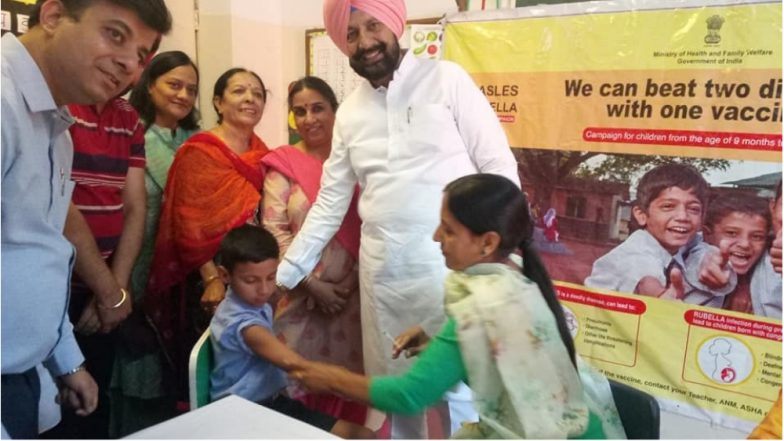
- Vaccine acceptance was greater when the vaccine was offered at the school.
- Young parents and parents of younger children were more likely to refuse the vaccine.
- There was a significant difference in linking information capital scores for parents who accepted MR vaccine and parents who did not accept the vaccine.
- There were significant differences in bonding physical social capital scores between parents who accepted MR vaccine and those who did not.
- Those who did not accept the MR vaccine had a greater overall social capital.
- Among the MR vaccine acceptors were parents who placed greater trust in teachers and other schoolchildren as sources of vaccine-related information. Parents who did not accept the vaccine placed greater trust in WhatsApp and other social media information.
- Health-related physical social capital negatively influenced MR vaccine acceptance.
In this study, the main finding of negative relationship between physical social capital and the MR vaccine acceptance can be explained by the fact that health-related physical social capital is a predominantly bonding social tie, and such strong homogeneous ties tend to perpetuate the locally held popular social norms and beliefs related to the MR vaccine. On the contrary, informational social capital is predominantly bridging and linking, and it is associated with a more heterogeneous form of capital, allowing for exchange of positive and negative beliefs. This indicates that there is a greater role for linking social capital in influencing health-seeking behaviours, while strong bonding social capital can hamper the same.
The study also found that the parents who accepted the MR vaccine trusted the information provided by schoolteachers, which implies that the success of school-based vaccine programmes depends on teachers' attitude toward and and knowledge about vaccines. Trust in schoolteachers' information was a significant positive influence on MR vaccine acceptance irrespective of adjustment for multiple confounders. On the other hand, in bivariate analysis, it was found that greater trust in WhatsApp information and information from other social media led to reduced acceptance of MR vaccine, although this ceased to be statistically significant in multivariable analysis. This is probably because age of the parent and age of the child are strong confounders. The lesser the age of the parent, the greater the access to social media and misinformation spread through social media.
Lessons from this study to guide future vaccination campaigns include:
- To cultivate vaccination acceptance in strongly bonded rural settings in India such as this one, it is important to engage with the community on a large-scale basis through village-level and door-to-door information, education, and communication (IEC) activities. Locally relevant methods of information dissemination such as street theatre, public talks, video shows, and interpersonal communication should be used to spread information. In areas where strong bridging networks such as women's self-help groups are available, they should be optimally utilised for dissemination of credible information about the vaccine.
- Schools and schoolteachers should be engaged in a greater manner in spreading credible, trustworthy information about vaccination.
- Greater focus should be placed on appropriately educating younger parents on the importance of vaccination. Relatedly, parents who trusted social media were more likely to be hesitant to accept the vaccine. Therefore, there is a need to regulate the misinformation that is spread on social media platforms, and credible information sources and the state department of public health should take affirmative steps to counter the spread of such misinformation.
Journal of Postgraduate Medicine. 2018 Oct-Dec; 64(4): 212-219. doi: 10.4103/jpgm.JPGM_249_17. Image credit: Balbir Singh Sidhu/Facebook
- Log in to post comments