










































Drivers and Barriers for Measles Rubella Vaccination Campaign: A Qualitative Study
Amrita Institute of Medical Sciences
"Addressing the anti-vaccination propaganda has become the need of the hour."
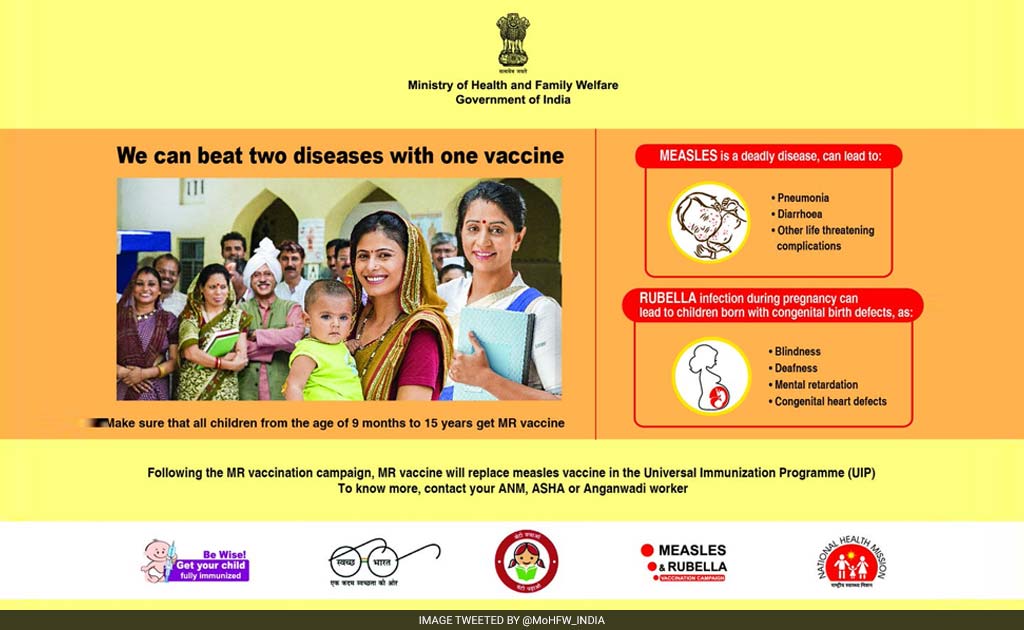
India accounts for 37% of the burden of global measles deaths. The objective of this study was to analyse the drivers and barriers for acceptance of measles-rubella (MR) vaccination in the field area of a primary health centre (PHC), which reported low coverage (62%) during the initial phase of the campaign launched in Kerala, India, on October 3 2017 aiming to eliminate MR by 2020.
This qualitative study was carried out in November 2017, immediately following the initial round of the MR vaccination campaign. This study area was mostly composed of people belonging to a religious minority group with a close-knit, traditional family structure. Notably, the routine immunisation coverage rate of this area was 98%, and the uptake for the MR campaign was found to be lagging behind. The study consisted of key informant interviews of parents of vaccinated and unvaccinated children, medical officers of the PHC, the Junior Health Inspector (JHI), Accredited Social Health Activist (ASHA) workers, and the principals of government and private schools where the campaign was conducted.
Among the parents (of five vaccinated and five unvaccinated children) who were interviewed, all parents were convinced about routine immunisation; however, they had mixed reactions regarding supplementary immunisations. Acceptance of the pulse polio campaign was much higher than the MR campaign. A sense of ownership prevailed among the parents, probably because of the fact that the pulse polio programme has been conducted over the years with effective information, education, and communication (IEC) campaigns. With regard to the MR campaign, parents were very apprehensive and viewed this campaign with suspicion. A sense of saturation and community fatigue toward the plethora of immunisation campaigns had settled in among the members of the community.
Drivers for the MR campaign included:
- Peer pressure created among the parents - Three parents confessed that they were initially hesitant to vaccinate, but when they saw their peers vaccinate, they followed. However, in male-dominated families, peer pressure did not make a difference.
- The venue where it was conducted - Vaccination in schools created pressure among the principals and teachers because they wanted their schools to achieve 100% vaccination coverage. Additional reinforcements in the form of sending notes to parents and repeated announcements were made.
- The efforts put by the field staff, especially the ASHA - Because these ASHA workers were representative members of the community, the parents were open to their advice to vaccinate.
- The mere fear of the consequences of not being vaccinated.
Examples of barriers to acceptance of the MR campaign:
- Lack of awareness regarding the vaccine and the rationale for administering it in a campaign mode, even among parents who had vaccinated their children.
- Deficiencies in the planning and implementation of IEC activities carried before the launch of the MR campaign - The parents felt that the idea of the campaign sprouted up too quickly, giving them neither opportunity nor time for sharing their apprehensions and clarifying their doubts. Hence, they felt that it was being imposed on them. IEC efforts were directed only toward parents with children in the age group of 9 months to 15 years and did not seek to influence people with whom parents might discuss their vaccination decisions. When questions regarding the deficiencies in the planning and implementation of IEC activities were directed at the healthcare workers, they stated that they, too, were given short notice and the campaign was implemented hastily.
- Anti-vaccination propaganda in social media - Multiple video clips were propagated by the anti-vaccination lobby, which became instant hits and became viral among these minority groups. Because the campaign laid more emphasis on the girl child, the anti-vaccination lobby skillfully popularised that the government had a depopulation agenda that was meant for the Muslim community. One parent commented, "We are among the minority religion. In WhatsApp we read this vaccination is dangerous especially for us." Most of the parents fully believed these messages blindly, whereas some questioned it, and others remained in a state of confusion not being able to come to a decision. The delay from the part of the government and the healthcare professionals in addressing anti-vaccination propaganda worsened the situation because it created suspicion in the minds of the people, further questioning the intentions behind the campaign. The healthcare professionals reported that by the time the government addressed these issues, it had become too late.
To conclude, the researchers note that family medicine specialists play a key role in increasing immunisation coverage by communicating the goal of elimination to the beneficiaries. A thorough knowledge of the socio-cultural contexts in which these vaccination campaigns are being implemented - e.g., through knowledge, attitudes, beliefs, and practices (KABP) surveys for the development of communication messages - is recommended.
Journal of Family Medicine and Primary Care 2019;8:881-5. Image credit: Vikaspedia
- Log in to post comments