











































Strengthening Immunization for Children: Tackling Gender Barriers and Promoting Parenting Alliance
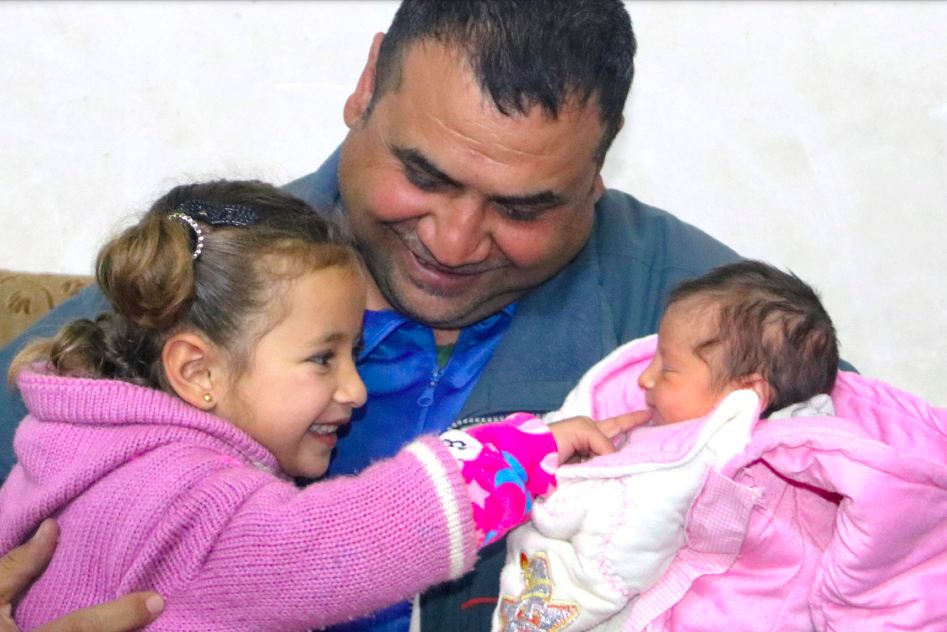
"Child and family services have traditionally placed a greater emphasis on engaging mothers rather than both parents, yet low rates of father involvement in these services potentially diminishes the effectiveness of interventions targeted towards children and families."
This brief, published by the United Nations Children's Fund (UNICEF), examines the existing evidence and conceptual rationale for policies and programmes that promote fathers' engagement in immunisation, emphasising their role as supportive allies for maternal and child health and well-being. With a focus on the Middle East and North Africa (MENA) region, the brief is a call to action for policymakers and practitioners to integrate gender-responsive frameworks into immunisation and child health initiatives to make sure that no child is left behind.
As explained in the introduction, "Gender can influence implementation efforts and outcomes through patterns of individual and collective decision-making, access to and control over resources for service use, quality of health care delivery and biases in service provision (Feletto and Sharkey, 2019). Women are typically assigned the role of primary caregivers in the family, yet they are often not empowered to fulfil this role. They are tied to a gendered division of labour that leaves them with little time or opportunity for seeking health care. Furthermore, their lower status in the household and community limits their ability to influence and enact decisions about their own and their child's health. Gender and security concerns can restrict women's mobility in public, thereby hindering their access to immunization services. Considering that resource allocation (such as time and transport), conflicting priorities (such as livelihood insecurity and subsistence versus preventive interventions like vaccination), and safety concerns are mediated and negotiated within the family and community sphere, where fathers wield critical influence, it appears short-sighted to sideline fathers in child health and immunization programmes."
To identify pathways to increase immunisation coverage and to sustainably reach the unreached, the brief firstly explores the many ways in which gender impacts immunisation both on the demand side (people's health-seeking behaviours) and the supply side (provision of health services). On the demand side (and as explained above), the different social roles assigned to women and men affect the degree to which women have access to and control over decision-making related to their health and their children's health. Related to the supply side, issues such as poor quality of health services, including supply stockouts and negative treatment by providers, may discourage women from attending the services.
The brief then looks at how fathers are historically often under-represented and overlooked by child and family services, and what hinders fathers' engagement across child and family services. On the demand side, for example, cultural views of fatherhood and family roles in the MENA region play a significant part in shaping the quality and quantity of father engagement with their children and their commitment to coparenting. In addition, the structure of social benefits such as the provision of parenting leave plays a significant part in shaping father involvement in preventive interventions to promote child development and health, including vaccination. On the supply side, one of the reasons cited for the lack of father involvement is the fact that child and family services have traditionally been designed for women caregivers rather than both parents. This approach positions mothers as gatekeepers, which could unintentionally impact fathers' access to information and therefore their engagement with services. Inflexible and inadequate timing and location of programme delivery can also be deterrents to fathers. Gender biases among service providers, which result in their low expectations of fathers, downplaying of paternal roles, and perpetuation of stereotypes portraying fathers as less competent and involved caregivers, also impact the quality of interaction with fathers presenting to services.
To inform future actions to support fathers' involvement, the document briefly looks at promising practices, including examples that exist in the MENA region (Egypt and Yemen) and what learnings can be drawn from them. It highlights the impact of positive parenting programmes that have sought to involve fathers in other areas, such as early childhood development and the prevention of violence against children. It also emphasises the impact that positive parenting and immunisation programming can have on other areas of social development due to its emphasis on gender equality and changing gender norms, as well as the importance of integration with other areas of health and child development.
Finally, the brief explores potential approaches to practice intentional inclusion of fathers and mothers in a parenting alliance for positive child health interventions. The following are some of the recommendations that fall within four key areas:
Address the family as a system:
- Address both parents in child health interventions.
- Educate fathers on available child health services and involve them in co-designing these services.
- Understand and address the parenting needs of the most vulnerable and hard-to-reach groups to ensure that intervention content and delivery modalities meet their needs and preferences.
Make fathers visible:
- Ensure that brochures, posters, materials, and messages are not biased towards mothers in their wording or branding. For example, refer to "mothers and fathers" rather to only mothers or the more generic "parents", which might be misinterpreted as reaching out to mothers only.
- Communicate the importance of fathers' engagement as co-parents. Explicitly state that fathers are welcome and encouraged to attend immunisation sessions.
- Use father testimonials to empower fathers to be strong advocates for the services available for children and families.
Create family-friendly services:
- Provide vaccination sessions at times and places that are suitable for working parents, including fathers.
- Conduct outreach in places where men typically gather.
- Strengthen the capacity and confidence of service providers to actively engage fathers, including demonstrating welcoming attitudes and respectful communication.
- Display positive messages in facilities that reflect and reinforce the importance of fathers.
Build trust and develop partnerships with fathers:
- Actively seek feedback from fathers through formal and informal mechanisms about their experience of the service to (i) build rapport and (ii) gain a better understanding of fathers' needs for more effective and inclusive service provision.
- Ask fathers for feedback on the difficulties they face in navigating the service, and request their suggestions for solutions.
- Monitor fathers' participation in the service to identify attendance patterns and modify aspects of the service accordingly.
Click here for the Arabic version of this 12-page brief in PDF format.
UNICEF website on January 22 2025. Image credit: UNICEF/UNI530191/Al-Kheder
- Log in to post comments