










































New Home New Life (NHNL)
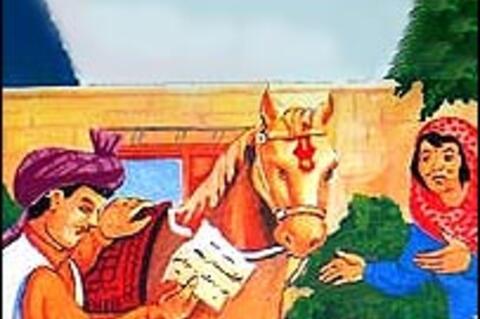
NHNL follows the story of a fictional village community resettled by former refugees inside Afghanistan. The drama weaves together tales of love, comedy, and human suffering in a format designed to communicate educational messages so that the whole village community can participate in development. Reportedly, BBC WST is committed to researching issues that are most relevant to communities themselves. After reviewing the issues with experts, the BBC WST integrates appropriate community education messages into the programme's storylines. The dedicated monitoring and evaluation team then continues to gauge audience reactions and needs; based on their findings, the scriptwriters constantly adapt and reorient the storyline. The strategy involves engaging people so that they can identify with the characters and, through them, with the storylines. The idea is that, in this way, the same basic theme can be repeated again and again in different contexts without boring the audience. NHNL began to refer to the September 11 2001 terrorist attacks that took place in the United States within 2 weeks, once the potential impact for Afghanistan was understood.
NHNL is also supported by a series of supplementary feature programmes which expand on some of the issues raised in the dramas. These programmes pick the findings of the community research and communicate actual examples of community actions or evidence of learnt messages. The feature programmes also provide supporting information for community structures to debate the issues raised. NHNL also has a quarterly publication that repeats the messages in cartoon format for partners to circulate and use in their discussions with communities. The BBC WST can also produce children's publications relating to the messages, which can be used in formal and informal learning methods.
In August 2006, the international non-governmental organisation (NGO) Tearfund entered into an agreement with the BBC WST to integrate, for a one-year period, disaster risk reduction (DRR) messages into NHNL storylines. The first 4 months saw the issues of earthquake, drought, and flood explored through drama, with disaster-related storylines integrated into the NHNL programme at least every other week. The messages are broadcast at certain hours of the day to suit women as well as men. According to organisers, the DRR messages have reached a wide audience because, among other reasons, a large section of the Afghan population listens to NHNL.
Community Development, Conflict Resolution, Landmines Awareness, Literacy Promotion, Gender, Social and Humanitarian Issues, Agriculture, Drug Addiction/Alternatives to Opium Growing, Forestry Conservation, Risk Management.
Afghanistan is not only a country that has suffered from wars and conflicts; it is also a country prone to earthquakes, avalanches, floods, and drought, and its human development index (HDI) is one of the lowest in the world. Partly because of its mountain ranges, the country is also hindered by lack of transport; hence the existence of perhaps the most isolated villages in the world. Approximately 80% of Afghans have radio sets in their homes, and between 60-68% of them listen to NHNL. Thus, radio can be one of the most effective ways of delivering information to communities which sometimes can be reached only after a 3-day donkey-riding journey.
"A typical real-life community disaster reduction story picked by NHNL as an entry point for its programmes - and accompanying features and publications - is the following. One community recalled when forests of tamarind trees surrounding their village had been cleared so that the trees could be sold, and this resulted in heavy destruction caused by a flood. After hearing on NHNL, a few years ago, that destroying forests could lead to destructive flood impact on farms and houses, the community established a local council and decided to fine anyone who cuts trees. The forest trees have now been growing for 4-5 years and the community is happy with the many benefits accruing from them: no flood impact on houses, less dust, good pastures for animals, etc."
BBC World Service Trust (BBC WST), United Nations International Children's Education Fund (UNICEF), World Health Organization (WHO), United Nations Development Programme (UNDP), United Nations Development Fund for Women (UNIFEM), the International Committee of the Red Cross (ICRC), the United Kingdom (UK) Department for International Development (DFID), Asia Foundation, United Nations High Commissioner for Refugees (UNHCR), United Nations Educational, Scientific and Cultural Organization (UNESCO), United Nations Office for the Coordination of Humanitarian Affairs (UNOCHA)/Office of the Military Adviser (OMA) of the United Nations Department of Peacekeeping Operations, MADERA, Swedish Committee for Afghanistan (MHC), Solidarite Belgium-Afghanistan, Dutch Committee for Afghanistan, Tearfund.
Mary Myers' summary of Afghan Education Drama (AED) "New Home New Life" 1998, which drew on many sources, including: 1) Gordon Adam and John Butt, 1994, "New Home - New Life: An Educational Drama Series for Afghanistan, Interim Report", 2) John Butt, 1997, "Radio for Meeting Learning Needs in Emergencies" - presentation to UNICEF Workshop, Cairo Oct./Nov. 1996; and the following additional sources: BBC WST website; and Building Disaster Resilient Communities: Good Practices and Lessons Learned [PDF], United Nations International Strategy for Disaster Reduction, 2007.
Comments

- Log in to post comments