










































Polio Storyline: New Home New Life (NHNL) Radio Soap
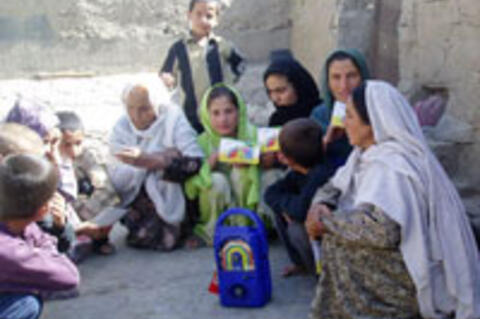
Polio-related themes were integrated into the NHNL drama, which intermingled tales of love, comedy, and human suffering in a format designed to communicate educational messages so that the whole village community can participate in development. Here is a synopsis of one scene in the polio storyline, which focused on: timely acute flaccid paralysis (AFP) reporting, endorsement from doctors, raising risk perception and emphasising the importance of preventive action among families, and highlighting the mutually supportive role of health centres and polio campaigns:
Two characters see a child who has suffered from limpness in the limb being carried to the clinic by her father. One of the characters expresses his sadness and his hope that she will get treated in the clinic. After a check-up, the doctor confirms that she has suffered from polio. Gulalai, the health worker, talks about difficulties the child and her family will face. The doctor agrees, emphasising the importance of polio vaccination - adding that parents should not neglect their children in this regard. The doctor asks Gulalai to inform women in the village about the importance of polio vaccine and to encourage them to get their children immunised. When Zarmina, an old woman, is informed about the importance of polio vaccine, she carries the information to her daughter Fatima and explains the risk children face if they do not receive polio drops. She urges Fatima to take her son Omid to the clinic to get him immunised with the polio vaccine. Worried, Fatima rushes to Gulalai, who checks her records and discovers that Omid was immunised recently during a polio campaign - assuring the relieved Fatima that she will inform her in time for the next polio campaign round.
Other topics explored in the storyline included the expected behaviour of families and caregivers of children during polio campaigns, vaccination at border crossings between Afghanistan and Pakistan, and routine immunisation.
In addition, polio was the focus of a 12-minute feature broadcast as part of NHNL's "Health and Life" supplementary programme series. The programme was designed to provide parents with factual information as a guide to saving their children from suffering from polio, using practical examples and experiences. Specific questions explored included: What is polio and how does it affect a child? What are the signs and symptoms of polio in children? What role can family members play in preventing polio? An NHNL writer and producer interviewed two doctors to gather the information included in the feature programme.
Immunisation and Vaccines.
The BBC Pashto (and Dari) service of NHNL reportedly enjoyed "a vast listenership" in the high-risk areas of the south and the east on both sides of the Afghanistan-Pakistan border.
Email from Savita Varde-Naqvi to The Communication Initiative on September 22 2009; and BBC Media Action website, accessed September 28 2009 and November 27 2012.
- Log in to post comments