










































Defining and Building a Data Use Culture
"Countries and organizations can improve health outcomes by introducing interventions or technologies that put the right information at the right time in the hands of the right people so they can make better decisions."
One of the primary benefits of information and communication technologies (ICTs) is the improved ability to collect, analyse, and use data. But, according to PATH, to do this well and sustainably requires fostering a data use culture: the customs, dispositions, and behaviours of a particular group or organisation to support and encourage the use of evidence, including facts, figures, and statistics, to inform their decision-making. This paper explores two frameworks that PATH has developed to highlight the necessary components of a data use culture - at a national system or country level as well as at organisation, facility, community, or individual levels. Its two case studies feature evidence gathered from data use success stories within and beyond the health sector and how a data use culture influenced their outcomes. Finally, it presents recommendations for how the digital health field can take local, regional, and global action to accelerate the rate at which countries and communities are designing and building their own data use cultures.
The report begins by explaining what a data use culture is and detailing activities that are critical to the creation of a data use culture, including data production and information use. "When both of these elements are in place, they fuel the need for even more information." The authors explain how the use of timely, high-quality data can strengthen health systems and provide health services efficiently. How is a national culture of data use established and sustained? In 2016, PATH and Vital Wave Consulting jointly developed a theory of change to illustrate how countries can strengthen national data systems and accelerate data use (see Figure 1 on page 10). The principal hypothesis of the theory is that better data and regular data use will create a data use culture, leading to better decisions, an improved health system, and improved health outcomes. This framework focuses primarily at the national or country level, but the themes can be applied to other contexts. As this theory is applied, understanding how the various levers - e.g., political champions who promote data use at each level of the health system - interact and relate to each other and the context is critical, revealing potential barriers to success and opportunities for targeted system improvement.
PATH's behaviour change framework (see Figure 3 on page 13) is complementary to the theory of change, explaining how the levers influence a set of individual actors within the health system who must change their behaviour and increase their production and use of quality data. These individuals interact with the data use cycle collecting, transforming, from analysis to reporting, and acting on data within communities, facilities, and organisations. The pathways to enable individual change consist of five interrelated pathways, detailed in the report: (i) awareness of need, (ii) access to information, (iii) motivation to act, (iv) empowerment to act, and (v) skills to use and improve quality. To support these individual pathways, an organisation needs to adopt a holistic approach to building and strengthening a data use culture that includes the "four Ps": information system products, data management policies, evidence-based practices, and motivated people who have the necessary skills.
These two frameworks complement each other in that the theory of change speaks to what has to happen and be in place for an optimal data use culture to take root. The behaviour change framework, on the other hand, speaks to why it can take root - namely, why individuals and their organisations enact critical data use responsibilities.
To facilitate understanding of how to utilise the frameworks, the report provides case studies of how two countries, Tanzania and Zambia, sought to strengthen data use through the Data Use Partnership and the Better Immunization Data (BID) Initiative. One learns, for example, that at subnational levels in Tanzania, health care workers often see their monthly reports as a top-down reporting activity and the final result of their data collection efforts, rather than information that they can use to make decisions about the immunisation services they deliver. To change this mentality, the BID team has recruited and trained district staff to be immunisation mentors to model, encourage, and support health care workers at the facility level to improve the quality of their data and use it to inform their planning and decision-making. District-level engagement has reportedly been key to motivate and empower facility-level data use, and for the long-term ownership and support needed for a sustainable data use culture. The vision of such an improved data use culture five years out has these elements: caregivers' records will be linked to their children's records so that important pieces of information are readily accessible; a child who is seen in an outpatient clinic with a potential adverse vaccine reaction or who has a potential reportable disease can be connected directly to the immunisation registry; stockouts will be reduced significantly, if not eliminated; defaulter tracing will be much easier and more cost-effective; health care workers will be consistently using the data they have to make better decisions about how best to deliver services; and countries across Africa will be working together to learn from each other's experience and will build solutions together.
It is noted that learnings from successful data quality and use frameworks used in other sectors can be applied to the health data use ecosystem, and the levers in the theory of change can be adapted beyond health to other sectors and applications. Examples are provided, such as data use in disaster preparedness and response.
The paper concludes with a few recommended actions to create a strong and sustainable data use culture, for policymakers, funders, organisational leaders, and data users who are seeking to build cultures of data use in their own work. They involve, in short: identifying champions, engaging users, building data use skills, integrating data use in policies and practices, linking systems, and being patient and prioritising. "A strong data use culture can truly be achieved only in an environment that emphasizes principles such as evidence-based, user-centered, country-driven solutions collaboratively designed with humility, transparency, and commitment to the end goal of making people healthier."
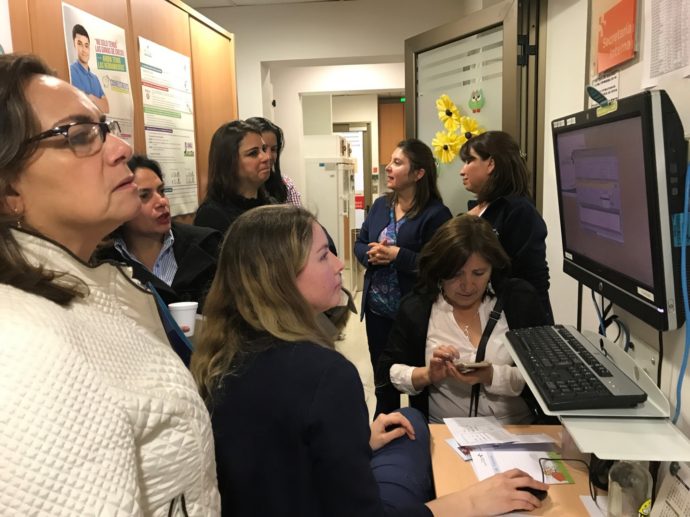
PATH website, October 30 2017. Image credit: The Ministry of Health of Chile
- Log in to post comments