










































Supporting Communities to Use Health Data
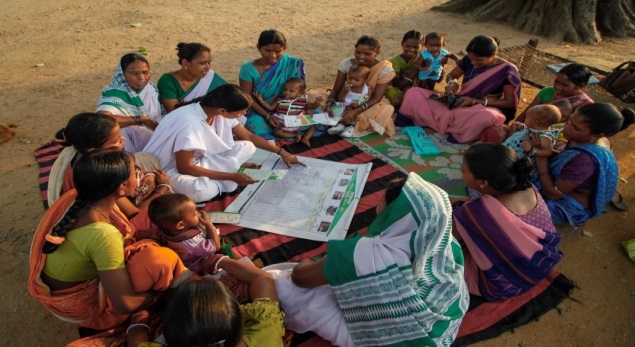
"Community members themselves are best placed to identify health and health care issues and concerns of the community."
Community-based interventions have been recognised for their potential to improve reproductive, maternal, newborn, and child health (RMNCH). This resource package describes core elements of data use at the community level and provides guidance, examples, and tools to support programme managers, communities, country policymakers, and their partners in strengthening primary service delivery and community engagement. It emerges from a joint effort by the United States Agency for International Development (USAID)'s flagship Maternal and Child Survival Program (MCSP) and the Health Data Collaborative (HDC). In addition, the resource package was informed by materials from MEASURE Evaluation and other sources, including non-governmental organisation (NGO) tools and descriptions of processes.
Data use at the community level to anchor development of this resource package is defined as: Data and information (formal and informal) regularly expected, analysed, interpreted, and used for decision-making by community actors to monitor and manage performance; track and adjust service quality and use; identify community needs, health status, practices, and trends; and ensure shared accountability.
As noted here, engaging communities as equal partners in using locally collected data can positively influence the supply and demand sides of the health system, as well as confidence in it. People are more likely to use health services if they have been involved in decisions about how those services are designed and delivered. In addition, community engagement in providing care and assessing quality of care can contribute to increased utilisation of services and improvements in quality.
There are 2 principal objectives of the resource package:
- To provide guidance on the core elements and steps to strengthen communities' capacity to use RMNCH data for action; and
- To provide links to existing tools and resources pertaining to data use at the community level, including data analysis, interpretation, and decision-making.
The resource package can be used in its entirety or as separate modules. A brief description of each module follows.
- Module 1: Engage Data Users and Producers - Working in communities provides an opportunity to advance understanding between data users and data producers; community health workers (CHWs) and community members are both users and producers in different situations. This module reviews different types of community stakeholders and the importance of engaging them in the community health information system by reviewing processes and providing templates for collaborative mapping and stakeholder engagement.
- Module 2: Conduct Assessments for Improving Data Use at the Community Level - Considering that information needs may vary by type of stakeholder (e.g., community member, community leader, CHW), this module builds on the stakeholder engagement process to outline the importance of identifying stakeholders' information needs, provides guidance for prioritising information needs, identifies potential sources of data that will yield needed information and improve availability of data, and explains how an initial assessment can identify common barriers to data use and opportunities to improve data use at the community level.
- Module 3: Build and Strengthen Core Competencies for Data Use - In light of the fact that community-based programmes may collect and report data but not have the capacity to use it, this module describes processes and tools for data collection, management, analysis, presentation, interpretation, and using data for action - with a focus on the MEASURE-Evaluation-recommended team appraoch to capacity-building.
- Module 4: Support Communities to Translate Data into Action - This module addresses the impact that community-level data can have - specifically, how these data and information products can be used to spur community action.
- Module 5: Ensure Systems and Policies Support Sustained Data Use - In recognition of the need to ensure the institutionalisation of data demand and use through appropriate systems and policies, this module describes how data management and supervision systems can support community-level data use.
Text boxes throughout the resource package provide concrete examples, such as the My Village My Home (MVMH) tool to use immunisation data in Malawian communities, and the use of data for advocacy in Kenya. To elaborate on the latter: In Nyanza Province, CHWs were trained to record data in the village register. These data were then analysed by stakeholders at the health centre, where they engaged in data-driven participatory planning to improve services. There were significant improvements in many areas, including immunisation, facility childbirth, insecticide-treated bed net use, and treated drinking water.
A concluding thought: "Optimal systems include a user-centered design for the data collection and reporting system, with a regular review of a subset of indicators...and a forum to review data regularly."
50
Email from Anika Hannan to The Communication Initiative on July 24 2019. Image credit: Dr. GV Rashmi/Jhpiego
- Log in to post comments