










































Zambia Integrated Systems Strengthening Program (ZISSP)
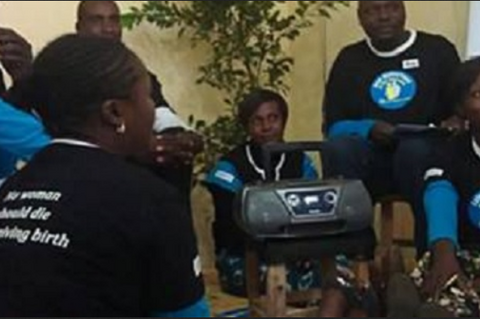
Running from 2010 to 2014, the Zambia Integrated Systems Strengthening Program (ZISSP) is designed to increase use of critical high-impact health services through a health systems strengthening approach. One of the strategies is the production of a 26-episode radio distance learning programme designed to support the learning of Safe Motherhood Action Groups (SMAGs). The programme works at the national, provincial, district, and community levels in collaboration with the Ministry of Health (MoH) to strengthen health systems, focusing on HIV/AIDS; malaria; family planning and reproductive health (FP/RH); maternal, newborn, and child health (MNCH); and nutrition. ZISSP is a United States Agency for International Development (USAID)-funded project that is led by Abt Associates and supported by the Johns Hopkins Bloomberg School of Public Health Center for Communication Programs (JHU-CCP).
The Safe Motherhood Action Groups (SMAG's) are central to the programme and play a vital role in strengthening community participation, transmitting necessary information about maternal, new-born and child health, and stimulating dialogue to identify local and culturally appropriate solutions to enhance the community's utilisation of reproductive health services. The Radio Distance Learning (RDL) Program was created to provide an opportunity to bridge information gaps and help promote desirable behaviours. By tuning into the programme, the SMAGs will reinforce training, education and skills, and thus contribute to improving the health of the communities in which they live.
The programmes, which began airing in January 2013, are in 7 languages and are broadcast on the national radio station and community stations in focus districts. They address safe motherhood issues, encouraging male involvement in health, and facilitating health centre referrals. Drawing on the Ministry of Health's SMAG Training Manual, RDL focuses on safe pregnancy from preconception through the postnatal period. Each topic is linked to a skill or a community mobilisation activity that SMAG members can use to encourage the community to model positive behaviour. There are topics focused on antenatal care, danger signs, preparing a birth plan, malaria and prevention of mother to child transmission of HIV, sexually transmitted infections, nutrition, and tetanus toxoid vaccinations.
At the outset of the project a community behaviour change communication (BCC) framework was created to ensure coordination and synergy of BCC activities among stakeholders and to guide planning and implementation of BCC activities at district and community level. The framework outlines roles and responsibilities for BCC implementers, and ensures harmonisation and consistency of the BCC interventions. An inventory of information, education and communication (IEC)/BCC materials and health promotions strategies was also conducted, highlighting available BCC materials in the five thematic areas and identifying strengths and gaps/weaknesses in topic areas.
Abt Associates, Johns Hopkins Bloomberg School of Public Health Center for Communication Programs (JHU-CCP), United States Agency for International Development (USAID), Planned Parenthood Association of Zambia (PPAZ), the American College of Nurse Midwives (ACNM), Banyan Global, the Liverpool School of Tropical Medicine (LSTM) and Akros Research.
JHU-CCP website andJHU-CCP website on September 30 2013.
- Log in to post comments