










































Polio-Free Chad: UNICEF Quarterly Newsletter on the Polio Eradication Initiative in Chad [Oct. 2013]
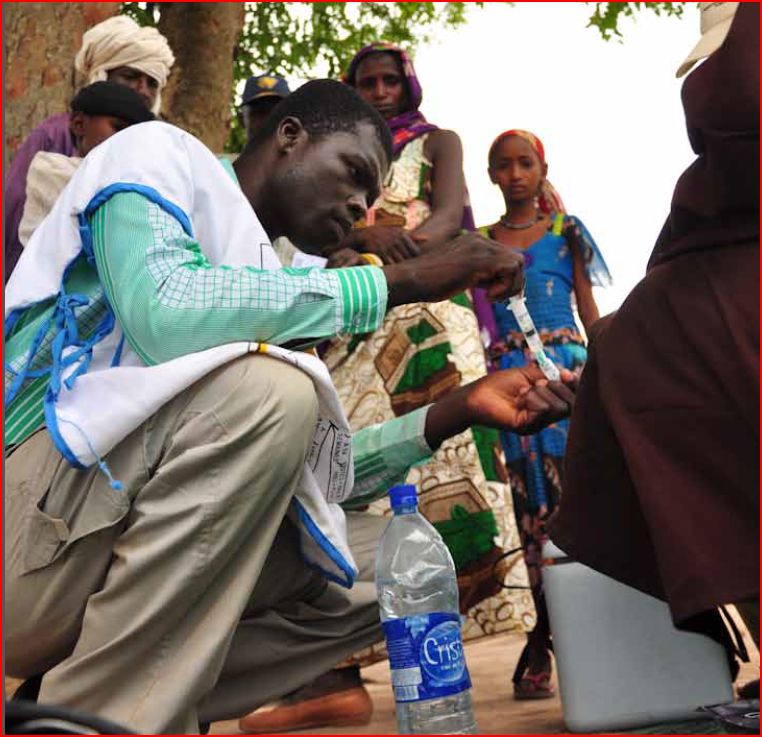
On the occasion of the World Polio Day, the United Nations Children's Fund (UNICEF) Chad Country Office released this newsletter, which celebrates the fact that, by the end of 2012, the total number of new wild polio virus (WPV) infections had dropped by more than 95%, and so far in 2013, there had been no new cases of WPV to date.
Several communication elements are discussed in the newsletter as having been critical to this milestone toward getting Chad on its way to becoming polio free. It is noted that efforts were intensified across all facets of the Global Polio Eradication Initiative (GPEI) in Chad, including: deploying more than 45 national communication staff to increase community awareness, launching special campaigns to immunise previously hard-to-reach beneficiaries such as nomadic groups along their seasonal migration routes across the southern borders with the Central African Republic (CAR) and refugees, and securing the engagement of the Chadian Government, whose president "declared an all-out war on the virus back in 2009, [and who] has played a key role in reaching a crucial milestone on June 14th of this year, after 12 consecutive months without a new case of WPV." It is noted that coordination with government departments in charge of livestock, which periodically run cattle vaccination campaigns, enabled the feasibility, in terms of logistics and communication, of conducting parallel polio and routine Expanded Programme of Immunisation (EPI) vaccination campaigns. Recent approaches adopted by the government and its partners include working directly with nomad community leaders, as well as traditional and religious leaders, in order to use their communication channels to inform tribes on upcoming campaigns, and to advocate on the importance of vaccination.
One segment within the newsletter asks: Why are so many children not present at home at campaign time, even though parents or caretakers were fully aware of the campaign and were not inherently against vaccinating their children? It is noted that UNICEF Chad has developed a dense communication and social mobilisation agenda that includes the involvement of local community leaders and religious leaders and the use of an increasing number of community relays from within communities they seek to reach in order to promote essential family practices for the survival and development of the child, such as exclusive breast feeding, vaccination, and good personal and family hygiene practices - in addition to polio drops. "By applying such a holistic approach, a favourable environment for child survival and development is created, setting the ground for the needed shift in attitude and perception, as parents' views on the importance of the wellbeing of the child change."
Another segment discusses an entertainment-education strategy: engaging communities in polio eradication through radio game shows. Through an initiative of the National Office of Radio and Television of Chad, and with the support of UNICEF, in June 2013, about 40 producers and radio broadcasters covering 40 health districts received training on the design and production of public radio games and programming. The objective of the workshop was to strengthen capacity to produce radio programmes - conducted in local languages, by the communities for the communities - to educate people on the importance of vaccination, hopefully promoting lasting change and supporting communication activities in immunisation and polio eradication. The session was preceded by a training-of- trainers held in N'Djamena. This communication method was chosen because radio remains one of the main sources of information that parents receive (public street announcers are foremost) on immunisation. During the national immunisation campaign against polio in March 2013, about one-quarter of parents (23%) were informed of the vaccination campaign through radio.
Also reported here is the importance of advocacy: concerted action plans to strengthen both demand and service. Chad's government, with the support of UNICEF and the World Health Organization (WHO) held a regional forum in the district of Am-Tinam, bringing together political, administrative, traditional, and religious leaders. This forum aimed to establish a strong network of partnership between those stakeholders and design an action plan to improve health and vaccination performance in the region. "Community participation is a key factor in raising immunization coverage. Creating awareness of and public demand for the benefits of immunization is an essential component of an active immunization programme," stated Ahmat Djidda Hassan, Ministry of Public Health in Chad, during the opening ceremony of the forum.
Email from Bruno Maes to The Communication Initiative on October 24 2013.
- Log in to post comments