










































Annual Report 2013: Polio Eradication Initiative, Afghanistan
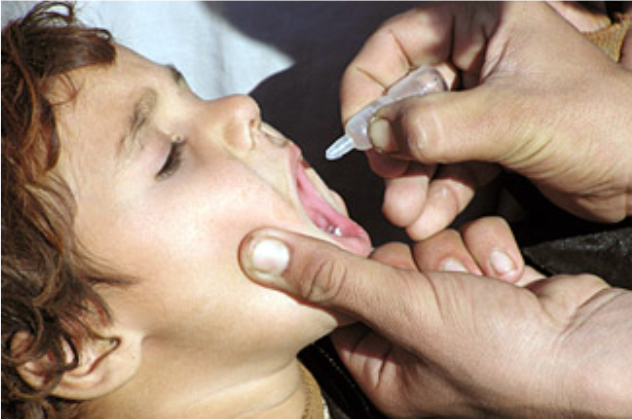
From the Expanded Program on Immunization (EPI), Ministry of Public Health, Afghanistan, this report narrates the epidemiological situation with regard to polio, the status of supplementary immunisation activities (SIAs), acute flaccid paralysis (AFP) surveillance, and communication activities implemented in 2013 and planned for 2014.
One section focuses on communication for increased community demand and ownership, as based on the activities carried out as part of the Strategic Communication and Advocacy Plan of Action for PEI (Polio Eradication Initiative) in Afghanistan 2012-13. It is noted here that the polio communication programme in Afghanistan "has steadily being considerably more robust and evidence-based, particularly in the South. The country has shown significant progress in media and Information, Education and Communications (IEC) by rolling out of the national mass media campaign 'Ending Polio is My Responsibility' and establishing a basic set of IEC materials. The campaign awareness in Afghanistan has risen to >90% in the past 18 months..." Furthermore, an Immunization Communication Network (ICN) was set up to provide social and community mobilisation support to the polio eradication programme. "While the ICN continues to play its awareness creation role during the campaigns till eradication is achieved, there is the need to begin to shift gradually from the campaign-focused ICN functions to a demand generation and stronger community engagement strategy in the communities of the Low Performing Districts (LPDs), whereby social and behavior changes get gradually introduced in a more systematic and organized way."
As described in the report, the national-level strategy focuses on increasing demand and ownership, reducing missed children due to refusals, and planning evidence-based, local-level communication intervention. There is also a shift to promote communication on routine immunisation (RI) and messaging on poor personal hygiene practices. "The ICN can gradually begin to use packaged messages that will continue to have polio as major component, but will include routine immunization, hand washing with soap promotion and exclusive breastfeeding to kick-start a behavior change strategy."
Sample communication interventions/accomplishments carried out in 2013 include:
- The ICN expanded to ensure social mobilisers are placed in all the clusters within the LPDs; by the end of 2013, almost 94% of the clusters in LPDs had social mobilisers.
- An interpersonal communication (IPC) training module was developed and rolled out starting from the Southern Region. Caregivers were informed about the importance of polio vaccination, with special emphasis on vaccinating new born and children who are sick. For this purpose, training flipbooks were pre-tested and shared with the field functionaries to improve the quality of trainings. Also, a training video was prepared.
- All IEC materials included specific message on the importance of vaccinating newborns. These messages were broadcast through 13 television channels and 60 radio channels before and during national immunisation days (NIDs). Community influencer networks, especially religious leaders, were involved in relaying these messages.
- The ICN at provincial and district levels facilitated an average of 7-10 advocacy meetings with district and provincial governors, which "contributed to improved coverage and successful implementation of NIDs and SNIDs [sub-national immunisation days] in all provinces and priority provinces, and SIADs in LPDs during 2013."
- Provincial Social Mobilization Groups (PSMGs) were established in all priority provinces (Khost and Paktia in the South East, Kunar in the East, Kandahar in the South, and Farah in the West). These held an average of 4-6 meetings with membership drawn from key line ministries (Religious Affairs, Women's Affairs, Education, Rural Development, Youth and Information).
Plans outlined for 2014 included communication components such as these selected plans:
- "Program plans to enhance focus in Eastern Region during 2014, which seems to be the part of country where risk of continuation of circulation remains high. District focused strategies, review of micro-plans, communication towards demand generation and placing additional HR [human resources] for the technical support and their trainings will be important activities in 2014. High level advocacy meetings and focus group discussions are planned to address the issues in Kunar."
- "Strategic communication focus to ensure that caregivers and community leaders have trust in and demand public health services, particularly in inaccessible or security-compromised areas."
- "Frontline workers, especially in LPDs, are equipped with the IPC skills, support and motivation they need to vaccinate all children."
- "Permanent cluster-based Social Mobilizer[s] will be placed in LPDs, particularly in bordering districts to enhance community ownership and demand."
- "To monitor impact of communication activities, periodic KAP [knowledge, attitudes, and practices] surveys will be conducted with the support of Harvard University."
- "National and Provincial cross-border meetings will be held with Pakistan for policy and enhance coordination at field level activities."
Editor's note, August 31 2017: This document is no longer available online.
GPEI website, accessed February 13 2015.
- Log in to post comments