










































The Persuasive Effects of Social Cues and Source Effects on Misinformation Susceptibility
"The results provide clear evidence social context plays a significant role when individuals make judgements about the reliability of misinformation."
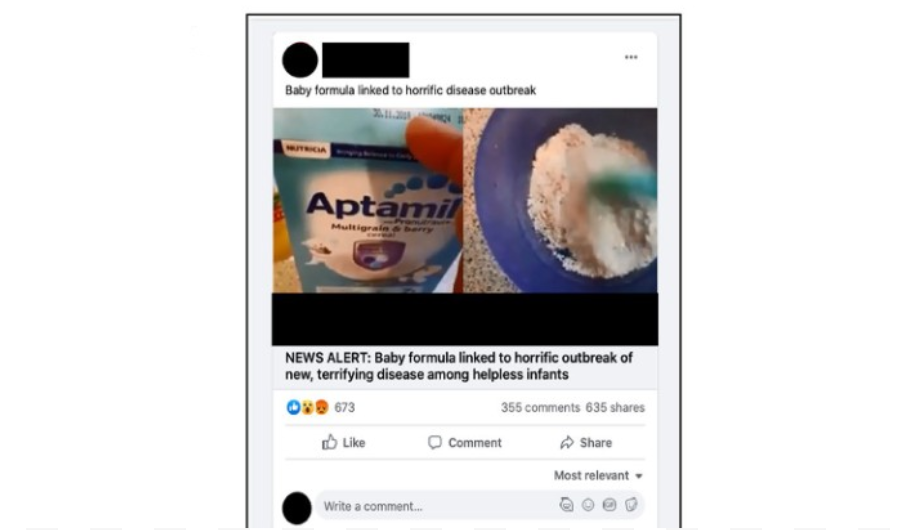
Researchers have drawn conclusions about what makes people susceptible to misinformation by studying misinformation mostly in a social vacuum, when, in reality, individuals often consume news in social settings - that is, on social media. Bridging the gap between social influence research and the cognitive science of misinformation, the experiments described in this paper ask: What are the cognitive processes through which individual misinformation susceptibility is impacted by social and source cues? Under which circumstances do social cues impact individual misinformation susceptibility? When do the sources of the information bias news consumer judgments of misinformation?
When consuming news, there are two main contextual elements individuals may be exposed to while they make judgments about headline veracity, and the paper begins by reviewing previous research on the links of misinformation to each:
- The surrounding social cues: In the context of misinformation, social engagement cues on social networking sites such as "likes" have in some research been found to increase the perceived credibility of misinformation, whereas other research found no effect of such cues on perceived message credibility. Moreover, it is currently unknown through which mechanism any influence would occur. Why do social cues influence perceived reliability of misinformation in some instances but not others?
- The source of the information: There is already some evidence that source cues on social media influence how individuals judge information veracity. However, results are mixed. Although some research has found that source cues influence perceived veracity of (mis)information, other research has highlighted that simply emphasising news sources does not reduce misinformation susceptibility. Do people fall for misinformation attributed to similar sources simply because they prefer to get information from similar sources even if they are not credible?
The researchers examine the mechanisms through which social context impacts misinformation susceptibility across 5 experiments (N = 20,477) using simulated social media environments (not real social media platforms):
- The purpose of study 1a was to explore whether engagement cues on social media platforms - that is, the numbers of "likes", retweets, and comments - influence perceived reliability of misinformation. Data were collected as part of a larger intervention experiment on social cues using the Bad News platform. The researchers created fictitious false headlines based on 6 misleading strategies used by misinformation producers based on previous research.
- The purpose of study 1b was to explore: (i) whether social cues influence perceptions of social consensus and (ii) whether social cues influence perceived reliability of misinformation when controlling for potential source effects. To select unreliable news headlines, the researchers used the "Hoaxy" platform , which visualises the spread of claims and fact checking.
- The purpose of study 2 was to assess: (i) whether explicit and implicit social cues influence perceived reliability of misinformation and (ii) whether these cues influence perceived consensus in misinformation reliability. The researchers manipulated social cues across 5 conditions: Implicit consensus, manipulated through comments endorsing (i.e., indicating belief in) misinformation vs. discrediting misinformation, explicit consensus manipulated through direct percentages of previous study participants endorsing (i.e., indicating belief in), vs. discrediting misinformation, and a control condition.
- The purpose of study 3 was to investigate whether source cues impact misinformation susceptibility using a large sample size and a between-subject design. As in study 1a, data for study 3 were collected on the Bad News platform as part of a larger intervention experiment on source effects. Sources were coded as either being similar or dissimilar to the participants' indicated political orientation to allow for factorial analyses.
- The purpose of study 4 was to examine the direct influence of source credibility and similarity on misinformation susceptibility. This study employed a 2 × 2 between-subjects factorial design manipulating source similarity (similar vs. dissimilar) and source credibility (high credibility vs low credibility).
In sum, the results of the studies provide evidence that both social cues and source cues influence misinformation susceptibility, but only under certain conditions:
- The findings suggest that when social media users are exposed to social cues that indicate that others believe misinformation, they are more vulnerable to misjudging the information as reliable. While following the majority can be a reliable heuristic, as statistically speaking the majority is often more likely to be correct, it may be an unreliable cognitive bias when individuals extrapolate information from a small selection of news consumers they are exposed to on social media. The studies found that social proof, or the influence of others, may be particularly potent when it challenges preexisting beliefs, or when there is a discrepancy between one's own judgement and the perceived judgment of a social group. In other words, news consumers may already have a good sense of what is true and false - until they are exposed to social cues that challenge their own assessments.
- People's political or ideological congruence with both real and fictitious news sources increases misinformation susceptibility. News consumers are less critical of information from sources they believe are credible. Unfortunately, otherwise reputable mainstream sources sometimes publish misinformation, which this work suggests could be much more influential than extreme falsehoods from illegitimate news sources, given people's tendency to use source cues when forming judgments about misinformation.
In conclusion: "This work highlights the importance of studying cognitive processes within a social context, as judgements of (mis)information change when embedded in the social world. These findings further underscore the need for multifaceted interventions that take account of the social context in which false information is processed to effectively mitigate the impact of misinformation on the public."
Scientific Reports (2024) 14:4205. https://doi.org/10.1038/s41598-024-54030-y.
- Log in to post comments