










































Mapping A Response: Using Satellite Images to Aid Humanitarian Action
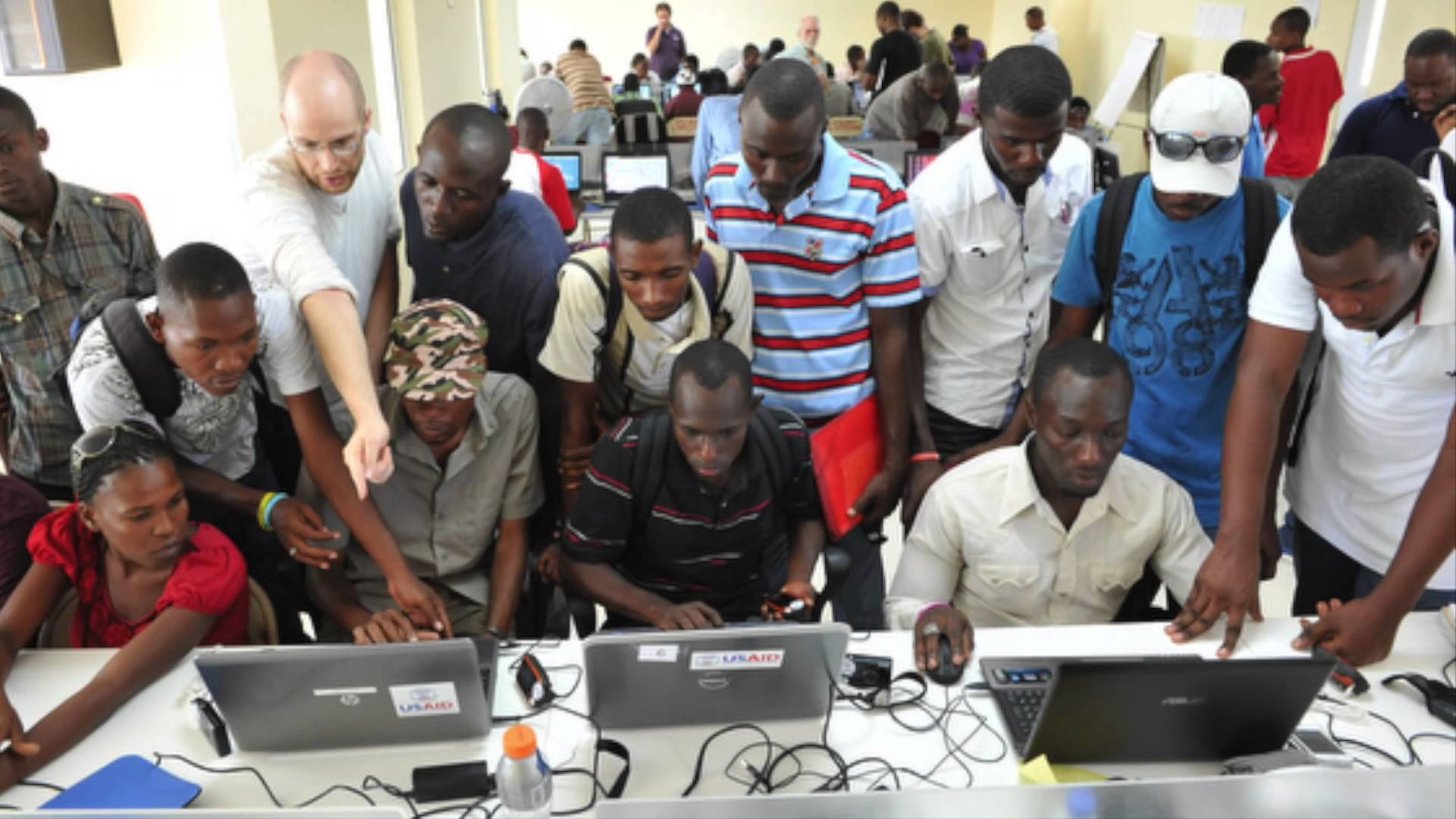
Jigsaw Consult (Thomas); Active Learning Network for Accountability and Performance in Humanitarian Action, or ALNAP (Obrecht)
"Today, aerial imagery is available from a variety of sources, including traditional satellites, nano satellites, manned and unmanned aircrafts, balloons and kites. This imagery can benefit humanitarian organisations in their response to disasters, but it is often difficult to share and access the data acquired efficiently, given the lack of a centralised digital index and an inability to turn imagery into useful maps for humanitarian response."
Humanitarian OpenStreetMap Team (HOT), established in 2010, is a non-profit organisation that creates and provides maps to support humanitarian organisations in their response to conflict or natural disasters. They do this through collecting data, coordinating the design and development of OpenStreetMap (OSM) tools and documentation, teaching data quality assurance, and collaborating with data imagery providers. The need for a system that enabled sharing of imagery and a centralised index for searching, as well as a process for translating images into useful maps, was first identified in 2006. In order to address this challenge, in 2010, HOT gathered a network of interested crisis mappers around the development of Open Aerial Mapping (OAM), an open source set of tools that would provide functions for hosting, uploading, sharing, searching, filtering, displaying, downloading and using imagery data. OAM consists of 3 main components: a database of aerial images, called a "catalogue"; the functionality to search for images, called the "browser"; and the underpinning "server". These enable humanitarian actors to search for, gather, and utilise imagery swiftly. It also enables those who capture imagery to more easily share it with humanitarian responders to generate maps.
To understand how this transpired, the research team conducted a review of project documents and 12 interviews with key project and partner staff over 2 months in 2015. The resulting case study uses a model based on 5 stages:
- Recognition of a specific problem, challenge, or opportunity to be seized - The Haiti earthquake in 2010 was a key event identifying and further highlighting a number of needs associated with the vast amount of imagery available (e.g., the need for the imagery to be archived so the same process of identifying and gathering imagery does not have to be repeated after each disaster). Anyone can take part in HOT, with volunteer members primarily undertaking the work. HOT seeks to mobilise an open community of crisis mappers to deliver the work it undertakes. A key element of the recognition phase entailed HOT ensuring the scope of the project was not solely restricted to the users of imagery (the humanitarian response sector), but also addressed the challenges facing the suppliers - the organisations that collect imagery. This ensured there was a strong definition of the technical problems concerning image-sharing and a good understanding of the user's needs.
- Invention of a creative solution or novel idea that addresses a problem or seizes an opportunity - While the concept of OAM is not a new one (it is available within the commercial market), HOT's OAM project is innovative in terms of its scale: a system that will eventually provide imagery of the whole world and is freely accessible to anyone, anywhere. An important success factor within this innovation process is the universal access provided through the open source project approach. The concept of OAM became an ongoing topic of conversation among the broader community of crisis mappers until 2013. Individuals such as Schuyler Erle, Kate Chapman, Rob Emanuele, Mikel Maron, and Cristiano Giovando kept the conversations happening at various conferences and ad hoc crisis mapper gatherings, which helped further shape the invention of OAM. However, without a clear lead and a lack of dedicated funding, the concept did not progress rapidly. This changed when HOT began to facilitate discussions around OAM in 2013. This was achieved through regular communication via mailing lists and through the gathering of interested crisis mappers into a community of contributing individuals focused on the invention and development of OAM. HOT used the open source platform GitHub and the chat functionality of Gitter to facilitate this.
- Development of the innovation by creating practical, actionable plans and guidelines - HOT is an organisation that coordinates the community rather than being the entity that carries out the development work itself. HOT uses an iterative community-based approach placing a strong emphasis on the community ownership of the project. This is achieved through conducting all work openly and engaging the network of interested crisis mappers at every juncture, allowing space for input and seeking feedback on progress. One early outcome of the ongoing discussions over GitHub and Gitter was the clarity of definition of high-level requirements for the 3 core OAM components. HOT had foreseen that the completion of these elements of OAM required dedicated time from highly skilled technical experts, and in March 2015 an open tender was released for the development of the OAM browser and catalogue. In May 2015, HOT hosted a summit in Washington, DC, United States (US), where they finalised the design of OAM, including significant adjustments to the overall architecture, by introducing the Open Imagery Network (OIN), which underpins OAM. The browser and catalogue were completed in August 2015 and the server, following a change of format, was completed in October 2015.
- Implementation of the innovation to produce tangible examples of change, testing it to see how it compares with existing solutions - There have been limited activities within this phase because of the relative infancy of the completed OAM architecture and the fact that it has not yet been exposed to a large-scale emergency response. The OAM community has been using each component as it goes live, constantly providing feedback for further development and improvement.
- Diffusion of successful innovations - HOT is employing a number of strategies to encourage the wider adoption of OAM. For example, the open source data on GitHub and Gitter is available to all, and current statistics drawn from the openaerialmap.org site confirm 5,591 people have accessed the information since May 2015. In addition, HOT has communicated updates through the OAM mailing list, delivered presentations at the HOT summit in May 2015, and continues to respond to numerous email enquiries from humanitarian organisations and crisis mappers interested in OAM. In broader sector-wide discussions surrounding this technology, concerns have been raised around privacy and the security of having open imagery available to all. In response to this, project lead at HOT Cristiano Giovando states: "We are aware of privacy concerns, and have ideas on how to address them (e.g. reducing resolution when requested), but have not implemented any strategy yet. It's on the agenda for the next phase. In terms of security, at this point the responsibility is still with the uploader/provider. A system of checks and community review will eventually guarantee some security control of published imagery."
The research team used evidence collected for this case study to assess the success of the OAM innovation process against 3 criteria. Overall, this process was successful in increasing evidence and learning. At the time of writing, the OAM platform had recently gone live and it was therefore too early to determine if the process had led to a fully improved solution or wider adoption. However, early pilot participants and potential users were positive about OAM's potential to fill an important gap in the use of maps for humanitarian purposes by providing a one-stop shop for imagery. For example, during the response to Typhoon Haiyan, United Nations Office for the Coordination of Humanitarian Affairs (UNOCHA) recommended that the Philippine government place its aerial imagery in OAM and then direct humanitarian organisations to this accessible centralised catalogue, enabling more timely access to imagery. However, at this stage of OAM's development, there is still a requirement for highly technical individuals to help translate the raw image data into useful maps for humanitarian purposes. Further, the need to inform the broader humanitarian community of the existence and function of OAM is a key to successful adoption. It is expected that wider adoption will take place through the work of the open community that surrounds OAM. These individuals are passionate and well networked and have links to the technical staff members of large humanitarian organisations. This cross-over will encourage diffusion.
Next, the case study explores 6 factors generally held to be fundamental to successful innovation processes and the way in which each works in the context of mVAM. In brief:
- Managing relationships and setting common objectives - "The presence of Cristiano Giovando in the coordination role, managing relationships and ensuring common objectives, has been vitally important for the successful completion of the development of the innovation. He ensured the multiple voices contributing to the project were heard while also keeping the project within the objectives. Gitter and GitHub and the mailing list ensured learning was captured and new plans developed, actioned and tracked. They also served to ensure transparency and openness."
- Dividing tasks and responsibilities - "Open source projects like the development of OAM run the risk of having input from a large number of voices, without one person taking responsibility to drive the process forward. The challenges connected with this were significantly reduced when Cristiano Giovando was employed. However, Cristiano's position is only funded until mid-October, meaning that there will be no specific individual funded to lead the project through implementation and diffusion."
- Resourcing an innovation - "The project has been heavily resourced in terms of expertise and participant engagement. The open source nature of the development ensured many people engaged in the design, development and implementation of the project....The funding provided by HIF [Humanitarian Innovation Fund - see below] enabled HOT to develop OAM....The funds were for development, but had there been more resourcing then HOT would have been able to undertake further development, implementation and diffusion activities, leading to wider adoption."
- Flexibility of process - "The open source approach, with the use of GitHub and Gitter, gave interested individuals considerable access to the development of OAM, allowing them ongoing feedback opportunities. The open source approach allowed for a high level of input, feedback and learning, all of which was open and available for anyone to engage with. The limited time available for the actual software development phase restricted the number of iterations and requests for feedback, thereby reducing the exposure to potential end users. This has potentially reduced target communities' awareness of the improved solution, which could hamper future adoption. Although there were sufficient iterations and flexibility, there can always be more within a software development innovation and as such the opportunities for additional learning were reduced."
- Assessing and monitoring risk - "The nature of open source projects also means multiple voices are included, leading to greater transparency and a wider group of people able to identify risks and offer solutions. The agile development approach, with its short development sprints and regular progress meetings, has meant risks are monitored closely and addressed swiftly."
- Drawing on existing practice - "OAM is built on the platform of previous endeavours and with the knowledge that comes from responding to disaster such as the Haiti earthquake, Typhoon Haiyan and the southern California wildfires of 2007. The need for OAM had been identified since 2006/07. HOT has also been able to draw lessons from a number of previous short-lived and unsuccessful iterations."
Several emerging lessons are identified for best practice in innovation, such as: "An individual point person managing the project, setting goals and coordinating the broader contributors is essential to keep the project on track and provide the impetus for a successful completion. An open source development process that tracks all activity online allows for greater contribution, feedback, learning and adoption. It also encourages greater transparency."
This study is one in a series of 15 case studies, undertaken by Active Learning Network for Accountability and Performance in Humanitarian Action (ALNAP) in partnership with Enhancing Learning & Research for Humanitarian Assistance (ELRHA)'s Humanitarian Innovation Fund (HIF), exploring the dynamics of successful innovation processes in humanitarian action. They examine what good practice in humanitarian innovation looks like, what approaches and tools organisations have used to innovate in the humanitarian system, what the barriers to innovation are for individual organisations, and how they can be overcome.
Active Learning Network for Accountability and Performance in Humanitarian Action (ALNAP) website, June 14 2016. Image credit: Humanitarian OpenStreetMap Team (HOT)
- Log in to post comments