










































Humanitarian Aid - The CNN effect and aid politics
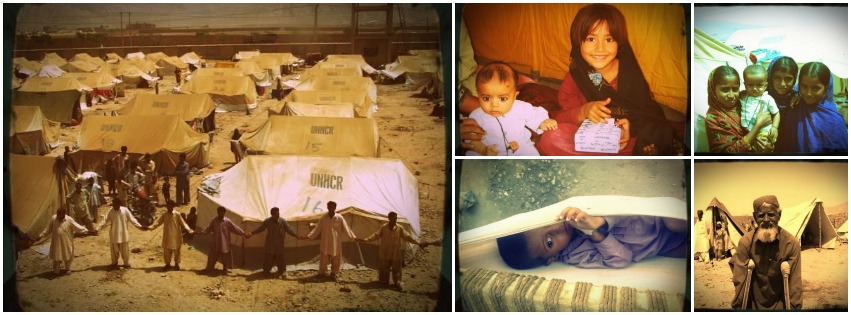
Author: Jawahir Habib, November 13 2013 "Lucky are the people of Yugoslavia and Somalia as the world's eyes rest on them. Condemned are the people of Juba … It may be a blessing to die in front of a camera - then at least the world will get to know about it. But it is painful to die or be killed, without anybody knowing it." Hand-written letter smuggled out from the besieged Southern Sudanese town of Juba, August 1992.
While watching a documentary on humanitarian work in one of my courses, I had tears in my eyes seeing a history of devastation and suffering across the globe from war, internal conflicts and natural disasters. The documentary also inspired me, showing the resilience, courage and efforts of the victims and the aid workers. I thought to myself why do some humanitarian emergencies get adequate aid and appropriate attention while some others just go unnoticed. Researchers suggest that factors such as media coverage, political interests of donor countries and presence of influential aid organizations are key drivers of humanitarian assistance(1). There is an ongoing debate on the linkage between media coverage and level of humanitarian assistance received.
CNN effect is a theory, which suggests that the 24-hours news media influences the decision-making and foreign policy agendas of the Governments(1-3). In the case of humanitarian emergencies, the theory implies that increased media coverage would result in increased assistance. This theory suggests that media plays a vital role in agenda setting for increased humanitarian assistance, for removing impediments of aid and for acceleration of the decision-making process(2). Evidence implies that for media to actually influence the decision making process, some preconditions have to be fulfilled; this includes emotive and dramatic imagery, high news value (proximity, impact, timeliness, sensation, etc.) and appropriate framing of the issue(2).
While covering humanitarian emergencies, media may also face challenges such as security and access, other competing stories and hurdles in getting the stories out of the remote areas(3). For example, during the Dafur (Sudan) and Rwandan genocide, media faced security threats and was denied access to affected areas by the Governments resulting in decreased media coverage(3). Other newsworthy stories, as “Nelson Mandela’s presidency” in 1994 and “Run Away bride” in 2003, completely overshadowed the Rwanda (1994) and Dafur (2003) humanitarian crisis(3). During the 2000 Mozambique and Indian floods, a wide difference was seen in provision of level of assistance(1). This can be attributed to the fact that the Indian government had denied access to the media, while in Mozambique media was facilitated to cover the devastation, and they also managed to appropriately frame the events.(1)
However, it is also evident that in majority of the cases instead of independently setting the agenda for Governments, the media follows the political agenda. For instance, British media covered stories of West Africa only following the visit of Prime Minister Tony Blair(2). Similarly, food shortage in Western Africa and cyclones in Vietnam received less coverage due to lower interests of Western Governments in the issues(4). However, the Pakistan 2005 earthquake received extensive media coverage due to the West's vested interest in Pakistan as an ally of the war on terror(4).
The Asian Tsunami occurred at popular tourist locations for western tourists, thus it received wide media coverage(4). Analysis suggests that the Asian Tsunami received significantly higher media coverage then 6 other global emergencies the previous year - it generated about $5 per person of aid in just two months as compared to 0.5 cents per person of 18 years of war in Uganda(4).
Political interests of the countries, particularly those in economy and security, are also key drivers of the level of assistance provided(1, 5). For example, in the 1999 Kosovo conflict, there was a greater interest of European nations which determined increased assistance to the conflict as compared to the conflict in the African countries Congo and Angola during the same time period which had affected a much larger population. The humanitarian crisis in Afghanistan before 9/11 was largely ignored with very limited funding(1). However, after the launch of the war on terror, US and European Union countries significantly increased humanitarian assistance in Afghanistan(1). The presence of committed humanitarian organizations such as the United Nations, International Non-Government Organizations or volunteer organizations, can establish early warning systems, initiate emergency response and advocate for funding(1).
In my opinion, media has a considerable role in agenda setting for the Governments to determine the level of humanitarian assistance. However, it strongly depends on factors such as political and economic interests of donor countries. Other factors such as dramatic imagery from the field, newsworthiness and framing of the story are also crucial. Organizations need to build their capacity in terms of media relations, increase dialogue with media, bring out human interest stories and appropriately frame the stories.
References
1. Olsen GR, Carstensen N, Hoyen K. Humanitarian Crises: What Determines the Level of Emergency Assistance? Media Coverage, Donor Interests and the Aid Business. Disasters. 2003;27(2):109-26.
2. Holm H-H. Failing Failed States - Who Forgets The Forgotten. Security Dialouge. 2002;33(4):457-71.
3. Bredeson J. The CNN Effect: Mass Media and Humanitarian Aid: Liberty University; 2011.
4. Shah A. Media and Natural Disaster: Global Issues; 2005 [cited 2013 10 November]. Click here for availability.
5. Thompson L. Humanitarian Emergencies: Why Does Kosovo Get More Aid than the Congo? Geneva: International Council of Voluntary Agencies, 2003.
Disclaimer: Views and opinions with this blog represent my own and not those of people, institutions, or organisations I am affiliated with unless stated explicitly. My blog is not affiliated with; neither does it represent the views, position, or attitudes of my employer.
- Log in to post comments