










































Guidance Note: Risk Communication and Community Engagement - Coronavirus Disease 2019 (COVID-19) Pandemic
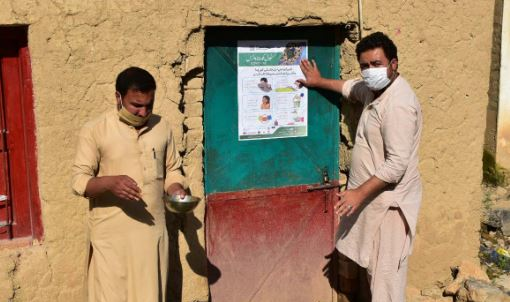
"Communication efforts must respond to stakeholder concerns as well as mis/disinformation (including rumors and false news) and behavioural factors (including social stigma, risk-promoting social norms and counterproductive decision contexts)."
Globally, the COVID-19 pandemic is directly affecting livelihoods and food systems; there are also other possible indirect effects on existing tensions, conflict lines, and marginalisation of identity groups. Populations living in food crisis contexts and those whose resilience has been eroded by previous crises are particularly vulnerable. In alignment with the Food and Agriculture Organization of the United Nations (FAO)'s commitments on accountability to affected populations (AAP), this guidance note aims to support FAO country offices in designing and implementing inclusive and participatory risk communication and community engagement (RCCE) initiatives.
Many of FAO's primary beneficiaries live in rural and remote areas with limited access to essential health or mass media services. Therefore, calls for local-level awareness and action around COVID-19 require campaigns that are adapted to the communication channels and methods that people can actually access. Moreover, to reduce the likelihood that the food supply chain does not become a vector of COVID-19, messaging must take into consideration the rural farming, fishing, and pastoral contexts and communities at issue, as well as the range of secondary actors involved in the agriculture value chain.
The guidance note begins by explaining the importance of RCCE, which refers to the processes and approaches to systematically consult, engage, and communicate with people and communities who are at risk, or whose practices or behaviour affect risk. The aim is to encourage, enable, and include stakeholders in the prevention of and response to risks by adapting communication to local political, economic, social, cultural, psychological, and other realities. In the case of COVID-19, RCCE is designed to enable authorities and communities to work together to promote healthy behaviour and reduce the risk of spreading disease. For example, by turning to community-based networks, engaging key influencers, and building local capacities, communication can establish the authority and trust required to rapidly mount inclusive - and hopefully thus more effective - responses.
There are 5 building blocks to consider when designing an RCCE strategy, and the guidance note is organised around them - with examples and key points in text boxes included throughout:
- Understanding the context and information needs - key actions include:
- Undertake a community mapping to understand the different stakeholders, influencers, and local networks/structures.
- Analyse and understand carefully the community (e.g., its values, history, political and power structures, social networks, socio-cultural norms and behaviours, etc.) - exploring opportunities through which to engage with communities and beneficiaries (ask communities and groups for their own solutions, rather than imposing ideas.)
- Select partners with appropriate personnel and adequate expertise to work with vulnerable groups, ensuring that engagement strategies respond to particular protection considerations (e.g., ask whether communication materials reflect the diversity of community groups in terms of age, gender, disability, ethnicity, minority, or other vulnerabilities and context).
- Conduct rapid information, communication, and accountability assessments in order to better understand needs, preferred and trusted communication channels, and available accountability mechanisms.
- Investigate barriers to change, including social norms, biases, and counterproductive choice architecture (e.g., default decisions/options that increase risks), and explore how to apply scientific insights to facilitate the ability of risk communication to overcome these barriers (e.g., by employing trusted messengers, leveraging emotion, ensuring concepts are salient, making new behaviours easier to implement through nudges, etc.).
- Assess risks associated with digital communication mechanisms, including data confidentiality and perceptions that data could be used by conflict actors.
- Designing an inclusive and participatory RCCE strategy - Key actions and considerations are outlined for a general strategy, as well as in light of specific needs for: protection from gender-based violence (GBV); people-inclusive RCCE; and efforts to counter stigmatisation/discrimination in relation to COVID-19.
- Developing key messages on COVID-19 prevention for people along the food supply chain - Subsections here focus on developing RCCE around: World Health Organization (WHO) advice on COVID-19 prevention for the public; reducing the impact of COVID-19 for smallholder producers in rural areas; mitigating the impact of COVID-19 on livestock production and animal health; COVID-19 guidance for fisheries and aquaculture food systems; FAO advice on COVID-19 and food safety for food businesses; FAO advice on COVID-19 and food safety for consumers; and FAO advice on COVID-19 and food safety for food authorities.
- Choosing appropriate channels and platforms for RCCE - Various options are outlined. One example: In parts of Asia, COVID-19 awareness raising campaigns are being promoted within local markets and through FAO's work with farmer groups and farmer field schools (FFS). (COVID-19 prevention principles for FFS are included.)
- Engaging in partnerships - Among the organisations outlined in this section are trusted civil society groups/organisations, which FAO notes can be key actors in overcoming difficulties linked to mistrust in the state and in preventing/mitigating conflicts within and between communities.
A bibliography with links to relevant resources concludes the guidance note.
38
FAO. 2020. Guidance note: Risk communication and community engagement - Coronavirus disease 2019 (COVID-19) pandemic. Rome. https://doi.org/10.4060/cb0526en - sourced from: KORE - Knowledge Sharing Platform on Resilience, August 24 2020 - accessed on August 31 2020. Image credit: ©FAO/Max Valencia
- Log in to post comments