










































Evidence-Based Process for Prioritizing Positive Behaviors for Promotion: Zika Prevention in Latin America and the Caribbean and Applicability to Future Health Emergency Responses
Population Council (Pinchoff, Hewett); United States Agency for International Development, or USAID (Serino); Johns Hopkins Center for Communication Programs (Merritt, Hunter, Parikh); Tulane University (Silva)
"The iterative, collaborative process of defining behaviors across all stakeholders was critical to ensuring a more harmonized and feasible response."
This case study documents a flexible process that can be adapted to inform the prioritisation of behaviours in social and behavior change (SBC) programming efforts when there is limited evidence and time available, as during many emergency responses. It describes an effort to support United States Agency for International Development (USAID) implementing partners in harmonising prevention efforts to reduce Zika infection, which involved an evidence-based process to identify behaviours with the highest potential to reduce Zika infection and transmission.
SBC messaging can be particularly challenging during emergency responses when data may be unavailable to inform programming, and time constraints inhibit collective planning. On February 1 2016, the World Health Organization (WHO) declared Zika a Public Health Emergency of International Concern. USAID and other US government entities and international partners began working together through existing country systems to reduce the risk of new Zika infections, particularly in pregnant women, and to provide care for those affected. In analysing USAID's first year of SBC programming, which consisted mainly of mass and social media, community engagement, and interpersonal communication, the researchers identified more than 30 variants of prevention behaviours that were being promoted.
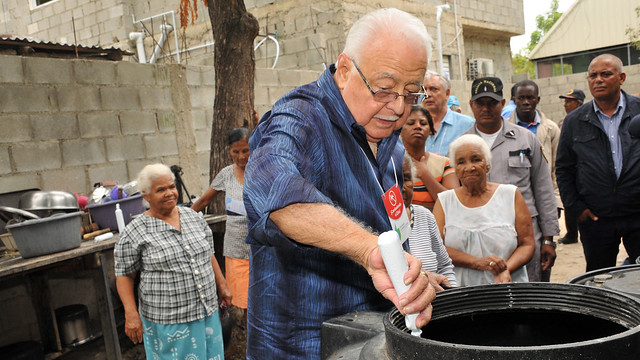
Between October 2017 and April 2018, a team of experts in SBC programming and vector control, led by the Breakthrough ACTION + RESEARCH Projects, was enlisted to categorise and refine the 30 behaviours. All of the Zika prevention messages were first grouped together by behaviour to create a condensed version of about 15 behaviors. Through an iterative review process including experts and discussions with partners, the list was distilled to 7 key behaviours: (1) apply mosquito repellent, (2) use condoms during pregnancy, (3) remove standing water, (4) cover water storage containers, (5) clean/remove mosquito eggs from water containers, (6) seek antenatal care, and (7) seek family planning counseling. (The final 2 behaviours (of the 7 total) are "enabling behaviours" that did not undergo the full review.)
Specifically, the review process included systematic keyword searches on Google Scholar, extraction of all relevant published articles on Aedes-borne diseases between 2012 and 2018, review of seminal papers, and review of gray literature. This review helped researchers determine each behaviour's potential effectiveness in preventing Zika transmission or reducing the Aedes aegypti population. The researchers also developed assessment criteria to delineate the ease with which the intended population could adopt each behaviour, including: required frequency; feasibility of the behaviour; and accessibility and cost of the necessary materials in the setting (e.g., a brush to scrub a water-storage container). The behaviours were refined through a consensus-building process with USAID's Zika implementing partners, considering contextual factors.
As reported here, a critical part of the endeavour was consensus building with partners across disciplines (e.g., public health, entomology, medical, and other technical area experts) and across response (e.g., those involved in mass media, service delivery, and community engagement) throughout the process, ensuring input from those working on the ground. Partners requested focusing on behaviours that families and communities could do themselves ("locus of control" at the household). Points of contention often centred around behaviors that were being promoted already and were perceived by partners to be effective but had mixed evidence.
The findings and conclusions for Zika SBC programming are presented in the article for each of the 7 behaviours. For example, seeking antenatal care enables counseling on Zika prevention by trained healthcare providers, allowing for early diagnosis and treatment, as well as access to information about effective protective measures to reduce the risk of transmission of Zika from mother to child.
These results were summarised in the Zika Prevention Behavior Matrix (see Related Summaries, below) and a Technical Specifications Content Guide, which details the evidence-based technical requirements and steps to follow for each of the 7 behaviours. Available in English and Spanish, the documents are available to the public via an interactive digital platform (at Related Summaries, below) that guides users through the evidence, messaging, and technical specifications in a user-friendly way. In addition, a job aid has been developed to guide outreach workers and volunteers during household visits to maximise the uptake of the recommendations in the Zika Prevention Behavior Matrix. A training-of-trainers curriculum on interpersonal communication skills for outreach workers has also been developed.
Global Health: Science and Practice, September 2019, 7(3):404-17; https://doi.org/10.9745/GHSP-D-19-00188 - sourced from "Prioritizing Behavioral Messages During the Zika Crisis", by Stephanie Desmon, October 7 2019; and email from Jessie Pinchoff to The Communication Initiative on October 29 2019. Image caption/credit: Antonio Isa Conde, Minister of Energy and Mines in the Dominican Republic, shows onlookers how to protect themselves from the Zika virus. Photo: Government of the Dominican Republic
- Log in to post comments