











































An Evaluation of the 2016 Influenza Vaccination in Pregnancy Campaign in NSW, Australia
National Centre for Immunisation Research and Surveillance (Carlson, Dey, Beard); University of Sydney (Carlson, Dey, Beard)
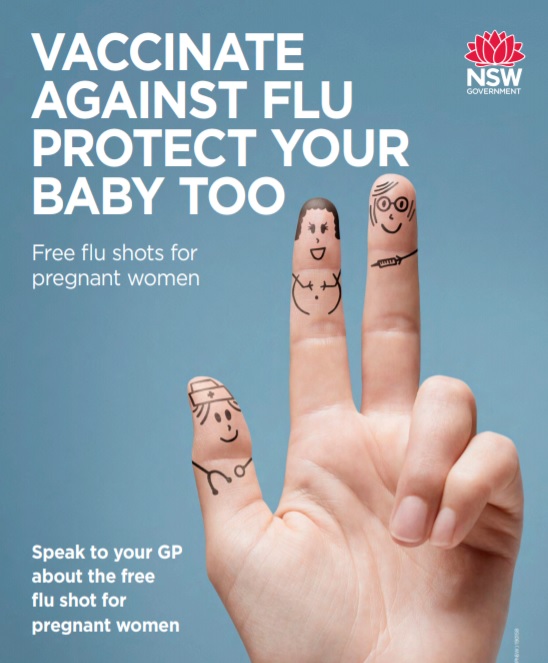
In an effort to improve uptake of influenza vaccine among pregnant women in Australia, the New South Wales (NSW) Department of Health (NSW Health) implemented a public information campaign that involved 3 different brochures, traditional media (television and newspapers), and social media (Facebook and Instagram). This paper evaluated the 2016 public information campaign to assess its reach and to identify issues that could be addressed in future campaigns to increase vaccination uptake.
The mixed methods study entailed a search of Factiva, ProQuest Global Newsstream, and Google News for news articles relevant to the 2016 campaign. The researchers reviewed information provided by NSW Health about NSW-Health-initiated social media activity relevant to the campaign, and they also assessed engagement with campaign messages using publicly available information.
- 31 news articles were published in traditional media between April and August 2016. The researchers found considerably more traditional media coverage of the campaign after the second NSW Health press release in August 2016, which described a "spike" in influenza cases and outlined what was happening in vulnerable populations due to influenza, compared with the first press release in April 2016, which focused on what can happen to pregnant women if they get influenza while pregnant.
- A single campaign advertisement on the NSW Health Facebook page ("The risk of premature labour and delivery is increased in pregnant women with the flu. Don't risk it. Speak to your GP about a free flu shot.") had 449,609 impressions, with a click-through rate to the NSW Health website of 0.4%.
- 16 sponsored articles were posted on Facebook, and 6 sponsored images were posted on Instagram, with relatively limited engagement.
Between September and October 2016, the researchers surveyed 71 pregnant women at the antenatal clinic of a large tertiary hospital in Sydney to estimate influenza vaccine uptake during pregnancy, identify key information sources, and understand knowledge and attitudes regarding influenza vaccination. Of those surveyed, 90% were aware that pregnant women can receive an influenza vaccine during pregnancy, with 54% reporting they had been vaccinated in their current pregnancy. Of those who were vaccinated:
- 95% (36/38) agreed or strongly agreed that influenza vaccination in pregnancy is safe for the mother, and 79% (30/38) agreed that it is protective for the mother.
- 71% (27/38) agreed or strongly agreed that influenza vaccination in pregnancy will protect the fetus; 79% (30/38) disagreed or strongly disagreed that influenza vaccination in pregnancy is dangerous for the baby.
Many women, particularly those who were unvaccinated, were uncertain about the effectiveness and safety of influenza vaccination in pregnancy. In terms of information sources:
- Midwives were the most common source of information (47/64); however, only 51% (24/47) of women who had discussed influenza vaccination with a midwife had been vaccinated. General practitioners (GPs) were also a major source of information, with 43/64 women discussing influenza vaccination with a GP; almost two-thirds of these women reported being vaccinated (27/43, 63%).
- One in two women (32/64) who were aware of the recommendation to have an influenza vaccination reported they had seen the advice on the internet; however, more than half (18/32, 56%) of these women remained unvaccinated.
- A brochure was a source of information for just over half (35/64, 55%) of participants who were aware of influenza vaccination in pregnancy, and 18 of these women (51%) had been vaccinated. Just over three-quarters (27/35, 77%) of the women who had read about influenza vaccination in a brochure had read at least one of the 3 brochures developed by NSW Health, and 63% (17/27) of these women reported that the information in the brochures helped them to make a decision about vaccination. These women were either vaccinated (15/17, 88%) or planning to be vaccinated (2/17, 12%).
Key takeaways:
- Both traditional and social media platforms can be used to promote influenza vaccination for pregnant women, although there are challenges to achieving high reach of messages via both methods. Because it is difficult to achieve traditional media coverage of immunisation messages before the start of the influenza season, social media may be an appealing alternative communication channel.
- In this campaign, social media content that related to the health of both mother and baby was more frequently engaged with than content related solely to the health of the baby. Pregnant women have been shown to perceive influenza as more of a risk to themselves than their baby, so campaigns should include information about the risks to both mother and baby in a single resource.
- Public health campaigns that aim to use social media could attract social media users to their content by having engaging and clear information that leads users to click on the content for more information. Social media campaigns should also be interactive, by inviting viewers to like, comment on, or share the content. Multipronged social media strategies using several tools as complementary approaches can reinforce and increase the impact of social media campaigns on behaviour change.
- Press releases issued before the peak influenza season are warranted to raise awareness and encourage vaccine uptake. However, they should be followed with later media releases that highlight increased influenza activity; later releases are more readily personalised and likely to achieve greater media uptake.
- Based on the findings, the researchers recommend further studies to inform tailored programmes to improve midwives' knowledge of, confidence in, and advocacy for vaccination during pregnancy.
In conclusion, self-reported vaccination coverage in this study was higher than previous NSW estimates, "but still suboptimal. Further efforts are required to understand and address provider and patient attitudes and concerns about influenza vaccination in pregnancy, especially regarding effectiveness and safety."
Public Health Research & Practice. 2020;30(1):e29121908. Image credit: NSW Health
- Log in to post comments