











































Evaluation of the NSW Influenza Vaccination Program for Children aged 6 Months to <5 Years
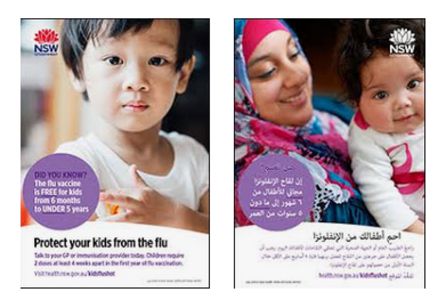
Influenza contributes substantially to the global burden of paediatric severe respiratory illness. Conducted by Australia's National Centre for Immunisation Research and Surveillance (NCIRS), this evaluation aimed to assess the implementation (process evaluation) and early impact (coverage and vaccine safety) of the influenza vaccination programme for New South Wales (NSW) children aged 6 months to less than 5 years during April to September 2018. The present summary focuses on the communication elements identified in the evaluation (e.g., demand issues as opposed to supply issues).
The process evaluation, which aimed to assess awareness, perceptions, and experiences of relevant stakeholders during the first year of the programme's implementation, was conducted in 3 modules:
- Opinions of general practitioners (GPs) and other professionals working in the primary healthcare area in NSW were sought via an online survey conducted from October 15 – November 30 2018. This survey was distributed via HealthEd, a private health education provider.
- With regard to knowledge and awareness, there were different ways used by respondents (n=229) to inform parents of eligible children of the programme. The majority (73.9%) reported that they did not actively contact parents but provided opportunistic influenza vaccination to eligible children. Of the remainder, 11.0% (24) reported sending letters to parents, 10.1% (22) contact via SMS text messages, 8.3% (18) via phone calls, and 3.2% (7) via emails to parents. Other reported ways of providing information on the programme to parents were: using recall lists on Medical Director; informing parents during consultation; educating parents when giving other vaccinations or services; posters in surgery/waiting rooms; handouts to parents; Facebook; and website posts. The majority of the 229 respondents reported that parents of eligible children were aware that free influenza vaccine was available (63.6% agreed or strongly agreed), but 25% reported that parents were not aware of the programme.
- With regard to attitudes, most respondents reported that the vaccination programme was well accepted by parents of eligible children (68.7% agreed or strongly agreed) and by providers (85.1% agreed or strongly agreed).
- Between October and November 2018, 19 stakeholders were interviewed via telephone. They included representatives of the NSW Health Immunisation Unit, representatives of Primary Health Networks (PHUs) and Public Health Units (PHUs), and a key immunisation expert. Knowledge and awareness issues: While NSW Health promoted the vaccination programme through a number of information resources, many of which were published on their website, not all respondents were familiar with these resources, and their personal assessment about the quality of the resources varied. Eight of 15 stakeholders reported parents' and healthcare providers' lack of awareness of the availability of free influenza vaccine, hesitancy around vaccination, and misperceptions regarding vaccination to be key barriers. Many stakeholders reported they were informed about the programme in early 2018, either via email communication or through regular teleconferences with the Ministry of Health. Seven of 15 said it was adequate notice for them to prepare.
- Thirty parents of children hospitalised for influenza between July 2 – October 25 2018 in 5 tertiary referral hospitals participated in an online survey during or after discharge. Most children aged over 6 months for whom influenza vaccination status could be verified (17/20, 85%) were not vaccinated. Of the 18 parents of children eligible for free vaccination in 2018, 14 (78%) were aware that vaccination was free for children their age. These parents did not perceive access to vaccination to be a major barrier to influenza vaccination. Rather, the main barriers identified were: (i) concerns about the safety of influenza vaccine for children (parents were more hesitant and less supportive of influenza vaccination than other National Immunisation Program (NIP) childhood vaccines); and (ii) lack of recommendation from a healthcare provider. GPs were the most commonly reported source of information on and recommendation to vaccination. However, most parents did not receive a recommendation to vaccinate their child, despite 83% (25/30) reporting that their child had consulted a GP at least twice in the previous 12 months. The second most commonly recalled source of information regarding vaccination was the child's My Personal Health Record (the Blue Book), though some parents noted no mention of influenza vaccination there. Finally, despite their child having been hospitalised for influenza, only half (13/25, 52%) of the parents reported having received a recommendation to vaccinate their child in the future. Despite many not recalling receiving a recommendation, most parents surveyed planned to vaccinate their children in future years. Some, however, were still undecided and needed more information about the safety and efficacy of influenza vaccination.
In 2018, influenza vaccination coverage increased significantly for both Aboriginal and non-Aboriginal children, reaching 26.0% and 25.3% respectively. In 2018, the proportion of children recorded as receiving their first-ever dose of influenza vaccine was also higher in all children compared to previous years. While the NCIRS calls the observed vaccine effectiveness "encouraging", they recommend that the programme is implemented for at least 3 years before attempts are made to measure the impact on the burden of disease.
Selected recommendations include:
- Boost awareness among immunisation providers (especially GPs) and parents about influenza vaccine safety, effectiveness, and potential side effects through media campaigns (e.g. radio, TV, social media).
- Use photos of children of culturally and linguistically diverse (CALD) backgrounds in campaign materials, and specifically target CALD media.
- Get midwives/child and family health nurses/nurse immunisers to advise new parents about influenza vaccination and where it is available.
- Develop videos and other effective communication resources for providers and parents outlining statistics on children with severe influenza and effectiveness and safety of the vaccine; these could be made available via NSW Health website.
- Improve clarity in resources for immunisation providers regarding influenza vaccination for seriously ill children (e.g., if on chemotherapy).
- Encourage immunisation providers, particularly GPs, to actively recall children for influenza vaccination - e.g., by sending SMS to parents.
NSW Government website, September 27 2019; and email from Sonya Ennis to The Communication Initiative on October 15 2019. Image credit: NSW Government
- Log in to post comments