










































Centro para la Prevención y Educación del SIDA (CEPRESI)
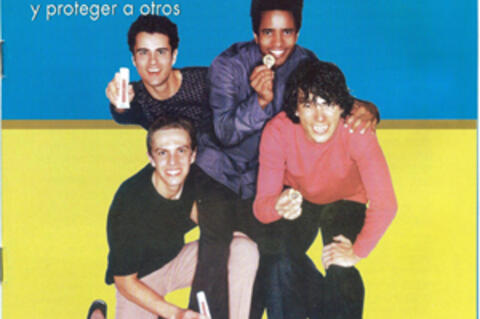
Centro para la Prevención y Educación del SIDA (Center for HIV Prevention and Education) (CEPRESI) is a Nicaraguan community-based organisation working toward HIV prevention for "sexually diverse" populations such as men who have sex with men (MSM). CEPRESI was founded as a voluntary community group in 1993 to respond to the lack of HIV prevention programmes for MSM in Nicaragua. In 2005, the organisation was awarded a grant from the Swedish International Development Cooperation Agency (SIDA) to start educational programmes on sexual and reproductive health designed to reach young men in secondary schools - addressing the complex social and health issues of masculinity, risk, and HIV.
According to organisers, in Nicaragua, as elsewhere: traditional gender roles assign health-seeking behaviour to women; men are less likely than women to actively engage in changing behaviour and to access health care, particularly preventive services. CEPRESI developed an approach that addresses these challenges and focuses on HIV prevention in the male community for a spectrum of sexual practices: heterosexual, bisexual, and homosexual practices, as well as male sex with transgender (TG) people. The organisation decided to build programmes from a gender-based perspective, taking into account the way masculinity is socially constructed and assessing how dominant views of masculinity are a key social factor driving HIV transmission in the general population. Thus, the organisation focuses on safer-sex practices, linking them to the promotion of healthier models of masculinity.
Specifically, CEPRESI simultaneously implements media and social marketing campaigns to address social determinants of risk and outreach programmes that reach out to youth as well as communities and settings where data revealed concentrations of men at greatest risk. CEPRESI achieved this by developing and putting into practice a comprehensive strategy with 4 angles:
- Social communication and advertising to deconstruct the traditional role of masculinity and to promote a new one based on more positive values - Television spots, radio programmes, road billboards, participation in festival parades, education fairs, and in some cases protest demonstrations have been used to provoke public discussions on the role of men in Nicaraguan society. Another example (from CEPRESI's peer education programme): "Jorge is a serious young guy, married with two children. He and his co-worker Javier, an openly gay man of the same age, are standing in the lobby of a small movie theater in Managua that screens heterosexual adult-content movies nonstop for an audience of only men. As customers walk through, Jorge or Javier approach them for a short chat about life, emotions, and safer sex. These conversations last no more than 10 minutes and end with condoms, lubricants, and information and referral flyers changing hands....For self-identified gay men, peers like Javier offer support and counseling on HIV prevention as well as referrals to services that can help them deal with violence and discrimination. For men who identify themselves as heterosexual or bisexual, or decline to declare a sexual identity, talking to Jorge is a way to engage in conversations on real sexual practices without the fear of being stigmatized."
- Educational sessions and peer-based actions for boys in public schools that link models of masculinity to gender equality, healthier sexuality, and HIV and STI prevention - With the support of the United Nations Children's Fund (UNICEF), CEPRESI implements the Teenagers in Action in Favor of Sexual and Reproductive Health Thanks to a New Vision on Masculinity programme, reaching up to 9,600 teenagers in the eastern region of the country. Male teenagers are invited to attend a series of sessions (workshops, video forums, knowledge contests) to discuss male roles, gender inequities, ethics and values, sexuality, and HIV transmission and protection; with the help of teachers, selected male students are invited to become sexual health peers or "promoters." These promoters become an ongoing source of information and leadership for the student body throughout secondary school life.
- Outreach activities for MSM to promote sexual behavioural changes in community-based settings, social networks, and community spaces - example: parents and others who support MSM are encouraged to create their own networks. They participate in training workshops and informal gatherings where they can chat. Skill-building sessions on sexual diversity, human rights, ethical values (respect, equity, non-discrimination), self-esteem, and assertive communication help them face community criticism. The facilitator eventually suggests having discussions on domestic and gender violence, normally taboo subjects.
- Comprehensive sexual health services for men in a friendly atmosphere.
HIV/AIDS, Gender, Rights.
Research conducted by the United States Agency for International Development (USAID) in 2008 found that MSM in Central America experience homophobia, persecution, restrictive laws, and limited human rights, stigma, and discrimination, which all contribute to their increased vulnerability to HIV. This discourages them from seeking out the few HIV prevention, treatment, and other essential services that are available, which are rarely adequate to cover the needs of this population.
Although HIV prevalence among Nicaraguan MSM was many times higher than among the general population, in 2004, funds from the Global Fund to Fight AIDS, Tuberculosis and Malaria (GFATM) for Nicaragua allocated no more than 3% of the resources to HIV prevention with MSM. This prompted CEPRESI to address two challenges: identifying MSM as a specific group for HIV prevention in the national strategy, and generating evidence on the evolving impact of HIV on MSM in Nicaragua. Advocacy efforts and media campaigning against homophobia and for recognition of sexual diversity, reportedly led mostly by CEPRESI, resulted in an increase of up to 10% for resources for MSM in the GFATM Round 8 grant of January 2010.
CEPRESI website, September 14 2011.
- Log in to post comments