










































Adolescents 360 Project
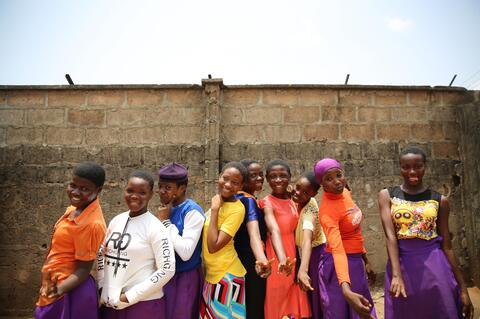
Launched in January 2016, Adolescents 360 (A360) is a four-year consortium-led project headed by Population Services International (PSI). The project aims to increase demand for, access to and uptake of voluntary modern contraceptives among adolescent girls (15-19 years old) in Ethiopia, Nigeria, and Tanzania. Fusing public health, human-centred design, adolescent developmental science, socio-cultural anthropology and marketing, A360 is developing adolescent and youth sexual and reproductive health (AYSRH) interventions for girls, by girls. A360 hypothesises that AYSRH interventions can catalyse high impact solutions that can be adopted and scaled by partners and governments worldwide.
Through its transdisciplinary approach, A360 seeks to transform the fundamental framework of how targeted AYSRH models are designed. According to Jennifer Pope, PSI Director of Family Planning and Reproductive Health, “Historically, health organizations defined problems and solutions for youth, rather than with them. This creates significant risks for misinterpretation of what the problem is and makes assumptions about the types of solutions that might work best. A360 turns to youth as not only the subjects, but as equal partners in conceiving, developing, and implementing the project. Our young designers are assets to A360 and co-creators alongside adult allies. This constitutes the heart of our operations — ensuring A360’s impact while building collective project efficacy and ownership.”
A360’s design aligns across four streams: emboldening providers to deliver care in a youth-friendly, unbiased manner; fostering welcoming environments across health facilities; ensuring clarity of disseminated communications material; and activating community members to serve as allies for women and girls seeking care.
The project is being implemented in the following 5 phases which form part of the human centred design approach:
- Inception - Project recruitment and start-up, followed by market-landscape analyses and gender-power analyses in each country.
- Inspiration - Formative research and insight synthesis conducted by design teams made up of researchers, programmers, designers and young people.
- Ideation - Design teams develop and test prototypes for increasing access to and uptake of modern contraception among 15-19 year old girls.
- Pilot - Successful prototypes are refined and tested more rigorously and for longer periods, for potential to scale.
- Scale - Successful pilots taken to scale in collaboration with government and local partners, leveraging existing service delivery channels and networks.
From inception to scale-up, each project element requires national and country-level advocacy, monitoring and evaluation, application of design standards for decision-making and ongoing learning and capacity-building.
Specifically, A360 is guided by the following approach:
- Works not only for, but with adolescents: A360 flips traditional public health models by placing adolescents, and their key influencers, at the centre of the design process. Through HCD, A360 mines insights to understand how adolescent girls think and feel in each country and cultural context, informing the tailored solutions developed to address their unique needs (the inspiration/research phase). A360 partners with girls’ parents, peers (including boys), health providers, community leaders and faith figures to grasp how cultural, societal and religious norms influence girls’ perception of and behaviour surrounding contraceptive use. The HCD approach enables designers to connect the dots in new ways that incorporates the empathetic experience as a key programmatic ingredient.
- Understands that behaviour change requires shifting societal norms surrounding contraceptives and pregnancy - Addressing the government policies and social, developmental and normative factors that lead to early and unintended pregnancy is critical to improving the culture of acceptance.
- Involves the private and public sector to reach sustainability - With more adolescent girls on this planet today than ever before, the market need for contraceptive access will only grow. Insights gained in A360 will support how PSI engages with and strengthens the private sector to improve access to contraceptive services. Moreover, A360 embeds adolescent-friendly health services within government infrastructure to reinforce scale and efficacy long after the four-year project ends.
- Adapts its interventions to the context of the country the project works in. The following are examples of country activities. All countries have completed the research and pilot phase and as of January 2018, A360 is transitioning to its adaptive implementation phase across the three target countries.
- In Nigeria, A360 has piloted 9ja Girls, a clinic-model programme that, via girls only spaces, offers one-on-one counselling and skills training courses. 9ja Girls leverages cross-sectoral partnerships, employs trainings to ensure youth-friendly providers are at the frontline of the programme’s health services and integrates facilities into public health and/or unused spaces. Since the September 2017 pilot, 9ja Girls has recorded a 55 percent in uptake of condoms.
- In Tanzania, A360 has expanded on Kuwa Mjanja (Be Smart), a programmatic blend of in-clinic and out-of-clinic events (i.e. pop-up clinics hosted near health facilities) to engage girls and their influencers in dialogue surrounding contraceptive use. Since the September 2017 pilot, Kuwa Mjanja has reached a 58 percent conversion rate via in-clinic events, and 52 percent conversion rate via out-of-clinic pop ups.
- In Ethiopia, A360 has piloted Smart Start, an approach that structures dialogue surrounding contraceptives on goal orientation through financial planning. Through Smart Start’s “baby calculator,” clients map out how much a child would cost to understand the monetary value sourced from delaying pregnancy. Since the September 2017 pilot, the programme records that it takes one site visit for a girl to adopt a contraceptive method.
For more information about A360 - including lessons and replication resources - please visit A360 website. For a general overview of the project’s objectives, please visit the A360 brochure.
Reproductive Health, Youth
Rationale:
The need for contraception among adolescent girls is high. In sub-Saharan Africa alone, 40% of girls and young women want to use contraception but aren’t able to access it. Within the region, girls aged 15-19 account for 16% of all births each year, an estimated 2.2 million unintended pregnancies, and 25% of all unsafe abortions. Complications resulting from pregnancy and childbirth are a leading cause of death for this age group. About 70,000 adolescent girls die annually in developing countries from pregnancy-related complications. For a girl under 15, the risk of maternal mortality is double that of a woman over 20 years old.
Impact to date:
The project, which set a goal of closing up to 80 percent of the existing contraceptive need-gap among adolescents in targeted geographies, has recorded notable conversion rates. From September through December 2017 - the three months following the project’s six-week pilot launch - A360 served 4,813 girls with a modern contraceptive method, a figure that comes even before the project has entered its actual implementation phase. PSI’s leadership sees this as a powerful indication of what can be done when girls are put at the helm, to lead in partnership with experts for AYSRH breakthrough.
Population Services International (PSI) leads A360 alongside IDEO.org, the Center on the Developing Adolescent at UC Berkeley, and the Society for Family Health Nigeria. The project is funded by the Bill and Melinda Gates Foundation and the Children’s Investment Fund Foundation.
A360 Brochure, and A360 website on February 16 2018 and email from Emma Beck on March 1 2018.
- Log in to post comments