











































A360 Open Source
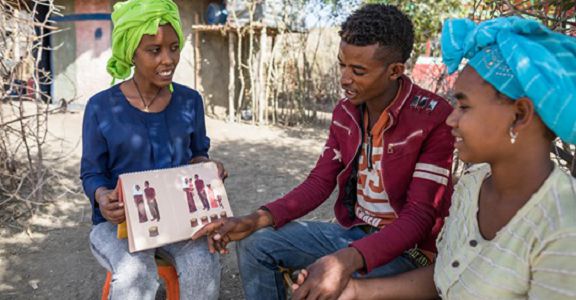
"...we're here with a true-telling of our youth-powered journey..."
Adolescents 360 (A360) is a 4.5-year (January 2016-June 2020) project that fuses adolescent and youth sexual and reproductive health (AYSRH) with adolescent developmental science, cultural anthropology, social marketing, and human-centred design (HCD). The goal is to increase demand for and voluntary uptake of modern contraceptives among 15- to 19-year-old adolescent girls across Nigeria, Tanzania, and Ethiopia. A360 is the product of a consortium including Population Services International (PSI), IDEO.org, Society for Family Health Nigeria, Center on the Developing Adolescent, and Triggerise; it is funded by the Bill & Melinda Gates Foundation and the Children's Investment Fund Foundation (CIFF).
In May 2019, these collaborators created an online resource repository intended to make the design and implementation process of the A360 project open to all in order to support larger collective and ongoing dialogue about meaningful youth engagement for SRH programming. It shares A360's applicable resources, as well as stories of some of the project's trials and successes that others can use to enrich youth programming.
The resources, which can be searched and/or filtered, are organised according to A360's 4-phase, HCD-focused approach:
- Inquiry - What did the findings of 280+ young researchers scientists, designers, and public health experts reveal?
- Insight Synthesis - Transdisciplinary experts and young analysts translate insights into new opportunities for design.
- Prototyping - What worked and what didn't? Learn from A360's rapid mini-experiments.
- Adaptive Implementation - See how adaptation has formed the foundation of A360's implementation and scale-up.
The resources on this repository illustrate how A360 brings science to the creative design process and eventual solutions through:
- Placing adolescents, and their key influencers, at the centre of the design process.
- Fostering meaningful and lasting youth-adult partnerships.
- Embedding HCD within a disciplined marketing process.
- Employing anthropological and consumer marketing lenses to better understand adolescent audience segments and transform that understanding into insights.
- Engaging the private sector to develop a model for filling gaps in the market.
- Addressing the social, developmental and normative factors that lead to early and unintended pregnancy, and improve the culture of acceptance of contraception.
Publishers
Posting from Claire Cole to the IBP Knowledge Gateway, May 29 2019; email from Emma Beck to The Communication Initiative on October 25 2019; and A360 Open Source and A360 project brief [PDF], both accessed on October 25 2019. Image credit: A360 via Facebook
- Log in to post comments