










































Online Activism and the Real World: Where Do We Meet?
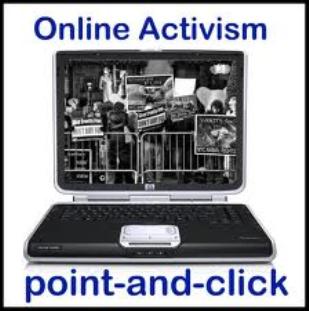
For the last couple of months, a number of bloggers have been sharing articles, blog posts at this website on issues including media freedom, online censorship, women in media and public health. I would like to take the liberty of grouping us bloggers as "online activists" since through our posts and articles we are active in demanding answers and calling for change.
While there are some whose real world work relates to online activism, and, thus, they contribute both virtually and also in "reality", some of us -like myself - have our activism limited to the cyberspace. Columnist Malcom Gladwell famously asserted that online activism and "Facebooking" demands for reform will not bring a revolution to successful conclusion - while the Arab spring was in full swing. He quickly became the bitter old generation for those who looked at events in the Middle East and invested a lot of faith and hope in the power of social networking and cyber activism.
Whether Gladwell is right or wrong is a different issue, but he does raise an important question: "Are cyber campaigns comparable to the real world action?" It is easy for me to sit in an air conditioned room and type away while someone is toiling in the real world, working with sick children or facing violent crackdown. It would be dishonest to put myself on the same level as this individual who is faccing far more risk.
What about online activists in repressive regimes like China, Burma, North Korea, Iran? These activists and their work in spreading the word, creating networks and keeping the fight alive is admirable and deserves recognition. In many countries, they face almost the same level of scrutiny from their governments as the real world activists. Do we cyber activists in the developed world face a similar level of threat or harassment? Certainly not.
The point is, we have to stop glamorizing all and every cyber activist and give credit where it is due. Recognizing the sacrifice of real heroes will add to the validity of online activism as a real force and help online campaigns be more effective.
Assessing the effectiveness of online campaigns, especially when it is about political change and human rights, is a tough call. It is almost impossible to develop parameters to measure online campaigns because of numerous variations based on location, culture, legal system, government, etc. But that should not be taken as a sign that online campaigns are far too fickle to be counted. Even when success cannot be measured or defined, online campaigners have made lot of difference. The Middle East a good example.
Instead of going all out negative against online campaigning and activists as the elitist or hippie way of bringing revolution, or being a pessimist like Malcom Gladwell, we have to find a balanced middle ground. Recognize the real cyber heros and keep things in perspective. It is wrong to puff up fake heroes like the Gay Girl in Damascus while real activists in Bahrain and elsewhere are sentenced to long prison terms.
Comments

excellent point
I thought this was a good approach and referred to it in my own blog:
http://thoolen.wordpress.com/2011/10/01/on-line-activism-and-the-real-w…
“Hans Thoolen on Human Rights Defenders”
http://thoolen.wordpress.com/
- Log in to post comments