











































How to Partner for Development Research
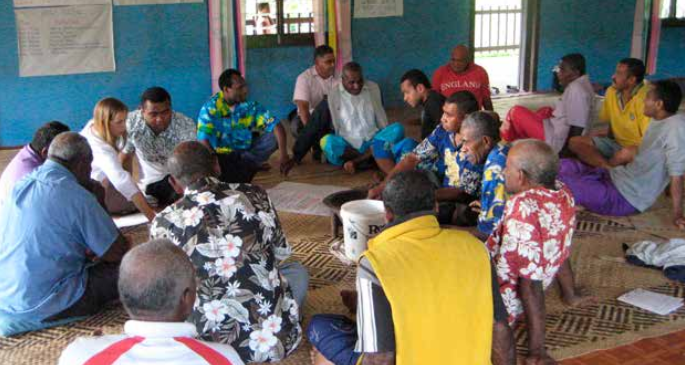
"In this Guide we intentionally value the practice of collaboration to carry out research. As described within this Guide, this way of working provides the greatest potential to create real changes in the contexts where NGOs work, generate evidence which is usable and contributes to development effectiveness, and to inform future development of policy and practice."
Featuring practical tools and case studies, this resource seeks to support good practice for research partnerships in order to generate evidence to influence policy and practice in the international development sector. Recognising that effective partnerships require intentional and continuous management, the guide unpacks a broad range of partnerships along the collaboration spectrum and is meant to provide support throughout the partnership process.
The primary audience for the guide is development practitioners, including those working in non-governmental organisations (NGOs), and researchers, including those working within academic institutions - with a particular focus on the Australian development sector. The guide may also be valuable for others engaged in international development who are interested in setting up or participating in research activities, such as NGOs and researchers based in other countries, donors, individual consultants, and the private sector.
Following an introduction and a chart clarifying terminology to provide a basis for shared understanding about research partnerships, the guide is divided into 6 sections:
- Part 1 provides distinctions between different types of partnership relevant to research focused on international development.
- Part 2 offers some reasons why partnership is of value, especially for the agenda of sustainable development.
- Part 3 sets out practical advice to set up, maintain, and improve the process and outcomes of a research partnership.
- Part 4 summarises key guidance in the form of a checklist for partnership.
- Part 5 contains links to additional resources and references.
- Part 6 shows a range of different partnerships through a series of case studies.
The guide was commissioned by the Research for Development Impact (RDI) Network, a network of practitioners, researchers, and evaluators working in international development. Fostering cross-sector partnerships is a key objective of the RDI Network, which functions as a cross-sector platform for shared learning and action; this guide builds upon past work that has included the documentation of case studies and a conference on "Partnering for Impact on Sustainable Development". The guide was commissioned by the RDI Network and developed by the Institute for Sustainable Futures (ISF) at the University of Technology Sydney (UTS). In a series of networking events in Brisbane, Melbourne, and Sydney, the guide was launched with members of the RDI Network community.
55
"How to Partner for Development Research", by Kimberly Clarke, Research to Action, February 8 2018; and RDI Network website - both accessed on March 6 2018. Image caption/credit: "Women exploring their experience of WASH [water, sanitation, and hygiene] activities in their community." Source ISF - UTS (from one of the case studies featured in How to Partner for Development Research)
- Log in to post comments