










































Community Radio and Gender: Towards an Inclusive Public Sphere
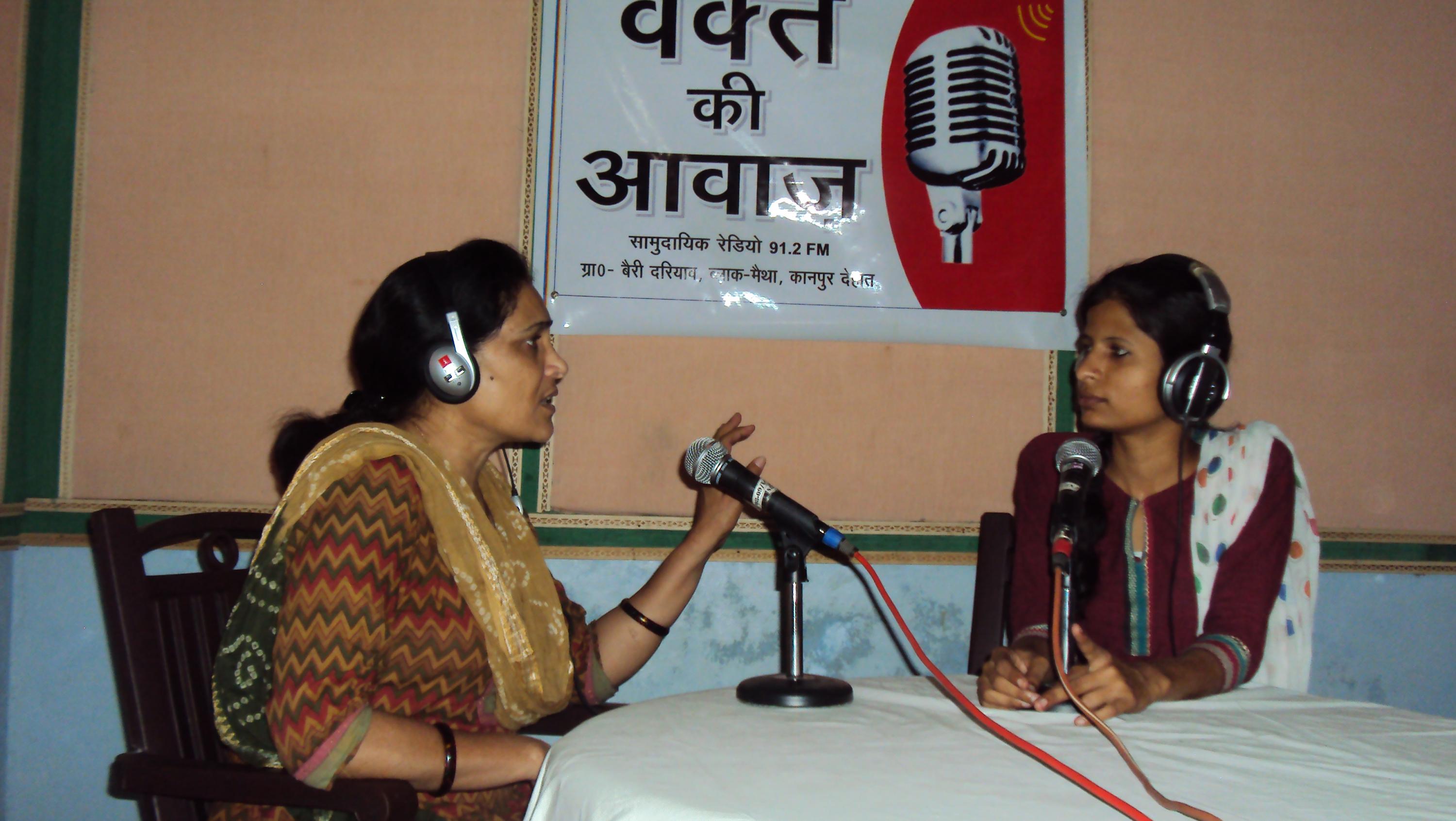
University of Hyderabad (Malik); University of Queensland (Bandelli)
"There still exist social hierarchies along the lines of caste, class and other oppressions that inhibit women from negotiating fair representation and equal participation on community radio. This is especially true in gender-mixed stations. While gender-specific programming that challenges gender stereotypes and promotes attitude and behaviour change is imperative, it is also important to incorporate women's perspective into all content, no matter what issue is covered..."
By examining the opportunities for and challenges facing women who participate in community radio (CR) in India, this paper offers insights into how CR has the potential to recast the dominant and gendered public sphere. It first examines the intersections of participatory communication for development (C4D) frameworks and feminist theorising, and how they have been influenced by debates and critiques of public sphere. Secondly, by examining the opportunities for and challenges facing women who participate in CR, it offers insights into how CR has the potential to recast the dominant and gendered public sphere. Thirdly, the authors look at the CR movement, policy, and practice in India and how it is endeavouring to shape the public sphere and mediascape. They analyse examples of women's participation in two CR stations - Sangham Radio and Radio Namaskar (see Related Summaries, below) - to accelerate the process of their gaining a "voice" that matters in the public sphere. Obstacles that hinder the empowerment process are outlined and recommendations to enhance the inclusion of women in CR are proposed. The paper was presented at the India Media Symposium: Public Spheres, the Media & Social Change, organised by University of Queensland (Australia), Brisbane, between November 21-23 2012.
As the authors explain, CR is a participatory tool for communication and a platform where ordinary and disempowered people, through the engagement in daily media activity, assert their right to active citizenship. Research by the authors in selected CR stations in India over the years has shown that CR radio has helped in amplifying the voice of marginalised rural women, and many women caught up within feudal social structures are beginning, albeit slowly, to find a voice of their own. Some studies have also indicated that new information enables women to acquire awareness of their rights and of the conditions of other women, make informative choices, develop imaginative capacity about their future life, and plan group action. Through CR, women acquire new skills, such as computer literacy, information and communication technology (ICT) use, and reporting techniques, as well as establish new interpersonal relationships.
However rich the potential of this participatory tool, the authors note, in elaborating the intersections between the concepts of gender, development, and voice, the fact that "pre-existing power structures hinder an equal involvement to all members within the community, and also impede full interaction between the producers and receivers of messages". The everyday possibilities for women to freely engage in programme production are impeded first of all by the fact that women are discriminated against even as listeners because radio devices are monopolised by men; women are expected to be busy with domestic duties and children. Participation is hindered also by the fact that it is not culturally acceptable for women to stay out late at night and interact with male outsiders such as reporters. Being a radio reporter is per se a challenge to the cultural belief that technologies are a man's domain and to traditional gender norms that are not always fully questioned by reporters themselves. Also, younger radio volunteers seem to accept that they, once married and relocated to their husband's village, might have to renounce their wish to continue working as activists and as media professionals because of the opposition of their in-laws.
After a section of the paper reviewing CR policy and practice in India (and women's role within it as documented in several studies described here), 2 case studies are offered:
- Sangham Radio (SR), which is being run exclusively by economically poor dalit women from rural backgrounds. SR treats individuals, especially women and the groups within the community as repositories of tremendous amount of local knowledge on crops, soil, agriculture, foods, health, etc. Professional experts such as doctors, agriculture scientists, and bureaucrats are rarely featured on SR. The station provides culturally vibrant and locally prevalent expressions such as "bichapolla kathalu" (storytelling and singing by itinerant beggars). Many of these are not only in the local idiom, but also reflect the local social, economic, political, and cultural milieu of the region. "Programmes made in the Telugu spoken in the Telangana region and the songs and folk tales of the area have begun to evoke a sense of pride among the women". One member of the radio committee felt that making radio programmes has made women more confident. Because of the involvement of women in collective developmental activities, of which SR has also been a part, it has been observed in participating villages that women take part in Panchayat meetings.
- Radio Namaskar (RN), in which women participate as reporters, listeners, and programmes contributors. The goal is to enhance their possibility to enter the public sphere by addressing their communication needs on both directions of the communication flow: receiving information meaningful to their daily life and producing communicative acts. The speak out on social problems and local governance through these channels: (i) their phone calls to the Janata Darbar programme about irregularities in Anganwadi centres, teachers who arrive late to school, health issues, local livelihood opportunities, and personal and family problems, etc.; (ii) their actions as field reporters; (iii) their role as listeners' groups leaders. They also express skills and artistic inclinations, such as writing poems and singing, and engage in social activism (through interaction with the radio team, they develop the wish to "do something for people" and especially to support other women within the community. As RN reporters, they interact with activists, doctors, Panchayat representatives, students, and teachers. By going to the studio to record a song or simply to visit, listeners' groups women break their isolation and give them access to a wide range of information. Also, radio activity itself constitutes a subject of dialogue within the family. Through daily interactions with colleagues, listener groups, interviewees, and others, they strengthen their interpersonal communication skills. Reporters stress the importance of learning technical aspects and gaining familiarity with media dynamics, use of sources, and production of programmes. Also, awareness of the role of media as an agent of change has been gained.
As suggested by these case studies, the authors contend that, by engaging in CR activity, women "endeavour to challenge gender roles and reverse the cultural discourse according to which part of the population cannot be considered credible because of their biological sex. Women's position is enhanced within the family as long as relatives understand the value of their work and within the community their role as an agent of change is gradually being recognized. Also, as a result of improved knowledge of social texture and dialogue with the community, women develop the desire to work as agents of change and promote different forms of solidarity and civic engagement. Thus CR provides to women an autonomous space for discursive interaction, deliberations and negotiations leading gradually to political participation and collective action."
Recommendations to enhance the inclusion of women in CR:
- Women as listeners: The ownership and control of a radio set (now mobile phones that receive FM) rests disproportionately in the hands of men or children, and women who are busy with household chores and domestic duties do not listen as much or as attentively to radio programmes as men. One possible way to enlarge the listeners' base among women could be to encourage them to make their own programmes on the radio, especially those that deal with their issues and their perspectives on issues. Special listening sessions exclusively for women could also go a long way in redressing the listenership imbalance and allow women to discuss issues as well as to network with other women. Having more women CR reporters who engage in mobilising women to participate would also be a step forward in this direction.
- Women as producers of content: Through specialised, context-specific training efforts, the capacities of women to produce radio programmes could be enhanced so they acquire the technical skills and confidence to control their communications. "Only when the women would be sure that their point of view is respected, their voice has a value and a major role to play in any initiative, would they gradually come out and participate and exercise their freedom of expression." The training and radio programme production must accommodate women's daily agendas and provide spaces where they may leave their children safely when they are busy in the studios. If more women in the villages were trained in radio production, they could in turn be instrumental in involving other women of their villages in radio production.
- Women as decision-makers: CR stations should facilitate women's involvement at all levels of station management, particularly in areas of decision-making and technical skills. The authors feel that it would be productive for CR stations to have a policy in place that embraces respect for women and equality as one of its core principles.
- Portrayal of women on air: Inviting women as experts, transmitting messages around women's rights and gender justice, and having a no-tolerance policy for objectification of men/women are some steps that could be adopted to encourage fair and balanced representation of women on air. Gender sensitivity training could enable men and women to recognise and avoid patriarchal behaviour and discriminatory portrayals.
Email from Kanchan K. Malik to The Communication Initiative on July 17 2015; and "Strengthening Their Voice, and Participation As Well" [PDF], by Kanchan K. Malik and Daniela Bandelli, Vidura, July-September 2015, pps. 28-30. Image credit: Sharamik Bharti
- Log in to post comments