










































Urban Settings Do Not Ensure Access to Services: Findings from the Immunisation Programme in Kampala Uganda
School of Public Health, Makerere University College of Health Sciences (Babirye, Rutebemberwa, Kiguli, Nuwaha); Centre for International Health, University of Bergen (Babirye, Engebretsen)
"Previous studies on vaccination coverage in developing countries focus on individual- and community-level barriers to routine vaccination mostly in rural settings. This paper examines health system barriers to childhood immunisation in urban Kampala Uganda."
This paper describes a study conducted in Kampala, Uganda from June to September 2010 to explore health system barriers to childhood immunisation services using the World Health Organization (WHO) health system framework to analyse and present the findings using 4 building blocks: service delivery, human resource, finances and supplies, vaccines, and technologies. Mixed methods were employed with a survey among child caretakers, 9 focus group discussions (FGDs), and 9 key informant interviews (KIIs). Survey data underwent descriptive statistical analysis. Latent content analysis was used for qualitative data. Of the 821 respondents in the survey, 96% (785/821) were mothers with a mean age of 26 years.
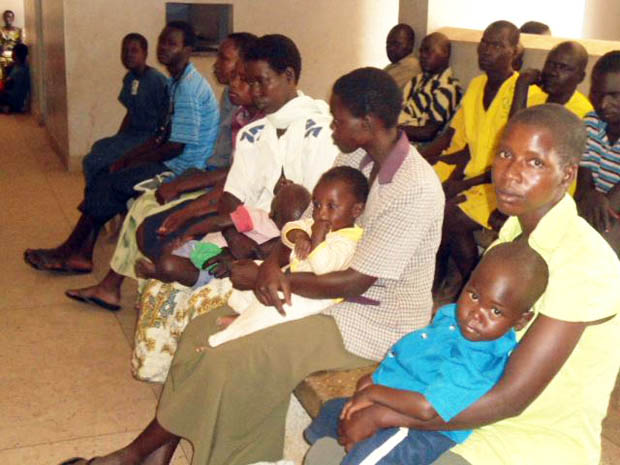
Poor geographical access to immunisation facilities was reported in this urban setting by FGDs, KIIs, and survey respondents. This, coupled with reports of few health workers providing immunisation services, led to long queues and long waiting times at facilities. Consumers reported waiting for 3-6 hours before receipt of services.
Amongst the communication-related findings: "Dissatisfaction with the number of providers engaged in immunisation service provision was expressed by those in charge of community mobilisation and among most participants in a few female FGDs....In addition to reporting that there were few service providers, consumers reported poor attitudes among some of them. This was expressed by most mothers in all female FGDs. The participants in the male FGDs did not report it, and most providers denied it. The poor attitude was reportedly manifested as 'verbal abuse' or 'poor or lack of communication with the consumers'. Mothers reported that although they went to immunisation facilities early as instructed by providers, they often waited for services with no explanation for the delayed services."
In conclusion: "Complex health system barriers to childhood immunisation still exist in this urban setting; emphasizing that even in urban areas with great physical access, there are hard to reach people. As the rate of urbanization increases especially in sub-Saharan Africa, governments should strengthen health systems to cater for increasing urban populations." One recommendation is that public-private partnerships which are currently being promoted for other child health programmes be strengthened.
Email from Mike Favin to The Communication Initiative on February 23 2015. Image credit: Transparency International
- Log in to post comments