










































Lessons from Polio Eradication
Faculty of Epidemiology and Population Health, London School of Hygiene and Tropical Medicine
"Ridding the world of polio requires a global initiative that tailors strategies to communities..."
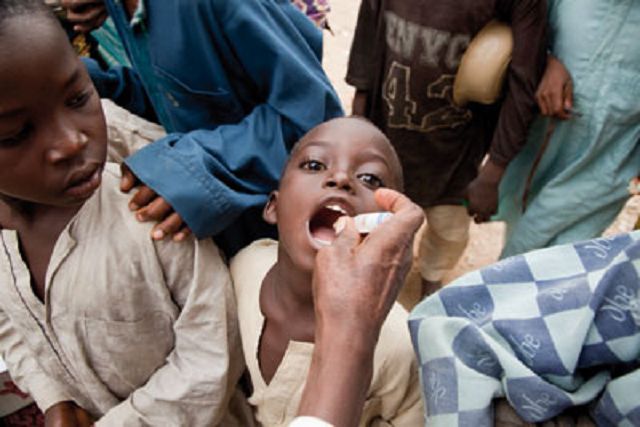
Vaccination campaigns to eradicate polio will overcome local resistance only if health workers listen to the concerns of marginalised communities and design communication strategies that take into account social and political complexities, say Heidi J. Larson and Isaac Ghinai in this Nature article (Volume 473, Issue 7348, pages 446-447).
The Global Polio Eradication Initiative (GPEI)'s efforts (some described here as perhaps too assertive at times, "alienating some local populations by seeming overly top-down in its approach") led to a 99% drop in the estimated number of cases between 1988 and 2001. However, the last 1% of cases has been difficult to wipe out. Anti-vaccine rumours in marginalised communities and a lack of political will are some of the key reasons. In Nigeria, for example, "religious and political leaders endorsed rumours that oral polio vaccine was an American conspiracy to spread HIV and cause infertility". Similarly, in India, rumours spread that the vaccine was being used to sterilise Muslims.
Prompted by several years of fieldwork (by Larson) with the United Nations on community acceptance of vaccines, the research team at the London School of Hygiene and Tropical Medicine has established an early-warning system to detect and investigate vaccine rumours and public concerns before they erupt into widespread vaccine refusals. The research points to 3 key lessons for the endgame of polio eradication and for other immunisation initiatives in the developing world:
- Integrate social and political analyses into feasibility assessments, strategic planning, and steering.
- Find out what is driving rumours and resistance.
- Design and monitor communication and engagement strategies that work hand in hand with technical strategies and enable local populations to feel ownership of their immunisation programme.
In both India and Nigeria, the key in moving vaccine rejectors (those responding to perceived external threats such as Western conflicts or minority status) to acceptors was public engagement. Didactic, mass-communication approaches - such as street banners, posters, and radio announcements - had been shown to do little to persuade the most marginalised and the resistant populations. Work by the GPEI in India's Uttar Pradesh state shows that campaigns can be successful if they work closely with formal and informal social networks or collaborate with local institutions. In Nigeria, understanding the influence of religious or political leaders has been essential, and the governor of Kano state vaccinating his child was a high-profile move to promote vaccination. Local barriers vary, say the authors, so different ways of engaging will work for different communities.
According to the authors, the GPEI has also realised that the effectiveness of engagement strategies need to be measured by the outcomes - namely, the number of children vaccinated and the number of polio cases - not just the number of community meetings or posters promoting vaccination and announcing immunisation days. Similarly, there has been a move to map key influencers of vaccine acceptance or refusal. In Kano, Nigeria, for example, each mosque, market, school, and household is plotted on a map and visited by vaccinators.
Despite the fact that "humans are as challenging, if not more so, than the virus itself", the public health community must not give up the fight or adopt costly long-term measures against the disease, argue Larson and Ghinai. Instead, it must learn from immunisation initiatives and ensure that concerns about vaccination are identified before they snowball into community-wide refusal.
"Polio Vaccine Campaigns Must Take Note of Local Concerns", SciDev.net, June 1 2011 - accessed July 23 2013. Image credit: Bill & Melinda Gates Foundation
- Log in to post comments