










































Coalition Building: A Cornerstone of National Advocacy, Policymaking and Effective Cervical Cancer Prevention Programs
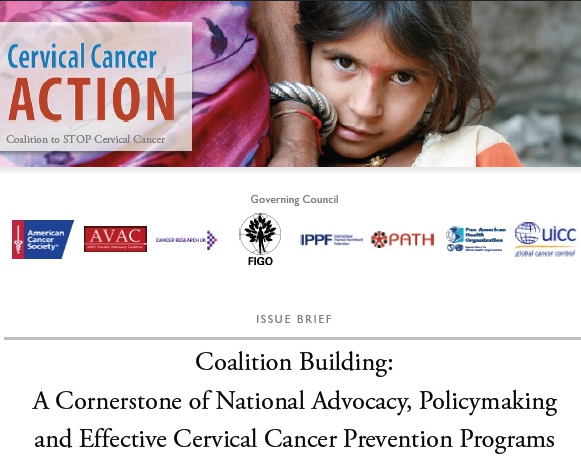
This brief, published by Cervical Cancer Action, is designed for civil society leaders seeking to expand access to cervical cancer prevention and control resources in their communities through coalition building. According to the document, cervical cancer is unique in its relevance to a broad base of stakeholders, including cancer advocates, vaccine programme managers, individuals fighting for increased gender equity, health rights advocates, women's health advocates, physicians, infectious disease experts, and many more. These groups may or may not have worked together on other issues. Yet experience shows that successful coalition building across disciplines and professions is key to accelerating access to cervical cancer prevention and control resources. This often means developing innovative partnerships between government and civil society to drive successful advocacy, national policymaking, and community-based programmes.
Strong coalitions have the potential to mobilise political will and financing, inform the policy process, and enhance the impact of community-based programmes. All of these elements are necessary for the rapid and equitable introduction of important health technologies. The brief outlines 4 key steps in coalition building:
Step 1: Survey the national landscape of cervical cancer prevention and control - In order to identify groups and individuals who can be allies and to identify potential action steps, it is critical to map the current state of cervical cancer prevention in your country, including any efforts underway to improve current policies and programmes.
Step 2: Identify allies and frame the issue - Successful outreach requires framing cervical cancer prevention and control from a variety of perspectives. Human rights activists may view cervical cancer control through the lens of equitable distribution of life-saving interventions. Reproductive health organisations may look at the delivery of Human papillomavirus (HPV) vaccines and screening as a means of reaching populations for other important health interventions. Physicians and medical associations might be looking to improve health outcomes for their patients. Parliamentarians may engage in the issue as a means of reducing mortality in their district. Gathered together in a focused coalition, these members can contribute to a rich variety of perspectives, experience, and urgency for action.
Step 3: Set short- and long-term goals - Identify stakeholders and action items. Decide how success will be measured and what the timeline for achieving each goal will be. Consider the three main areas where other cervical cancer coalitions have had success:
- Building awareness: Many potential allies may be unaware of recent developments in cervical cancer prevention. Providing accurate, evidence-based information is the first step to garnering support.
- Developing and advocating for clinical guidelines: Evidence demonstrates that a comprehensive approach that includes vaccine and expanded options for screening and treatment is the most effective form of prevention and control of cervical cancer.
- Influencing national planning processes: Many countries have National Cancer Control Plans that are periodically updated and used to guide health policy and spending. Advocates can work together to ensure that cervical cancer is included in these plans. Where such plans do not yet exist, the coalition can initiate their drafting.
Step 4: Connect globally - Global advocacy and knowledge sharing can be an important source of support for national coalitions. Over the past several years, a number of efforts have been established to support advocates and practitioners working in cervical cancer, namely the Cervical Cancer Action coalition and the HPV Vaccine Community of Practice.
Click here to download the full brief in English in PDF format.
Click here to download the full brief in French in PDF format.
Click here to download the full brief in Spanish in PDF format.
Cervical Cancer Action website on July 30 2012; and International Cancer Control Partnership website, August 25 2021.
- Log in to post comments