










































Executive Summary: Independent Evaluation of Major Barriers to Interrupting Poliovirus Transmission
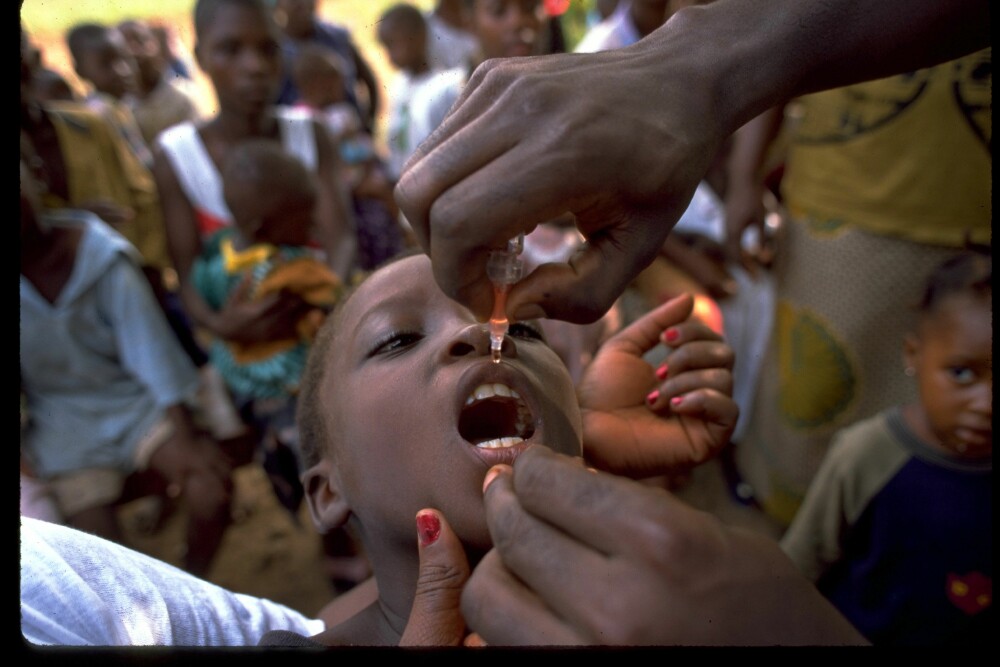
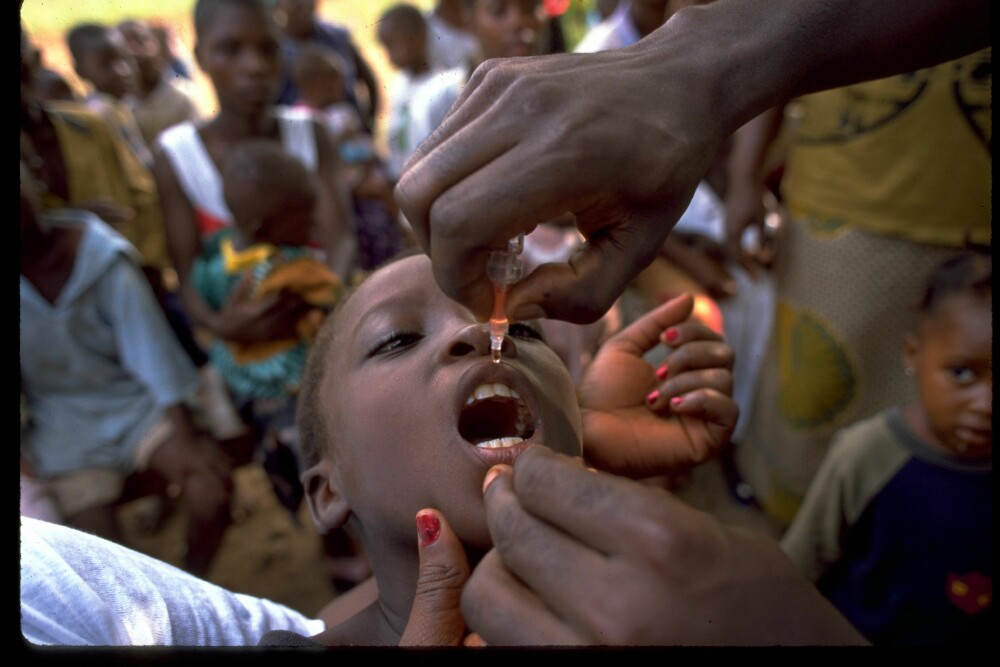
This 16-page Executive Summary offers an overview of an independent, external evaluation of the Global Poliomyelitis Eradication Initiative (GPEI). Carried out in response to a request from the Executive Board of the World Health Organization (WHO), this evaluation consists of an Executive Summary as well as 5 full reports from 5 separate evaluation teams, focused on: Nigeria, India, Pakistan, Afghanistan, and the international spread of polio. The present summary identifies major findings as outlined in the Executive Summary, with a specific focus on communication-related issues and elements.
To carry out this evaluation, each of the 5 teams undertook 10-day in-country visits in July and August 2009. The teams were not asked to - and did not - address the broader issues of the likelihood of success of the GPEI or the relative benefits of the choice of polio as an eradication target. The scope of the evaluation was narrower. The teams identified several cross-cutting issues, two of which are communication-related. First, the GPEI and a functioning routine immunisation (RI) programme must work closely together, especially in the post-eradication era, when reliance on injected Inactivated Polio Vaccine (IPV) will make house-to-house supplementary immunisation activities (SIAs) more difficult to carry out. There are clear lessons, particularly from the Indian polio programme, for strengthening RI. Second, it was clear in all countries that programmatic effectiveness is determined by commitment and resources at a local, grassroots level.
The Executive Summary provides background, current statistics, and an assessment of GPEI work - which are detailed in each of the extensive team reports. In brief:
In Pakistan
- Primary challenges are the inability to sustain very high oral polio vaccine (OPV) coverage in the heavily populated accessible areas and difficulties in achieving moderately high coverage in the security-compromised areas of North West Frontier Provinces (NWFP) and Balochistan. The movement of large populations both between Pakistan and Afghanistan and between provinces within each country has the potential to introduce wild polio virus (WPV) into areas where it has long been absent.
- "There are persistent rumors and misconceptions in Pakistan linking polio vaccination with sterilization or infertility with minimal efforts to address this issue....[D]emand for polio vaccination is relatively low because it is not perceived by communities to be a high priority."
- Evaluators recognised a new and strong federal government commitment to polio eradication, which should be harnessed to address political interference and lack of accountability at the level of programme implementation, especially in greater Karachi (Sindh) and the Quetta area (Balochistan).
- "[T]here is a need to review the goals and objectives of communication strategies for supplementary immunisation activities (SIAs) and routine immunization. Innovative communication approaches, including entertainment-education, are needed [to] generate demand, as well as clear, culturally appropriate messages to counteract rumours, misconceptions, and misinformation in the general population. The recruitment of local language speaking (especially Pashtun) female health staff and LHWs [lady health workers] in the immunization team and post-campaign reviews involving zonal supervisors at evening meetings might help ensure their accountability."
- Both Pakistan and Afghanistan reportedly rely too heavily on the designated health worker category "vaccinators"; in some provinces, nurses and midwives are not expected to provide vaccinations in the absence of designated vaccinators.
In Afghanistan
- The PEI "has achieved remarkable success in an increasingly challenging environment. For the majority of the Afghan population (84%), ongoing polio transmission has ceased. Despite the contraction of the area of polio transmission, the annual number of confirmed polio cases is not diminishing and appears to have remained static for the last four years: 18 cases (types 1 and 3) reported during 2009 up until mid-August is consistent with the incidence in 2008. There is a very high level of political commitment, coordination by partners, and technical quality of PEI team work. The high level of planning, review, and analysis of supplementary SIAs is impressive."
- One communication-related challenge is that "[s]ome middle level health managers (not directly involved in the PEI) are voicing scepticism about the need for such a high focus of attention on polio. Private practitioners are not adequately involved in the provision of routine EPI services, especially those who continue to work in insecure areas. Perceived fear by service providers is not always adequately addressed and could benefit from better information on the actual security situation in contested areas."
- "There is no one 'right way' to engage with communities in security-compromised areas, though the teams heard of a number of examples of negotiation through different local intermediaries, including NGO [non-governmental organisation] district staff, hired negotiators, mullahs, and tribal elders. Bridging into non-secure areas could be via a broader range of service providers, eg, private practitioners and veterinary workers."
- "A number of foreign governments have both military forces and aid programmes, some of which support the PEI. This raises the possibility that in areas controlled or influenced by anti-government elements, immunization activities may be perceived by community leaders to be intertwined with military operations."
- There needs to be more management risk-taking through discrete negotiation with a range of intermediaries including NGO district staff, hired negotiators, mullahs, tribal elders, and district veterinarians to gain access to contested areas.
- Evaluators recommend tightening procedures for selecting cluster supervisors, volunteer vaccinator teams, mobilisers, and campaign monitors to strengthen the ability of the programme to assess and validate performance at the community level.
- Continuing to pilot and evaluate innovative methods of community mobilisation, such as "women's courtyards", is also recommended.
- "While political commitment is important to maintain resource allocations to the PEI, reduce the visible involvement of political figures in vaccination campaigns. Focus on discrete, local negotiations with anti-government elements through a flexible range of intermediaries. De-link SIAs from associated events that might be used by antigovernment elements to politicise the polio eradication initiative."
In India
- "[T]he high coverage observed in both UP [Uttar Pradesh] and Bihar reflected the most thorough, well managed vaccination effort that team members had ever seen. In short, programme implementation was not viewed as a constraint to elimination of polio." To address India's uniquely efficient transmission, the report recommended a multi-pronged approach featuring an aggressive research agenda.
- "The efforts to eradicate polio in India form a highly visible and recognised programme with robust community mobilisation and programme communication components especially in the endemic states of Bihar and Uttar Pradesh."
- "The National Polio Surveillance Programme (NPSP), Government of India and their partners are capable of sustained high coverage OPV for the immediate future, though a less intense schedule will ultimately be important to avoid worker fatigue. A decline in cases and WPV isolates will be an important motivating factor as complete elimination comes closer though many cautioned against presenting too 'rosy' a picture or giving time lines that were not met. More attention must be paid to the post eradication strategy and the ultimate integration of NPSP into a strengthened routine immunization programme."
In Nigeria
- All 3 types of polio are present, with the epicentre in the northern provinces. "The occurrence of circulating Sabin vaccine derived type 2 virus is a problem that must be addressed and points to a weakness in OPV as a post eradication tool."
- "Management issues are the most critical barriers to the success of the Nigerian programme. In some areas the programme was well supported, but in others, interest, support and supervision were weak."
- "The vaccination teams were...poorly equipped with knowledge and interpersonal communication skills to respond to even the slightest community challenges....No established training programmes exist for staff to ensure that all teams are adequately prepared."
- "Community perceptions regarding the safety of polio vaccines presented a major barrier, to the extent that OPV was withdrawn from use in the State of Kano in 2003-2004. The issues with the vaccine were couched in religious terms and in this community, as in other areas, depressed community demand for immunization. These religious concerns have created major barriers to implementation of polio eradication which persist today."
- "Inadequate mobilization of community groups, such as women's groups and others, is a key barrier to community demand. Inadequate community interest, support, and demand have therefore become barriers to polio eradication. Polio has not been the highest priority in terms of child survival and there is a disjunction between immunization and other health care services."
- High-level support and active involvement from traditional and religious leaders have had positive, visible impact, but ownership at the level of local government is highly variable.
- "Training programmes for developing appropriate interpersonal communication skills should be provided to vaccination teams and staff in order to respond to even the slightest community challenges met during IPDs. A strong communication campaign, fully implemented, is required. A system of performance-based rewards based on implementation of PEI, should be planned and implemented."
Regarding the international spread:
- The international spread of polio out of Nigeria and from India has been controlled in countries with strong health systems and high routine vaccine coverage. However, the virus has persisted in countries with underdeveloped health systems and low routine vaccine coverage - South Sudan, Angola, and Chad. Vaccine coverage with OPV3 in South Sudan has been around 20% although there is a current acceleration and in Angola it is about 40%.
- "Repeated campaigns in both Angola and South Sudan have led to fatigue in the health services. The basic guidelines for the conduct of campaigns are no longer being followed. The resources that WHO and UNICEF are committing to Angola and South Sudan are strikingly limited in comparison to those in Afghanistan, Pakistan and India."
- Social mobilisation has been largely successful in Angola, where there is a close relationship between WHO and UNICEF. However, in South Sudan social mobilisation has suffered from difficulties in release and use of funds. In South Sudan, there are virtually no sealed roads outside the capital and many of the airstrips are susceptible to flooding. The presence of live mines in some places in both Angola and South Sudan limits the travel of international staff.
- "A bolstering of routine vaccination in border districts of countries neighbouring previously endemic and newly endemic countries would limit exportation of virus."
- "Weekly contact and discussion between AFRO [the WHO Regional Office for Africa] and EMRO [WHO Regional Office for the Eastern Mediterranean] would facilitate greater cooperation in identifying cross border transmission control."
- "In the reinfected countries campaigns there is a need to follow the basic guidelines with more emphasis on social mobilisation....Coordination between the EPI/polio team and the social mobilisation team must be strengthened at both central and decentralized levels. Additional human resources, technical guidance and financial resources should be devoted to social mobilisation in these countries (if one is to tackle resistance, create demand and involve communities)....Capacity in planning, management and monitoring should be strengthened with a particular emphasis on district level activities."
The recommendations and subsequent strategic decisions made by the advisory bodies will form the foundation for the 2010-2012 Programme of Work to Interrupt Wild Poliovirus Transmission Globally, which will include a review of the programme at the 24-month mark to determine whether further investment is warranted. In January 2010, the WHO Executive Board will review the findings and recommendations of the Independent Evaluation as well as the 3-year Programme of Work.
WHO Polio website, accessed December 16 2009. Image credit: WHO
- Log in to post comments