










































World Pulse
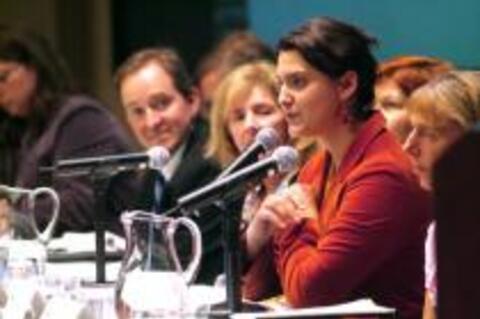
As a young journalist in Burma and the Amazon, Jensine Larsen began a quest to create a media source that would bring the vital, yet untapped, voices and solutions of women and youth to the world stage. By using the printed medium as well as interactive information and communication technologies (ICTs), she hoped to communicate global problems through the eyes of women and highlight solutions already underway.
Specifically, World Pulse draws centrally on an interactive place for collaboration and social networking called PulseWire, where women worldwide, including those using internet cafes in rural areas, can connect and make their voices heard. This website provides online tools that enable women and allies to support each other across borders by telling their stories, exchanging resources, sharing solutions, and collaborating in groups that they themselves establish. One may seamlessly navigate between PulseWire community discussions and the editorial content of World Pulse's magazine - which includes articles, interviews, arts and marketplace recommendations, and updates on the latest news through the eyes of women - and then link up with other women who are leading, reading, and writing. To facilitate communication, women may instantly post entries to the "personal journal" they have set up online from their mobile phones.
World Pulse is geared not just toward exchange, but toward action. Click here to access details about various advocacy roles World Pulse participants may take on through the use of ICTs, such as by submitting an online form to request that United States (US) President Barack Obama fill his cabinet with qualified women candidates, too.
An awards component is designed to facilitate the creation of an international women's correspondent programme and network; in the 2009 contest called "Voices of Our Future", World Pulse extended a call to those interested in learning to use new media to "speak for ourselves to the world, transform our communities, and change our lives. After being selected, the [30] Correspondents will embark on a four-month 'virtual' journey on the frontiers of new media and women's empowerment."
Women.
According to World Pulse, "[w]omen are consistently excluded from top economic and political decision-making positions and their voices are drastically underrepresented in international news media....Despite the fact that women represent more than a third of working journalists around the world, less than 1% of the world's editors, department heads, and media owners are women [International Federation of Journalists,] 7% of women are cited in global news stories on government and politics [International Women's Media Foundation,] 1% of world's financial resources [are] owned by women [United Nations, and] 15% of women [are] in top global decision making positions [United Nations]."
World Voice stresses that "including women's voices benefits our world. When women's voices are equally heard and supported in the media, it results in increased family and child wellbeing, more investment in education and health care, better economic growth and job creation, as well as proper transparency and accountability. It accelerates social healing after trauma, as well as information sharing and problem-solving. Most importantly, it strengthens community networks, environmental stewardship, and the democratic process, as well as arts, culture, and creativity."
World Pulse Magazine was nominated for "Best International Coverage" and "Best New Title" of 2004 and 2005 by the Independent Press Awards.
- Log in to post comments