










































Binti Pamoja (Daughters United) Peer Education Programme
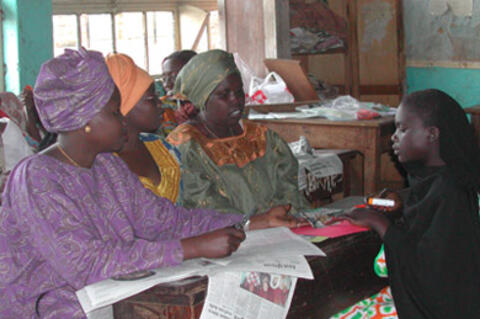
The Peer Education Programme is comprised of training sessions, a drama club, a newsletter, community forums, a financial literacy curriculum, and a safe spaces programme. The Binti Pamoja Centre hosts 3 multi-day training sessions each year focusing on HIV/AIDS, drug abuse, and other relevant issues. According to the organisers, these sessions cover one-on-one counselling, group facilitation, and confidence building, among other topics. In addition, each week there is a "peer education hour," which serves as time for both in-house training and for discussion among group members about their work in the community.
The programme formed a community drama group that writes and performs dramas in the Kibera community, the largest slum in East Africa. Approximately every 3 months, the club goes out into the community accompanied by a singing and drumming group and performs their new play. After the performance, members facilitate a discussion about the topic with the audience. According to organisers, recent plays have covered issues such as drug abuse, abortion, and discrimination against people living with HIV. The group also performs at other events such as youth festivals.
The programme also produces the Tunanego (Let's Talk) newsletter 3 times a year. The newsletter is geared for Kibera youth, and newsletter committee members write, edit, and type articles on topics of their choice. To assist them, the Centre sponsors training in creative writing, interview techniques, educational cartooning, and computers/word processing. According to organisers, the newsletter is distributed in the community and at all Binti Pamoja events.
Over the course of the year, the project also hosts community forums for youth in Kibera. The forums focus on a different topic each time, which is chosen by the members of the Centre. Previous topics have included drug abuse, teenage dating, condom use, rape, sexually transmistted infections (STIs), and voluntary counselling and testing.
In March 2006, Binti Pamoja partnered with the Global Financial Education Programme to develop a financial literacy curriculum for adolescent girls. Alumni of Binti were trained as facilitators of the curriculum and regularly train other members on savings, budgeting skills, banking services, and earning money.
The final aspect of Binti's peer education programme is the Safe Spaces Programme, which supports alumni members to start their own girls groups in the community. The groups follow a similar format to Binti's programming, including training on reproductive health, financial literacy, leadership, and peer education.
Children, Women, Youth.
Under the Safe Spaces programme, organisers say that alumni have established 10 groups throughout Kibera, reaching over 200 girls aged 9 - 16.
According to organisers, the financial literacy programme was based on research conducted with adolescent girls in Kibera, parents, and financial institutions, and was pilot tested with Binti Pamoja members. The curriculum is serving as a model for other programmes across the globe, and will serve as the basis for a universal curriculum for youth.
The American Jewish World Service, the RAINBO Small Grants Project, Ford Foundation, the Reuters Foundation, General Motors-Kenya, Kodak-Kenya, and private donors. (Initial Center start-up was funded by the Henry Evans Traveling Fellowship of Columbia University).
Letter sent from Karen Austrian and Emily Verellen to Soul Beat Africa on April 21 2004 and Carolina for Kibera website on November 18 2008.
- Log in to post comments