










































Women and Violent Radicalization in Jordan
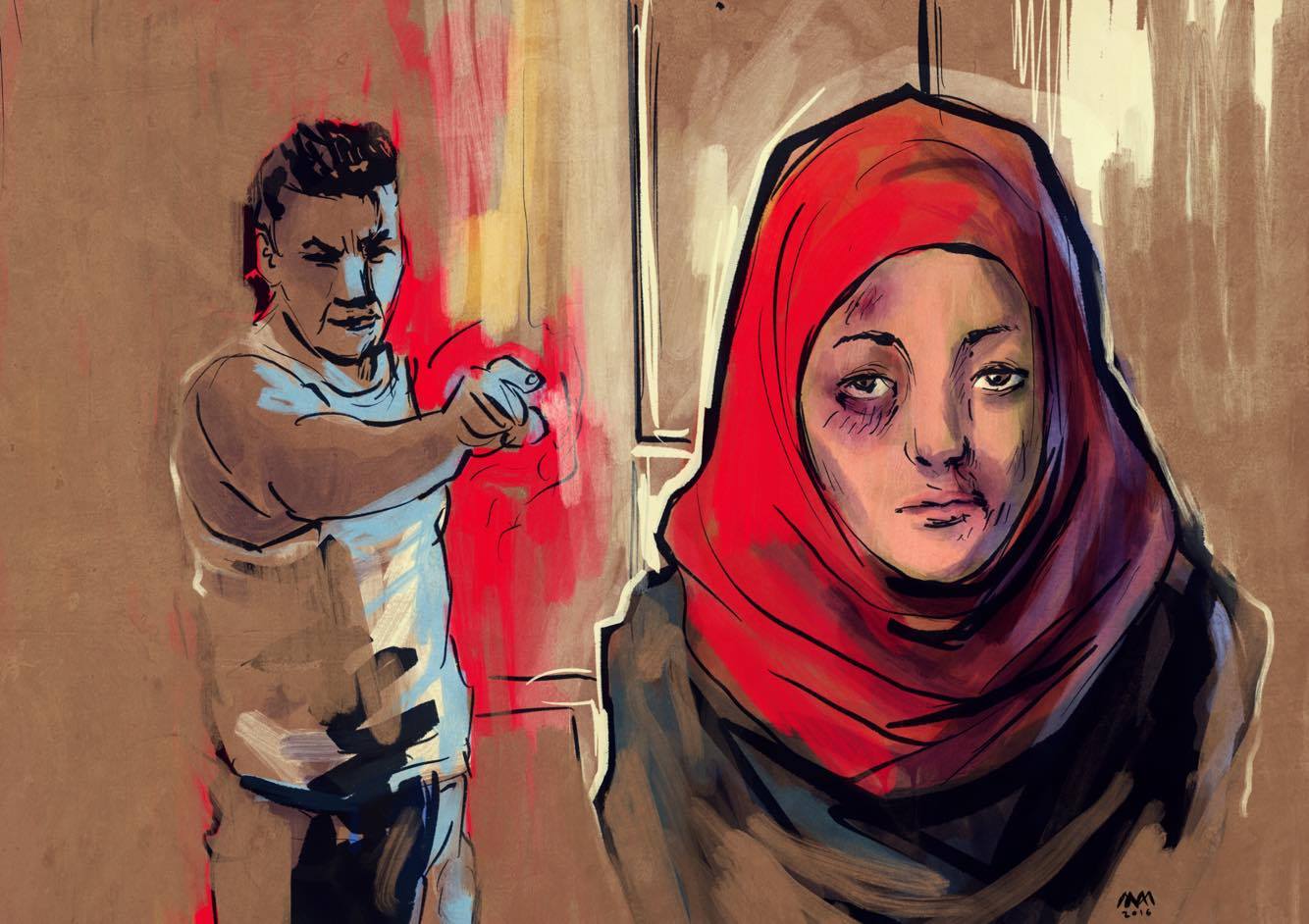
"The ways in which violent extremism affects women - both as victims and participants - are rarely discussed and remain underexplored. As Jordan moves toward taking new efforts to combat violent extremism within its borders, it is necessary for all involved to have a deeper understanding of how women in Jordan play roles in preventing or promoting such radicalization."
This study on the gendered dimensions of radicalisation in Jordan was commissioned by the United Nations Entity for Gender Equality and the Empowerment of Women (UN Women) as part of an effort to support the Jordanian National Commission for Women and the Government of Jordan in developing a National Action Plan for implementing UN Security Council Resolution (UNSCR) 1325 (2000). Passed on October 31 2000, this resolution called for the United Nations (UN) and Member States to promote women's inclusion in decision-making processes about peace and security and to recognise the ways in which conflict affects women. This report focuses specifically on violent radicalisation, which it defines as the escalating process by which a person begins accepting or promoting violence to change the ideological norms of their surrounding society. The research was conducted by Al-Hayat Center for Civil Society Development (RASED) and Search for Common Ground (SFCG) in February and March 2016.
The research, based on a literature review, 47 semi-structured interviews, and a focus group discussion with a cross-section of Jordanian society, focused on the perceptions of men and women of radicalisation in their communities, the risks that women and girls may face from radicalisation, the roles that women occupy in both the radicalisation and deradicalisation processes, and whether current efforts at deradicalisation are gender sensitive. While researchers for the report were unable to speak to women who had been radicalised themselves, several respondents reported knowing women who had been radicalised or targeted by extremists. Often, they said, women were recruited because of their role as "influencers" in the home. While some reported women being targeted online, others said women could be targeted at female-only religious study groups. The reasons respondents gave for women potentially becoming radicalised were similar to those for men, including financial pressures, lack of prospects, and religious conviction. It was also said women could be persuaded to join the Islamic State of Iraq and the Levant (ISIL) or other radical groups as a way to escape domestic abuse or because of a divorce or other difficult situation at home.
In short, the study found that both men and women - 85% of respondents - perceive radicalisation to be occurring in their communities and in universities. (Jordan is the third-largest contributor of fighters to ISIL after Tunisia and Saudi Arabia). The majority of respondents (87%) said women are at risk of suffering the effects of radicalisation, with 71% saying women face a bigger risk than men. They fear that it could exacerbate existing limitations on women's freedom and access to their rights: Effects include a rise in violence at home, increased restrictions on women's movements (e.g., decreased opportunities for engagement and volunteering with their communities), and a greater risk of being coerced into sharing or spreading radicalised views. "People said when they had experienced living in communities where there was a rise in radicalization, either via people in Jordan or people going to fight in Syria and Iraq and coming home, they saw those communities getting much more conservative and much more insular," says Rachel Dore-Weeks, a peacebuilding expert for UN Women in Jordan who coordinated the research. "As a result, where women had been eking out freedoms and breaking gender norms little by little, they were really pushed back." It was also reported that when young men or women become radicalised, their mothers are often blamed by society and feel more responsible for their children's behaviour, putting them under more pressure from their communities. Women are seen as the primary pillars and influencers of their families; thus, they are thought to be targeted by radicalised groups to impact their ideology as a first step to influencing the entire family.
Some of the findings are connected to the role of trusted messengers. In sum:
- Respondents indicated that Jordanians discuss issues of radicalisation in different settings. They believe that men often play a more active role in these discussions than women. Most respondents said that fathers encouraged discussions on radicalisation in the family, and such discussions involved mostly the male family members.
- Trust of religious leaders was mixed: 46% of respondents said they would refer to a religious leader if in doubt about radical religious ideas, while 21% (all of them women) said they would not trust a religious leader in such cases.
- Civil society actors (both women and men) received many questions from young people or people in their community related to radicalisation and extremist practices in other countries.
- Parents expressed skepticism as to the ability of the state security institutions to help them respond to the risk of their children becoming radicalised; 7% said they would report their child's suspicious behaviour to state security as their first choice, which is not a surprising finding given the potential criminal implications of violent radicalisation.
- While respondents identified traditional and social media as one aspect driving the radicalisation process in Jordan, many (31%) also saw it as a tool that could be used to test the validity of controversial religious ideas.
- Respondents noted that those who are radicalised may be isolated from the broader community and information sources, either collectively (e.g., children of radical families being home-schooled together, separated from their peers, and outside of the official education system) or individually (e.g., trapped in a "spiral of silence" by which individuals who feel they hold dissenting or minority views may feel pressured to keep silent about their opinions, further marginalising them and driving them to further withdraw from their peers).
In general, respondents showed interest in deradicalisation programmes: 79% of respondents said they would participate in governmental or local deradicalisation efforts, and 95% said they would join deradicalisation programmes led by international organizations, as long as such programmes are legal and conducted in a transparent manner, do not challenge religious norms, and focus on more than just research and interviews. All respondents and civil society organisations (CSOs) agreed that women have an important role to play in the deradicalisation process. However, none of the respondents who knew about deradicalisation activities were aware of any gender-specific focus of these current activities. CSO respondents stressed the importance of having more efforts by the government, especially the Ministry of Religious Endowments, to build the capacity of its Imams and Wa'edaat (women preachers) to frame positive narratives and having a national strategy to counter radicalisation. The vast majority of respondents (95%) perceive the importance of women's involvement in deradicalisation efforts as stemming from their traditional social roles as mothers and their position within their families. This "reaffirms traditional stereotypes and neglects the broader community and societal positions women hold that can help to prevent radicalization. A woman's role outside of the family was mentioned by 21 per cent of respondents who stated that women are often socially well-connected and well-educated."
The following excerpt from the report highlights a number of recommendations for scholars, CSOs, international organisations, and the government to address violent radicalisation in Jordan in a gender-sensitive manner.
"Cross-cutting recommendations:
- Increase women's leadership: Empowering women as leaders - and in particular, recognizing women as active agents in combatting radicalization - is critical for decreasing the risks that violent radicalization poses to both women and society. Respondents noted the need to uphold positive examples of women as role models, support moderate female religious leaders, and change the harmful stereotypes of women prevalent in society. Those working to counter radicalization should recognize and address the role that women have to play, not only as mothers and community members, but also as professionals, decision-makers and influencers of public opinion.
- Support male champions: Deradicalization efforts will prove more effective if women and men are able to work together as equal partners. Such efforts should include meaningful partnerships with men, increasing their awareness of the issue of radicalization of both men and women. Moreover, women's increased leadership in this field can be made more possible by enlisting male support. This would include their acceptance and promotion of women's professional roles in the community as well as participation in efforts to prevent violent radicalization...
Policy recommendations:
- Engage CSOs and the government in partnerships for local deradicalization: Jordan should establish a national strategy to counter violent extremism in the country. It is essential that such a strategy be developed through a participatory approach that gathers a diverse range of actors, including youth (male and female), women activists, women community members, CSOs, religious leaders, tribal leaders and government officials working on the local level (i.e., mayors, governors and heads of governmental directorates). It should build on the research already conducted...
- Address the gendered aspects of radicalization and its prevention in the National Action Plan on 1325 and its subsequent resolutions...
- Provide safe channels to report radicalization:...Use these channels to provide resources to citizens to help them mitigate these risks and prevent harm to their communities. Softer approaches (alternatives to detention) would help encourage such reporting.
- Amplify credible voices against violent radicalization:...Programmes should amplify existing credible voices and moderate influencers who are able to spread alternative narratives using television shows, social media and in-person events. Initiatives can also present real stories of people who faced the risk of radicalization and describe their disillusionment with violent radicalization, as those individuals can share powerful examples and have credibility among those who may be considering radical ideologies. This approach can also enhance community awareness about the progression of radicalization and possible signs of radicalization. Currently, many of the individuals writing and speaking about women's experiences with radicalization are from institutions in Europe and North America. While important, they must be supplemented with a multiplicity of women's voices and experiences on these issues.
Programmatic recommendations:
- ...Offer rehabilitation and victim's family education:...Make sure that these programmes are well known to people who might need them or want to refer others to them - especially mothers.
- Build the capacity of formal and informal Imams and Wa'edaat (female Imams)....Understand that it is critical for these figures to maintain the trust of their communities and for them not to simply be (or be perceived to be) co-opted. Support initiatives to build their capacities in ways that strengthen their engagement with their communities. Consider opportunities for networking between Wa'edaat and women activists.
- Enhance schools' curricula and teachers' education:...Some of the CSOs that work in schools stated that sometimes while working on raising the awareness of the students, they faced a challenge with the radical ideas of some teachers, which made achieving their objectives more difficult; respondents suggested targeting teachers via capacity-building and awareness programmes.
- Target women via awareness-raising initiatives: Increase awareness of the risk of radicalization through a variety of platforms and activities, such as social media, television shows and community events. These programmes could specifically target women and mothers - particularly those with fewer opportunities for engaging with the broader community, such as housewives. Awareness materials and activities should be made available in frequented locations, such as popular shopping centres, mosques, churches and schools. These activities should encourage parents to monitor their children's behavior and attitudes, taking care to become aware of any indications of radicalization so that parents can intervene. Most importantly, interventions should include structured programmes for parents to encourage their children to be open to other cultures and religions."
The findings from the study will inform the development of Jordan's National Action Plan on Women, Peace and Security as well as future programming efforts aimed at preventing violent extremism. For example, a pilot project is underway in universities to create safe spaces for young men and women to talk about radicalisation and voice concerns about people they know. UN Women is also in talks with the Jordanian government about approaching female Imams to work with the community on countering violent extremism.
To order the printed/published version in English or Arabic, contact Heba Zayyan (Heba.zayyan@unwomen.org) or Sylvia Rognvik (Sylvia.rognvik@unwomen.org).
UN Women website and "In Jordan, Women More Vulnerable to Effects of Extremism, Says Report", by Flora Bagenal, Women & Girls Hub, News Deeply, September 20 2016 - both accessed on November 4 2016; and email from Sylvia Rognvik to The Communication Initiative on February 16 2017. Image caption/credit: "Speaking to researchers for a U.N. Women report, women in Jordan said violence at home increases when communities become radicalized." Illustration by Mervin Malonzo
- Log in to post comments