










































Willingness to Get the COVID-19 Vaccine among Residents of Slum Settlements
Universidade Federal da Bahia (Ticona, Nery, Ribeiro, Reis, Costa); Ministério da Saúde, Salvador, Brazil (Ticona, Nery, Victoriano, Ribeiro, Reis, Ko, Costa); Yale University (Fofana, Reis, Ko, Costa)
"Addressing the concerns about vaccine effectiveness and safety in low-income sub-groups...will be key in increasing vaccine uptake."
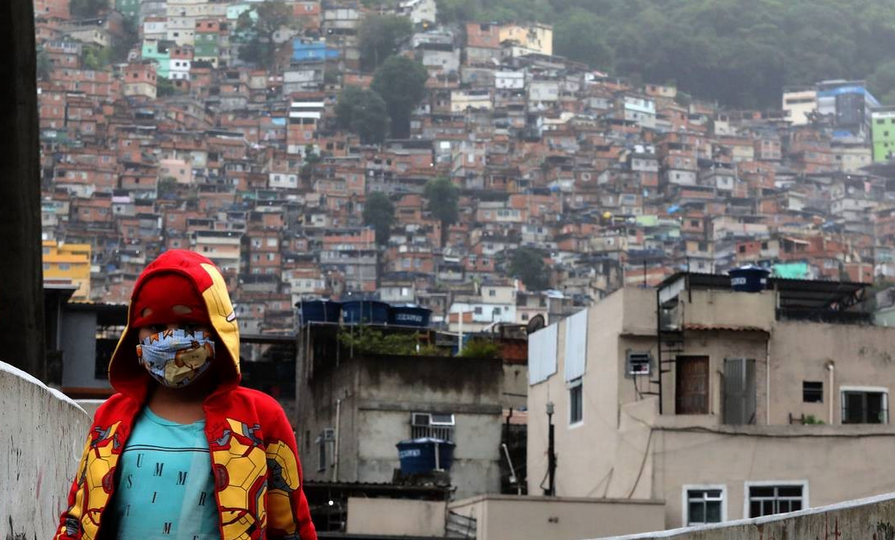
Slum residents, who make up about 30% of the world's population, are more vulnerable to COVID-19 infection than their wealthy counterparts. In the COVID-19 context, hesitancy linked to the vaccine's fast development and misinformation that has spread through social media represents a challenge to disease control. This study determined the rate and factors associated with the willingness to get vaccinated against COVID-19 among slum residents and their main reasons associated with the vaccine intention.
Conducted among 985 residents of Pau da Lima, a slum community in Salvador, Brazil, between November 16 2020 and February 28 2021, the study found that 66.0% (650/985) were willing to get vaccinated, 26.1% (257/985) were hesitant to take the vaccine, and 7.9% (78/285) were not sure. Among a sub-sample of 402 parents, 67% (270/402) indicated that, if the vaccine were available and safe for children, they would vaccinate their children, whereas 18% (73/402) would reject the vaccine for their children, and 15% (59/409) were unsure.
The main reasons cited for vaccine hesitancy or being unsure were concerns about vaccine efficacy and potential side effects. This finding indicates that survey participants are making decisions based on their understanding of available information, and that attitudes towards vaccination may respond favourably to education on the benefits and safety of vaccination. On the other hand, exposure to misinformation may seriously hamper vaccination efforts. The researchers suggest that governments need to address people's uncertainties by providing information about COVID-19 vaccination using contemporary communication channels such as social media.
Multivariate analysis identified that COVID-19 vaccine hesitancy was associated with younger age and low social capital, summarised as low perceived importance of vaccination to protect one's family, friends, and community. This finding suggests that tapping into the perceived benefit of protecting family and community may have an important role in the design of communication campaigns to increase COVID-19 vaccine acceptance in slum settings.
In contrast, attitudes associated with vaccine acceptance included the perception of being at high risk for COVID-19, thinking that it is a serious disease, and the belief that the vaccine would not only protect those who would receive it but also their families, friends. and community.
In conclusion, this study finds that slum residents surveyed are less willing to vaccinate than the general population. Communication campaigns that focus on social capital and that draw on social media to reduce misinformation have the potential to reach slum residents with messages that may increase COVID-19 vaccine uptake.
Vaccines 2021, 9, 951. https://doi.org/10.3390/vaccines9090951. Image credit: RioOnWatch
- Log in to post comments