











































WawaRed
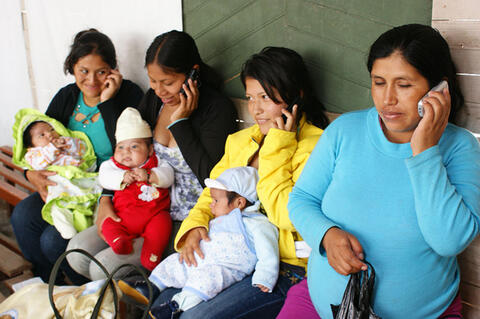
In 2010, the Universidad Peruana Cayetano Heredia in Lima, Peru launched the WawaRed project to support the government's efforts to improve maternal health by tackling the poor availability and quality of health data. WawaRed ("wawa" means baby in Quechua; "red" is network in Spanish) is the integrated electronic health record system that was piloted in 15 health centres in the district of Ventanilla. A ministerial order signed on January 16 2017 supported scaling WawaRed to up to 350 centres countrywide, including 20 in the humid lowlands, where the Zika virus continues to spread. The ultimate goal of WawaRed is to improve health services by reaching pregnant women with information designed to prevent unnecessary deaths and complications and to ensure that health workers and decision-makers are aware of how to use the data that are collected and how to analyse them to make informed decisions about care.
WawaRed is designed to enable all levels of the health system to communicate seamlessly and effectively by using technological solutions to strike a balance between how information is collected and how it is used. An integrated data collection and analysis platform links local health centres to district-level hospitals and to the central Ministry of Health.
More than 54,000 pregnant indigenous women were registered in the WawaRed system over the course of this project. In addition, more than 100 midwives were trained to use eHealth records and to gather data, and 28 ministry statisticians were trained in data analysis. WawaRed provides the Ministry with accurate and timely data for planning and allocating health services. For example, it can track the use of supplies at health centres to ensure their availability. As WawaRed researchers point out, since everyone can access the new e-records, the system enhances the status of midwives and promotes greater equity among workers in primary health centres.
Standardising and sharing data through an electronic health record system is a means of ensuring that the right information and advice can benefit vulnerable mothers and children. For example, the system sends customised text messages to pregnant women based on their health profile and in their local language. These messages include appointment reminders, nutritional recommendations, and healthy living tips, as well as general information about pregnancy care. Women may also call in to obtain additional information about pregnancy, nutrition, and danger signs.
The rationale behind WawaRed is that sending information to women wherever they are and in a language that is familiar to them can transform how they understand their pregnancy and the measures they should take to stay healthy. WawaRed also enables women to access their own health records and those of their family so they can better manage their health and well-being. Enabling women to ask questions of their healthcare providers promotes a better understanding between them and it can improve the system's accountability, ultimately boosting health outcomes. Women can also involve their spouse and other family members in their care by sharing information about their pregnancy and health.
Maternal and Child Health
Deep inequities underlie the country's health system. In particular, economically poor and indigenous women in rural areas suffer high rates of preventable death and illness. Of the estimated 615,000 Peruvian women who become pregnant each year, 420 will not survive childbirth. Most of these women die from preventable causes that arise, in large part, from the inaccessibility of vital information when and where it is needed.
Before WawaRed, midwives spent some 40 minutes to complete as many as 15 forms for each expectant mother, leaving very little time to interact with the patient. Data in those forms were redundant and, as much of it was considered irrelevant by the providers, little care was taken in recording it. This poor quality of information was then digitised at 5 levels: those of the local health institution, the sub-health network, and network, regional, and national levels. As a one-way system, the consolidated information never made it back to local health planners or providers to help correct inefficiencies or deal with common problems faced by expectant and new mothers. It was also too narrowly focused on pregnancy and childbirth. However, the researchers found that women were much more concerned with broader aspects of their health and their children's basic health.
WawaRed's viability to improve efficiency and protect patient confidentiality was tested in 2 health centres. The testing showed that the system could be replicated and scaled up elsewhere (a factor that facilitates scale-up is that 65% of Peruvians own a mobile phone). In August 2016, WawaRed was extended throughout Ventanilla's health network, benefiting some 18,372 women. Talks are underway with Peru's mobile telephone companies to fund the service on a national scale. WawaRed is likely to expand to other areas of health care, including tuberculosis treatment and tracking HIV and other diseases.
The ministry already has electronic health records for children under 5 that are linked to their mother's pregnancy record. This helps parents and health workers track diseases and vaccinations over time. It can also improve responses to outbreaks wherever they occur.
Universidad Peruana Cayetano Heredia, International Development Research Centre (IDRC), Telefónica Móviles Perú. Advisory institutions: Regional Government of Callao, Callao Health Directorate (Ministry of Health), Open Mobile Consortium (OMC), MIT NextLab, Grameen Foundation, mHealth Alliance
Emails from Liane Cerminara to The Communication Initiative on January 18 2019 and February 11 2019; and IDRC website, January 29 2018, and mobilecitizen (YouTube) - both accessed on January 22 2019. Image credit: Iván Reátegui Ismodes
- Log in to post comments