










































Village Health Teams Radio Distance Learning (RDL) Program
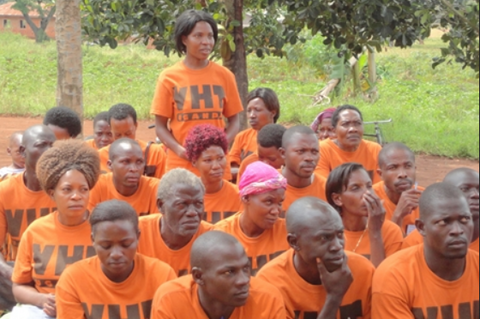
The Village Health Team (VHT) Radio Distance Learning Programme was implemented to supplement existing village health team training efforts, providing continuing education, refresher training, and transfer of knowledge and skills to VHTs on a regular basis through radio. Launched in 2010 by the Uganda Ministry of Health (MoH) in collaboration with The Health Communication Partnership, the Radio Distance Learning Programme helps to keep VHTs updated with accurate, relevant information, which they then pass on to communities.
VHTs were established in Uganda to empower communities to take part in the decisions that affect their health. This includes mobilising communities for health programmes and strengthening the delivery of health services at the household level. VHTs receive basic training in a cross section of key health issues common in Uganda, but need to provide consistent, accurate, and up-to-date health information. Since health information and recommendations are ever-changing, VHTs need to be routinely updated, which can be a challenge, particularly in rural areas which are far from health services. The biggest challenge facing the MoH's VHT programme is the cost of providing refresher training for the thousands of VHTs across the country.
In 2010, the VHT Radio Distance Learning (RDL) programme was launched, which provides training through weekly half-hour radio programmes supplemented by workbooks and handbooks for the VHTs who listen. VHTs that enrol in the programme may form discussion groups and work on assignments in their workbooks together, or may listen to the programmes and do the exercises individually in their own homes. A total of 26 30-minute episodes in Luganda, Luo, Ate so, Runyankore-Rukiga, and Karamajong were produced and broadcast over selected radio stations. One episode ran per week with several repeats to accommodate those who miss out or those who wanted to listen to the programme again. The overall format of each episode is "magazine", including a variety of methods to create one cohesive programme. The magazine format include small segments from experts, features, feedback, health tips, village talk, adverts, and remarks that all work together to create the overall messaging for a single episode.
One component of the radio programme is the "Obbanywa" radio drama which is based on the lives and happenings in the village of Obbanywa. Each episode includes a drama that features fictitious VHTs, who demonstrate values and desired behaviours of VHTs. Through these stories, VHTs can see how they are expected to work in their communities, while learning up-to-date information on a variety of health issues. To aid the learning process, each VHT receives a copy of the listeners guide, which contains chapters that follow each episode's story, key learning points, group discussion questions, and individual assignments. Click here for the Uganda VHT Listener's Guide and to download scripts of the audio episodes.
A radio broadcast schedule was developed and distributed to all participating VHTs through their VHT Coordinators and mentors. VHT members in each region/district were asked to identify their favourite radio stations and convenient time of listening to the programme. The programme tackled topics and issues, in and outside the VHT minimum package, as determined by the ministry and partners. Some of these topics include: HIV/AIDS, family planning, malaria, TB and TB/HIV, diarrhoea, sanitation, nutrition, child health/adolescent health, safe motherhood, alcohol abuse, gender based violence/violence against women, data collection, community mobilisation, and home visiting, among others. Specific programme content for each topic and episode was developed during the participatory design workshop on June 17-18, 2009, with reference to the VHT handbook that is being designed in consultation with MoH.
In order to aid in sharing the materials and resourecs developed as part of the project, a toolkit was created which includes radio programmes and scripts, workbooks, and guidelines for the Uganda VHT Radio Distance Learning programme.
Click here for the Uganda VHT Radio Distance Learning Toolkit.
During implementation of the first phase (episodes 1-13), over 12,000 VHTs from the districts of Lira, Tuke, Alebtong, Mukono, Mpigi, Wakiso, Masaka, Gombe and Rakai enrolled into the programme demonstrating that it is possible to reach large numbers of community health workers using radio as a training medium to increase knowledge. An evaluation of the programme showed that there was an increase in the knowledge levels of VHTs on key issues. Because VHTs met in groups to listen to and discuss the programme, this enhanced dialogue and sharing of experiences among VHTs. The evaluation also found that with a decentralised system, limited access to health facilities, and low utilisation of available services, the VHT plays a key role in supporting positive health and behaviour change at the community and household level through basic education, community mobilisation, and referral.
According to the 2006 Uganda DHS, radio has the widest coverage in Uganda. Seven in ten women and nine in ten men listen to a radio broadcast at least once a week with 70% of rural women and 86.6% of rural men listen to the radio (DHS, 2006). As a result, radio provides an excellent medium for VHTs to gain on-going and current information that will supplement their training.
World Vision Uganda, United States Agency for International Development, UNICEF, THETA Uganda, STAR-SW, STAR-E, STAR- EC, FHI 360, Uganda Health Marketing Group, Malaria Consortium, Reproductive Health Uganda, Interreligious Council of Uganda, SHSSPPII, AMREF, The Hunger Project, Plan International, World Health Organisation, Raising Voices, Y.E.A.H, Stop Malaria Project, POPSEC, Makerere University, Uganda Water, Sanitation NGO Netwok
K4Health website and K4Health website on August 5 2013
- Log in to post comments