










































UNDP Discussion Paper: Transgender Health & Human Rights
"Traversing these issues is essential to addressing the underlying structural factors that marginalize trans people, negatively impact their health and exclude them from the benefits of development."
This discussion paper aims to increase understanding of the human rights issues that trans people (a term used here to include all people whose sense of their gender identity differs from the sex they were assigned at birth) face and the priority actions required to secure trans people's right to dignity, equality, health, and security. Published by the United Nations Development Programme (UNDP)'s HIV, Health & Development Group, it focuses predominantly on the rights to health, to legal gender recognition, and to freedom from violence and discrimination. A large number of trans people and other advocates for trans people's health and human rights contributed to this paper at various stages.
As explored in an opening section of the discussion paper titled "International Human Rights Standards", "[t]he legal, economic and social marginalization of trans people affects every aspect of their lives. Social exclusion is reflected in laws that do not acknowledge the existence of trans people, either as a third gender or as people who wish to transition from male to female, or from female to male. Without legal protection, trans people are vulnerable to daily violence and discrimination, with cumulative impacts. Some impacts are visible, such as the HIV epidemic among trans women in many parts of the world. Most impacts are insidious, with trans people, their families and communities left to support each other and struggle for their rights."
This paper seeks to engage readers by reflecting the various aspects of health, human rights, and development that come into play when examining trans issues. It is divided into 8 sections:
- Terminology
- Background - history, numbers, visibility, and invisibility
- Violence - family violence, murder and rape, and torture and other forms of cruel, inhuman, and degrading treatment
- Discrimination - right to education, right to work, legal protection
- Health - general health services, HIV and AIDS, gender-affirming health services
- Legal gender recognition - Right to recognition before the law, forced sterilisation, progressive gender recognition laws, recognising third gender options
- Conclusion: Trans social inclusion
- Selected resources
Through action points contained in each section, the paper suggests practical ways that UN staff can employ to be more inclusive of trans people, both in daily interactions and in their broader work, particularly in the areas of HIV, health, the rule of law, and development. For example, in the area of terminology, it is recommended that staff: learn and use positive local terms for trans people, and avoid derogatory terms; give people the choice to share their preferred name and pronoun in community consultations (e.g., on name tags or through introductions); discreetly ask a person's preferred pronoun and name when unsure of their gender identity; include trans terms and examples in publications; and attend trans community events to show support and to gain greater understanding of trans people's lives. Action points in the concluding section of the paper also highlight communication-related efforts that UN staff could undertake, such as building capacity on trans human rights, conducting sensitivity training on gender identity issues (ideally developed in partnership with local trans communities), holding trans-specific consultations, and facilitating dialogue between trans groups and government agencies.
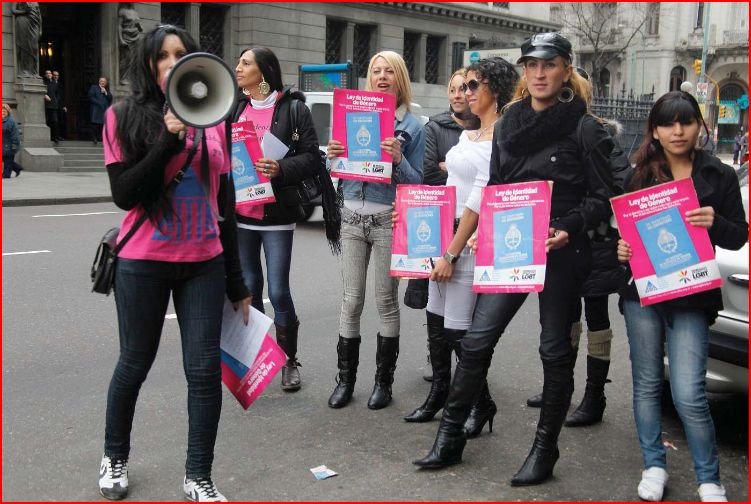
Case studies are also included throughout the paper. For instance, one text box discusses Argentina's Gender Identity Law, which enables trans people to change their name and sex details without requiring a medical diagnosis or specific medical interventions (including those that would result in infertility). In doing so, it recognises that identity does not depend on medical transition. In addition, the law guarantees access to trans-related health care on the basis of informed consent, with the costs covered by the national Mandatory Medical Plan.
UNDP's work covers a range of issues that influence trans people's lives. Its main engagement on trans issues has been through the lens of HIV and human rights. However, other aspects of development that UNDP engages with, such as poverty reduction, governance, citizenship, and access to justice, are also pertinent to the marginalisation that trans people experience. This is in line with the UNDP Strategic Plan: 2014–17 emphasis on poverty eradication and the reduction of inequalities and exclusion as the primary vision of sustainable development, informed by outcomes of inclusive growth, stronger democratic governance, and universal access to basic services. Indeed, these are themes that have found voice in discussions of the post-2015 development agenda.
It is hoped that this paper will also be useful for others in their work and advocacy, including trans advocates, human rights defenders, and policymakers. Many of the resources in the footnotes and selected resources provide more detailed recommendations directed at specific actors, including health professionals, policymakers, and educators.
Email from Vivek Divan to The Communication Initiative on January 10 2014.
- Log in to post comments