










































A Triumph of Coordination: Eradicating Polio from India
United States Agency for International Development
This blog entry from Ellyn Ogden, who has coordinated the United States Agency for International Development (USAID)'s polio eradication initiative since 1997, reflects on the process that has led to the accomplishment, announced in January 2012, that 12 months had passed with no confirmed case of polio in India.
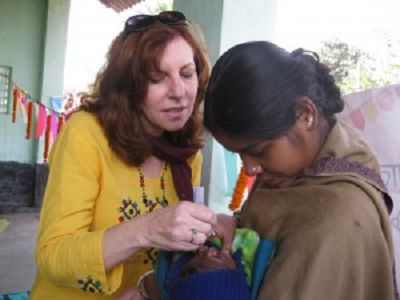
Ogden writes: "With the help of WHO [the World Health Organization], UNICEF [the United Nations Children's Fund] and Rotary international, detailed plans are developed to assure that vaccine reaches every village, data is analyzed and feedback given to constantly improve the work of the teams. Detailed maps help trace the daily route of the vaccination teams. Supervisors provide guidance and quality control. Monitors verify the work of the teams, by checking to see if their fingers are marked and flagging any locations with poor coverage. Sweep teams go back to find missed children. Issues are discussed at evening meetings during the campaigns and corrective action taken immediately. Government accountability and ownership is very visible."
She affirms that "India has had its share of skeptics and the spread of false rumors questioning the safety of the vaccine." To combat that, communication strategies - and, in particular, collaborative approaches - have been central. For instance, "[t]housands of mobilizers have joined with religious, traditional and local leaders to provide accurate information and reassure parents that the vaccine is safe and effective." Furthermore, "[w]orking with local community organizations, women's groups and self-help groups, the messages have gone well beyond polio to address other immunizations, water and sanitation, breastfeeding and handwashing. Partnerships between local government, community organizations, private doctors who are members of the Indian Academy of Pediatrics or the Indian Medical Association, and religious leaders, are now the norm."
Ogden concludes by stressing that this partnership has led to an increased population immunity against all three types of polio virus - to a high enough level to stop virus transmission. However, this will need to be sustained for three years in order to know if there were missed segments of the population, risking a return of the virus.
USAID's IMPACTblog, January 31 2012. Image credit: CORE Group Polio Project
- Log in to post comments