










































Supplement: The Impact of Polio Eradication on Routine Immunization and Primary Health Care: A Mixed-Methods Study
Middlebury College (Closser, Cox, Tedoff, Neergheen, Nuttall); ISciences (Parris, Landis, Luck, Pont); University of California at San Francisco (Justice); Oregon State University (Maes); Independent Consultant (Omidian); Global Public Health Solutions (Nsubuga); Freelance Consultant (Gopinath); Deep Children Hospital and Research Centre (Thacker); Addis Ababa University (Amaha); Bayero University (Mohammed, Dukku); Health Services Academy (Varley); Aga Khan University (Jooma); London School of Hygiene and Tropical Medicine (Koon); National University of Rwanda School of Public Health (Nyirazinyoye); McGill University (Rosenthal)
"Polio eradication's surveillance, communications, and service delivery systems were unmatched in terms of combining quality with reach....Applying the resolve and dedication that characterizes polio eradication to a wider suite of services could provide communities with the services they are demanding, give workers a fresh reason for enthusiasm, and increase baseline RI [routine immunisation] coverage. The eradication of polio would probably not be far behind."
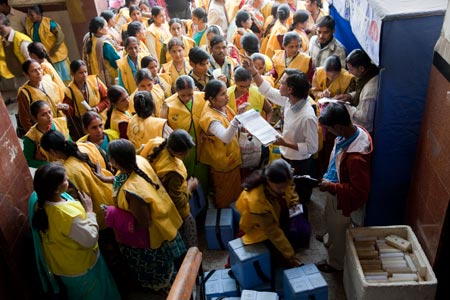
This study, originally published in April 2014, is detailed again through this article evaluating the impact of polio eradication activities on routine immunisation (RI) and primary healthcare (PHC). Researchers conducted a systematic qualitative analysis in 7 countries in South Asia and sub-Saharan Africa to assess impacts of polio eradication activities on key health system functions, using data from interviews, participant observation, and document review.
In short, the analysis "did not find compelling evidence of widespread and significant effects of polio eradication campaigns, either positive or negative, on measures of RI and maternal healthcare." The research did unveil context-specific positive impacts of polio eradication activities in many of their case studies, particularly disease surveillance and cold chain strengthening. "These impacts were dependent on the initiative of policy makers. Negative impacts, including service interruption and public dissatisfaction, were observed primarily in districts with many [immunisation] campaigns per year."
That said, the researchers identified "[i]nspiring best practices" in their case studies (detailed in the document as: "Case 1: The 107 Block Plan" [India] and "Case 2: Integrated Disease Surveillance in Nepal"), noting, for example, that acute flaccid paralysis (AFP) surveillance "can be expanded to include robust surveillance for other diseases. Outreach to marginalized populations can provide bed nets and oral rehydration solution. Communications materials can educate about vaccines and breast-feeding. Applying the resolve and dedication that characterizes polio eradication to a wider suite of services could provide communities with the services they are demanding, give workers a fresh reason for enthusiasm, and increase baseline RI coverage."
Specifically, selective communication-relevant results include the following:
- "Public awareness of vaccination and health services had increased markedly in the past 15 years in many of our case studies. Polio eradication activities made some contributions to this increase in awareness but were not the only or primary contributing factor in any case study. In most case studies, polio's social mobilization materials focused solely on polio vaccination. Notable exceptions were social mobilization surrounding Immunization Plus Days in Kumbotso, Nigeria, and the integrated communication provided under India's 107 Block Plan (see Case 1). In Camucuio, Angola, and Rubavu, Rwanda, respondents noted that polio campaigns provided an opportunity for face-to-face communication about RI and other health services."
- "In most of our case studies, people working on polio eradication found, mapped, and repeatedly visited populations that were previously unreached by other health services. The maps and information created by polio eradication teams in the districts we studied represent a likely unprecedented collection of information on populations - including urban slum populations, pastoralists, and socially marginalized groups - most marginalized from health services. The extent to which this often detailed information was used to provide other health services to these populations varied widely across case studies. In Purba Champaran, Bihar, India, residents of 'high-risk' blocks were provided with a wide range of health education and services in addition to polio vaccination (see Case 1). In the case of Kumbotso, Nigeria, integrated campaigns provided additional health services to these populations, and in some other case studies, these populations received vitamin A or other interventions during polio vaccination campaigns. Polio eradication's extensive information on and outreach to the world's most underserved populations were not routinely used to reach those populations outside of campaigns in the majority of case studies."
- "In all of our case studies, staff working on polio campaigns were trained prior to each campaign. In part because polio campaigns in Kumbotso, Nigeria, and Rubavu, Rwanda, also provide other services to the public, training materials in these case studies laid out clear plans to transfer additional knowledge and skills to workers. Also, trainings for surveillance-related activities were sometimes integrated with other trainings. However, in the majority of case studies, campaign trainings focused only on polio-related information, missing opportunities to broaden worker knowledge - and in some cases contributing to worker fatigue through repetition."
The Journal of Infectious Diseases, Volume 210, Supplement 1, November 1 2014, p. S504-S513. Image credit: Bill & Melinda Gates Foundation
- Log in to post comments