










































Strategies for Addressing Vaccine Hesitancy - A Systematic Review
Department of Infectious Disease Epidemiology, London School of Hygiene & Tropical Medicine
"Overall, our results showed that multicomponent and dialogue-based interventions were most effective. However, given the complexity of vaccine hesitancy and the limited evidence available on how it can be addressed, identified strategies should be carefully tailored according to the target population, their reasons for hesitancy, and the specific context."
This report describes a systematic review of peer-reviewed (January 2007 - October 2013) and grey literature (up to October 2013) that used a search strategy built to capture multiple dimensions of public trust, confidence, and hesitancy concerning vaccines. Descriptive analyses were undertaken for 166 (peer-reviewed) and 15 (grey literature) evaluation studies. In addition, the quality of evidence relating to a series of PICO (population, intervention, comparison/control, outcomes) questions defined by the SAGE Working Group on Vaccine Hesitancy (WG) was assessed using Grading of Recommendations Assessment, Development and Evaluation (GRADE) criteria; data were analysed using Review Manager.
"Across the literature, few strategies to address vaccine hesitancy were found to have been evaluated for impact on either vaccination uptake and/or changes in knowledge, awareness or attitude (only 14% of peer reviewed and 25% of grey literature). The majority of evaluation studies were based in the Americas and primarily focused on influenza, human papillomavirus (HPV) and childhood vaccines. In low- and middle-income regions, the focus was on diphtheria, tetanus and pertussis, and polio. Across all regions, most interventions were multi-component and the majority of strategies focused on raising knowledge and awareness. Thirteen relevant studies were used for the GRADE assessment that indicated evidence of moderate quality for the use of social mobilization, mass media, communication tool-based training for health-care workers, non-financial incentives and reminder/recall-based interventions."
More specifically, the researchers found that the most effective interventions employed multi-component strategies and were tailored to specific populations and addressed specific concerns (pointing to the importance of understanding the drivers of vaccine hesitancy to inform the interventions). For instance, under the aegis of dialogue-based interventions, some of the findings include:
- "The impact of religious or traditional leader involvement in populations with low baseline uptake merits further investigation and evaluation. This type of intervention is important as it addresses one of the more difficult determinants of vaccine hesitancy, namely, misconceptions and community distrust. This intervention aligns itself with natural community processes - seeking out community leaders, and encouraging dialogue across multiple levels to both inform and influence. The success of the intervention could be attributed to the efforts made to understand the target audience, facilitate open dialogue, and integrate activities with familiar processes and systems.
- The success of social mobilization interventions for populations refusing polio vaccination could also be attributed to the targeting of, and dialogue with, a clearly defined population....
- Social media intervention studies suggest that this approach might work well for those who have already started their vaccination schedule, or who are familiar with social media in other aspects of their lives...
- The use of mass media to target populations with low awareness of health services appears to be effective, however, the limited impact also suggests that there may be other underlying issues affecting the impact that need investigation and more tailored supporting interventions.
- The provision of communication tool-based training for HCW [health care workers] generally had a positive effect....The observations about this example and mass media suggest that interventions that adopt a unidirectional (top down) approach to communication, may be successful among some individuals and groups, but not all; success is dependent on the nature and degree of hesitancy."
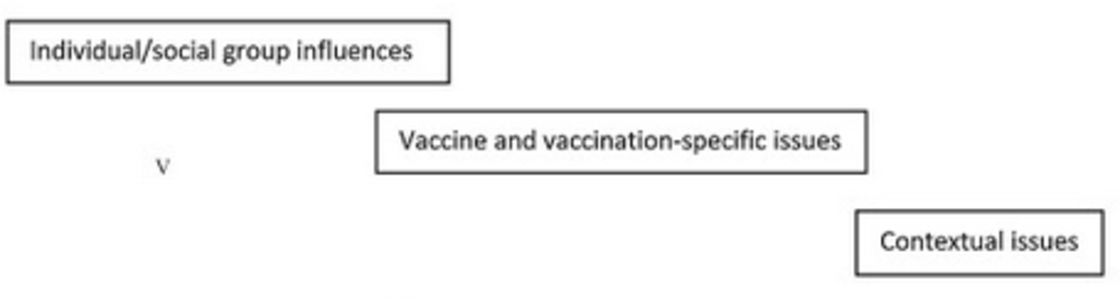
In concluding, the researchers note that "[o]ne of the greatest drawbacks of the interventions identified is that many operate from an assumption-based rather than an evidence-based approach; appropriate evaluation is also lacking. On a more positive note, there is a growing body of research on the determinants of vaccine hesitancy which can help inform and refine currently used approaches that look promising but have not yet been fully implemented or evaluated. Lastly, there is a clear need for more attention to understanding and addressing hesitancy at the community and social network level - most interventions have historically focused on addressing individual level issues (e.g. knowledge, awareness) and vaccine/vaccination specific concerns (e.g. mode of delivery, vaccine risks) despite the large body of literature on the many other determinants of vaccine hesitancy."
Vaccine Volume 33, Issue 34, 14 August 2015, Pages 4180-90 - sent via email from Michael Favin to The Communication Initiative on August 18 2015.
- Log in to post comments