










































Statement on the Roundtable on Immunization for Vaccine-Preventable Disease and Polio in Ukraine
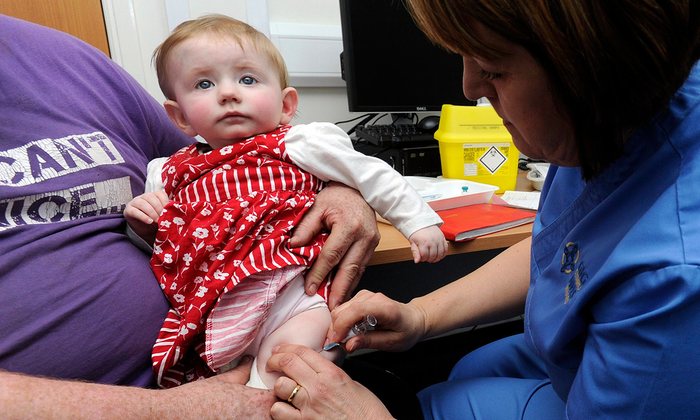
"Unfortunately, few of the elements of Ukraine's immunization program are at the standard expected or required to protect public healh. Experts agree that a major overhaul of all elements from procurement through to policy and implementation and political will is urgently required. While external goodwill still exists, the country is urged to work together with international partners to increase vaccination coverage."
This document emerged from a high-level technical consultation on immunisation for vaccine-preventable disease and polio organised by the U.S.-Ukraine Foundation in Washington, DC, United States (US) on June 8 2016. The purpose of the event was to engage in an open and free dialogue and analysis of the status of immunisation in Ukraine, a country where there are as many as 3.5 million children un- or undervaccinated. In the context of polio immunisation rates as low as 14% in mid-2015 and a vaccine-derived polio virus outbreak that same year, the conversation also focused on the current polio situation in Ukraine, with the goal of producing a set of strategic thoughts on ways to address the core issues for review by relevant decision-makers. The event engaged polio and technical people centrally involved in immunisation activities in Ukraine, people from within the North American Ukrainian diaspora with knowledge of and interest in this issue, and global public health technical experts on communications, immunisation, and polio eradication. Organisations that participated in the consultation that resulted in this overall statement included the United Nations Children's Fund (UNICEF), the World Health Organization (WHO), and the US Agency for International Development (USAID)-funded Maternal and Child Survival Program (MCSP).
According to those gathered, factors that led to the 2 paralytic polio cases (likely representing at least 200 silent infections each) included insufficient vaccine supply, low government investment, pharmaceutical industry influence (they promote high-price vaccines), challenges related to reaching internally-displaced people (IDPs) and migrant groups, health issues pre-dating the present war within Ukraine, unacceptable legal risks to health workers and policymakers (who can become subject to legal action if there are claims of alleged adverse events, with very low thresholds for such legal risk), and lack of detailed, data-derived insights into the child health, immunisation, and polio status in the areas experiencing the most intensive conflict in Eastern Ukraine. Some communication-related factors include:
- Deficiencies in up-to-date knowledge and understanding of the science behind and impact of vaccines and immunisation on the part of medical personnel and scientists/academicians;
- Low public awareness - consistent misunderstandings about the necessity and safety of vaccines for children;
- Corruption within the health system, which is consistent with this issue being a priority concern for the Government, civil society, and international organisations;
- Confusion between the health roles and responsibilities of the Government, oblasts, and cities related to health.
- Misunderstood contra-indications - common perceptions about vaccine delivery that have no basis in science (that slightly high temperature6 is a cause to avoid vaccination, for example, or that children who have received an oral polio vaccine (OPV) should not attend kindergarten for six weeks);
- Use of social media as a mass forum for the communication of often erroneous information about the desirability and safety of vaccines; and
- Gaps in Ministry of Health (MoH) capacity including, for example, the absence of a significant communication section.
Derived from the shared analysis of this technical group on the above and other factors, several ways forward were suggested, such as these communication-related ideas:
- A clear official Government statement that full immunisation coverage for all children under 5 years of age is a health priority, with Government adoption of a target of at least 95% coverage for all routine immunisation antigens for all children under 5 years of age in Ukraine within 2 years;
- Immediate re-stocking of the required vaccines for all routine immunisations recommended for children under 5 years of age, drawing on support of international organisations to establish national regulatory and procurement mechanisms able to gradually take over vaccine procurement in an effective and transparent way;
- Increasing support for vaccinators by providing much stronger legal protection for health care workers and policymakers;
- A major and immediate training programme for all medical personnel on the most recent science related to immunisation and vaccines and the demonstrated epidemiological impact that they have for major child and adult diseases;
- An enhanced social media initiative to engage parents, communities, the medical community, the private sector, and government representatives and officials with accurate knowledge about vaccines and immunisation, from polio to Hepatitis B;
- A review of current global standards for policy and practice on immunisation and vaccines by countries, with the assessment of the Ukrainian status as compared to those global standards;
- Organising a subsequent high-level roundtable on this topic to be held in Ukraine as soon as possible to help address immediate concerns, support reform, and share lessons learned and recommendations with government and non-governmental stakeholders;
- Convening and facilitating oblast-level dialogues, in person and through local media, on child health issues and risk; and
- Preparation by both sides of the conflict in the East to honour days of tranquility, monitored by the Organization for Security and Co-operation in Europe (OSCE), which would allow vaccinators into areas along the contact line that are cut off.
The statement concludes that inaction could bring consequences, including further outbreaks that increase a population's morbidly and mortality, national health care burden, travel restrictions, lost productivity, and diplomatic isolation.
Click here for the 4-page statement in English [PDF].
Click here for the 5-page statement in Russian [PDF].
Click here for the 5-page statement in Ukrainian [PDF].
- Click here for an overview of the Washington DC Roundtable Discussion on Immunisation for Vaccine-Preventable Disease and Polio in Ukraine.
- Click here for an interview of David Salisbury from the same event.
- Click here for an interview of Patrick M. O'Connor from the same event.
- Click here for an interview of Boris Lushniak from the same event.
- Click here for an interview of Judyth Twigg from the same event.
- Click here to access a video of an October 9 2015 press briefing on the Ukraine outbreak by Ellyn Ogden, Coordinator of the United States Agency for International Development (USAID) for polio eradication.
U.S.-Ukraine Foundation. Image credit: Rebecca Naden/REUTERS
- Log in to post comments