











































Social Norms and Girls' Education: A Study of Eight Sub-Saharan African Countries
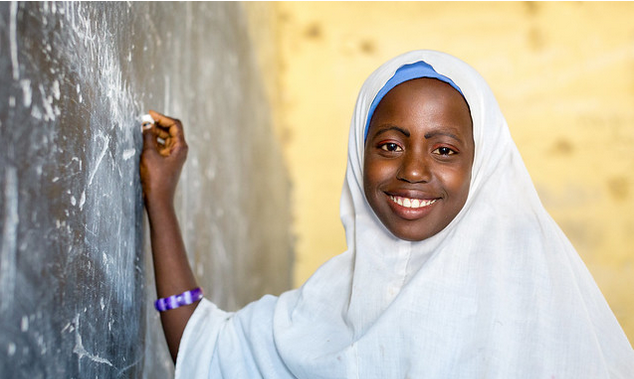
UN Girls' Education Initiative (UNGEI)
"In the context of gender-transformative education, the school environment can be a space for learners, teachers, school leaders, parents and communities to challenge gender inequalities and promote positive norms and practices..."
Restrictive social and gender norms feed into perceptions around the value of girls' education. Gender-transformative education goes beyond access to education for girls and women, leveraging the whole education system to transform harmful norms and stereotypes. Commissioned by the Gender at the Centre Initiative (GCI), this desk study on social norms and girls' education in eight countries in West and Central Africa combines the findings from a literature review on social norms and girls' education with new evidence. The study explores gendered social norms, the underlying values that keep them in place, and the ways in which they affect access, participation, and achievement in quality education for girls.
The paper begins with a brief situational update of the key challenges to girls' education and gender equality in the eight GCI partner countries (Burkina Faso, Chad, Mali, Mauritania, Mozambique, Niger, Nigeria, and Sierra Leone), underpinned by social norms relating to:
- Early pregnancy: Even in countries in which discriminatory laws and policies have changed (such as in Mozambique and Sierra Leone), negative teacher, peer, parent, and community attitudes and norms can continue to ostracise pregnant girls and young mothers in education.
- Child marriage: Social norms put pressure on girls to drop out of school at the time of marriage and govern different educational and employment expectations for boys and girls who have children.
- Female genital mutilation (FGM): Increased education, along with higher socioeconomic status and wealth and exposure to mass media, is linked to a decreased likelihood of FGM, which is underpinned by socio-cultural norms and persists despite legislative measures banning the practice in some countries.
- School-related gender-based violence (SRGBV): SRGBV can be defined as acts or threats of sexual, physical, or psychological violence occurring in and around schools, perpetrated as a result of gender norms and stereotypes and enforced by unequal power dynamics. In sub-Saharan Africa, girls report instances of male teachers demanding sexual favours in exchange for good grades, preferential treatment in class, money, and gifts.
- Disability: Schools reproduce societal power structures and hierarchies, reinforcing harmful norms, stigma and stereotypes regarding both disability and gender.
- Fragility, conflict, and climate emergencies: West and Central Africa, and particularly the Sahel region, faces some of the world's most complex humanitarian challenges. Existing, unequal gender norms are often intensified during conflict, exacerbating gender disparities in education.
- COVID-19: The pandemic is likely to undermine efforts to advance gender equality in and through education. Emerging evidence highlights that gender norms and expectations determined whether girls and boys were able to participate in, and benefit from, remote learning strategies.
- Poverty and child labour: Economic disadvantage is a pervasive barrier to girls' education, particularly when combined with entrenched gender norms regarding the role of women in society and beliefs about the value of girls' education.
- Lack of female teachers and school leaders: Evidence from African countries has shown that girls are more likely to go to and stay in school, and that parents are more willing to support girls' education when female teachers are present. Research shows that in Niger and Mali, only about 1 in 10 school leaders are women.
Section 2 of the report provides an analysis of the continental and regional policy architecture relevant to the advancement of girls' education and gender equality in Africa. It begins by noting that, across the African continent, support for gender equality and girls' education has been gathering momentum since the adoption of the Sustainable Development Goals (SDGs) in 2015. Movements to end child marriage, early pregnancy, and FGM in West Africa have often run in parallel with efforts to advance girls' education. As noted here, "Increasing the participation of religious and traditional leaders in decision-making and public influence on the promotion of gender equality in education is important for targeting social and cultural norms which may serve as barriers to girls' education." Among the groups working on this agenda across the continent are: the Committee of Ten Heads of State and Government (C10) Championing Education, Science and Technology in Africa; the Pan-African Parliament; the West African Federation of Disabled Persons Organizations (FOAPH); the Council of Traditional and Religious Leaders (CoTLA); and young African activists and young feminist organisations.
Case studies from the eight GCI countries follow, each of which includes a snapshot of the national policy and legal framework for gender and education. The case studies explore country-level evidence on social norms and girls' education in more detail, identifying potential entry points and promising approaches for social norm transformation.
Across the eight GCI country case studies, social norms governing girls' education and life pathways emerge as a more powerful influence on behaviour and decision-making than individual knowledge or attitudes. Thus, "Policy and programming that target individual knowledge and attitudes may overestimate girls' agency to drive decisions regarding their own life pathways....Authority figures in girls' lives (such as parents, community members, husbands and religious and traditional leaders) often hold decision-making power over girls' education. Their perceptions on the quality and safety of education and its compatibility with their values and beliefs are both key influencing factors and potential entry points for change towards greater gender equality and girls' education in the GCI countries."
This policy paper mentions several promising approaches for social norm transformation that could be further explored in the GCI countries, including: community-based mobilisation and activism, media-based education and communication, non-formal education and vocational training, positive masculinity and community dialogues, teacher training and teacher union-led initiatives, and efforts to strengthen capacity, resources, and partnerships among government, civil society, and youth.
Among the suggestions for future research: a focus on enabling factors and environments for social norm transformation and the identification of "positive deviants" who are forging a different path from conventional norms and behaviours in their communities to advance girls' education and gender equality. Such data could support the evidence base on "what works" in creating entry points to support norm change and in terms of addressing and overcoming resistance.
Based on the approaches and evidence reviewed, the policy paper recommends actions including:
- Institutionalise gender training for all teachers and school staff - preferably provided by national gender experts - and ensure that curriculum, textbooks, and learning materials are gender responsive.
- Establish training, safe spaces, and peer-support initiatives that allow teachers to challenge and transform their own attitudes and beliefs on gender issues, to create and uphold gender-responsive learning environments, and to play a key role in SRGBV prevention and response.
- Invest in gender-responsive hiring practices for new teachers.
- Increase investments in gender-responsive, inclusive, quality, school infrastructure - e.g., with regard to addressing harmful gender norms that drive menstrual inequity.
- Take greater consideration in education policies, plans, and programming of post-colonial realities and norms regarding perceived incompatibility of "Western education" with traditional values.
- Partner with community and youth groups, including adolescent boys and men, to challenge harmful masculinities and to engage these groups as advocates.
- Conduct research into how religious institutions can be effectively engaged in social norm transformation and girls' education efforts.
- Foster supportive policy and legal environments for pregnant girls and young mothers to continue their education, coupled with school- and community-level initiatives to address stigma.
- Formalise social norm transformation efforts within education sector policies, plans, and objectives.
- Systematically integrate data on knowledge, attitudes, and practices around key social and gender norms into measurement, evaluation, accountability, and learning in education sector plans and strategies.
- Spearhead cross-sectoral coordination to holistically address harmful social norms that limit girls' education.
- Reserve seats at all decision-making tables for young feminist activists, male allies, religious and traditional leaders, and other community figures who have demonstrated strong advocacy and action for girls' education and gender equality in education.
UNGEI website, April 27 2022. Image credit: GPE/Kelley Lynch (CC BY-NC-ND 2.0)
- Log in to post comments