










































Real-Time Monitoring of Rural Sanitation at Scale in Zambia Using Mobile-to-Web Technologies
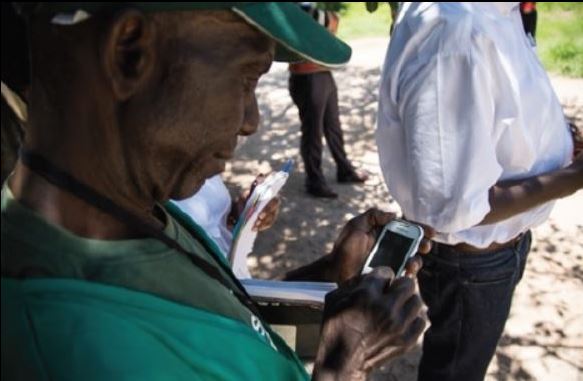
"The M2W [mobile-to-web] system has resulted in greater accountability, better data quality, and higher cost efficiency per village targeted.""
This is one of the key findings resulting from an assessment of activities in Zambia using a mobile-to-web (M2W) platform to support community-wide sanitation improvements through the 3 Million People Sanitation Programme. This 8-page brief discusses how the programme incorporates evidence-based models of community mobilisation, gathering and analysis of data, and behaviour change strategies, based on the M2W real-time monitoring system.
The 3 Million People Sanitation Programme focused on a set of key behaviour change goals: handwashing with soap or ash; safe water handling and use through treatment and safe storage; sanitation marketing to create the demand for toilets; and encouraging households to upgrade their sanitation facilities. The brief outlines how the M2W platform uses low cost mobile phones combined with simple protocols for reporting and analysis. In Zambia, Sanitation Action Groups (SAGs) record information on key sanitation and hygiene indicators using paper forms that are handed to Community Volunteers, or ‘Champions’, who in turn enter the data into low-cost, simple Nokia feature phones, which are fed into the online platform.
The brief also discusses key outcomes of the project. The M2W platform allows for real-time mobile-to-web monitoring, which is combined with spatial mapping to provide user friendly visualisation of data, i.e. charts, maps, reports, and customized dashboards. In 2014, the system was used in 29 of the 92 rural districts in Zambia and covered a population of 2,153,788. The end goal is to "raise the practice of handwashing with soap or ash from 8.6% to 47%."
Although the use of M2W to monitor rural sanitation is still in its pilot phase, a number of lessons learned have been identified. Key factors of success include encouraging widespread buy-in, empowering traditional chiefs with data, and developing a sense of ownership among partners. The pilot has also faced a number of challenges, such as difficulties faced by Community Champions in using the handsets. It was found that "effective monitoring of rural sanitation ultimately depends on people and an enabling environment. The enabling environment must have a broad range of factors, such as: appropriate policy, legal and regulatory frameworks; adequate human resources; sufficient budget; good governance and clear institutional responsibilities/accountabilities; consistent incentives for community volunteers; a good understanding of the social and cultural context; and rewards and sanctions to prevent ODF."
In terms of next steps, the brief states that there are plans to upscale the use of M2W throughout Zambia. It was found that M2W "is an appropriate, accessible and affordable monitoring tool. The system addresses sector performance monitoring as well as coverage and functionality,
and highlights organisational accountability."
UNICEF website on September 18 2015.
- Log in to post comments