










































Quality Improvement as a Framework for Behavior Change Interventions in HIV-Predisposed Communities: A Case of Adolescent Girls and Young Women in Northern Uganda
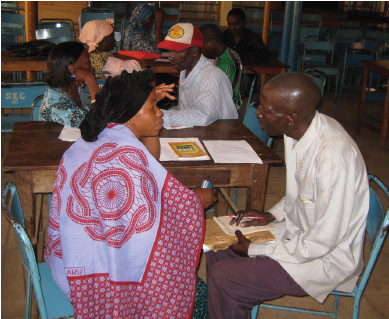
USAID Applying Science to Strengthen and Improve Systems (ASSIST) Project (Karamagi, Sensalire, Nabwire, Byabagambi, Awio, Aluma, Rahimzai), USAID Uganda (Calnan, Kyobutungi)
"In the past 2 years, a USAID-funded project tested a quality improvement for behavior change model (QBC) to address barriers to behavioral change among adolescent girls and young women (AGYW) at high risk of HIV infection."
This evaluation analyses effectiveness of a model used among Ugandan women and girls designed for skills building to improve ability of AGYW to stop risky behaviour; setting up and empowering community quality improvement (QI) teams to mobilise community resources to support AGYW to stop risky behaviour; and service delivery camps to provide HIV prevention services and commodities to AGYW and other community members. In this post-conflict region following the activities of the Lord’s Resistance Army (LRA), AGYW were likely to experience at least three or more HIV risk factors in life such as gender-based violence (GBV) including rape, cross-generational sex and early marriage, transactional sex, multiple sexual partnerships, and drug abuse.
Because northern Uganda has HIV prevalence of 10.1% among women aged 15–49 and HIV prevalence among young people is markedly higher among young women, especially considering vulnerability to HIV infection during forced or coercive sex, this intervention, the QBC model, focused on changing individual-level behaviours rather than addressing the larger contextual and structural landscape within which young people live.
USAID ASSIST Project used community-based QI teams under the “Determined Resilient Empowered AIDS-free Mentored and Safe” (DREAMS) initiative to roll out "three core interventions: (1) skills building and peer to peer support in topics such as saying no to sex and negotiating condom use to improve the ability of AGYW to stop risky behavior and to influence safer sex practices with their partners; (2) setting up and making functional community QI teams to mobilize community resources to support the young women and their partners to stop risky behavior; and (3) holding service delivery camps to provide HIV prevention services and commodities to AGYW, their partners and other community members mobilized by the community QI teams."
QI team members were local, including community elders, religious leaders, peer facilitators, local council members, Village Health Teams (VHTs), health workers, and teachers. AGYW were identified using 'The Girls Roster toolkit' through trained community resources people who used it to map priority communities. "Teams worked with AGYW to develop risk reduction plans consonant with the norms, culture, and aspirations of the target population and followed up with the AGYW to support behavioral change using a set of messages that were tailored to the specific needs of the AGYW. Participatory approaches to behavioral change communication were used, such as sharing of experiences, problem identification, and personalized risk reduction plans." Quarterly integrated health service camps for AGYW and partners of young women were available to serve demand created by QI teams, including HIV counseling and testing (HCT), screening and treatment of sexually transmitted infections (STIs), family planning services of their choice, condom awareness and distribution, risk reduction counselling, and provision of tetanus toxoid to partners in preparation for voluntary medical male circumcision (VMMC).
QI teams mobilised parents and caregivers of AGYW for parenting training sessions and held meetings with partners to identify risk factors and mechanisms to address them and bring them into communities as change agents in the communities.
A cohort of 409 AGYW at high risk of HIV infection participated in a longitudinal evaluation over a 2-year period to examine the effect of the QBC model on risky behaviours. A baseline and three follow-up assessments using standard questionnaire collected evidence from key informants on: multiple sexual partnerships, transactional sex, non-use of condoms in risky sex, gender-based sexual violence, unwanted pregnancy, and self-efficacy to negotiate for safer sex aimed at assessing the effect of skills building on behavioural change.
Results showed:
- There were declines in high-risk behaviour among AGYW over the QBC roll-out period (p < 0.05), including reduction in AGYW reporting multiple sexual partners from 16.6% at baseline to 3.2% at follow up and transactional sex from 13.2 to 3.6% of whom 57.1% used condoms.
- "The proportion of AGYW experiencing sexual and other forms of gender based violence reduced from 49% a baseline to 19.5% at follow up due to the complementary targeting of parents and partners by QI teams....
- [T]he proportion of AGYW receiving parental support increased from 68.1% (n = 278) out of 408 AGYW to 72.6% (n = 286) out of the 394 AGYW, and partner support from 56.1% (n = 229) out of 408 AGYW to 82.5% (n = 325) out of the 394 AGYW. "
- Those receiving parental support in any form (material, financial, health or psychosocial support) engaged in less transactional sex following the intervention (57.1%)
- AGYW were encouraged to report to report to local council, parents/guardians, police, or seek medical care when faced with violence", resulting in a decrease in those who kept silent (from 36% at baseline compared to 18% at follow-up 3.)
- Unwanted pregnancies declined over the 2-year period.
The evaluation concludes that a scale-up should be supported, involving peers and respected community members using the QI approach.
AIDS Research and Therapy website of BMC Research, November 1 2018.
- Log in to post comments