











































Qualitative Assessment of Providers' Experiences with a Segmentation Counseling Tool for Family Planning in Niger
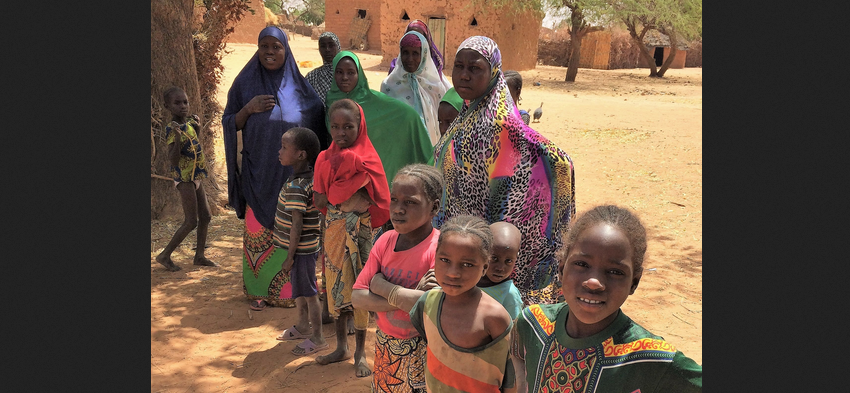
"It [segmentation] allows you to interact more with the client and spend more time. The client becomes comfortable and trust develops between you." - midwife who received a briefing on segmentation
Niger has long been recognised as a country with high fertility and low contraceptive use. From 2013-2014, the government developed a segmentation counseling strategy that is based on women's key family planning behaviours, attitudes, and needs, such as openness to modern methods, the influence of religion, and desired family size. Based on answers to 12 questions, women are segmented into one of five categories of family planning user and counseled based on their identified segment. This study qualitatively assesses provider perspectives on implementation of the segmentation tool in the Dosso region of Niger.
The parent study for the data reported here comprised of a mixed-methods quasi-experimental post-test-only evaluation study implemented in the Dosso region between February and March 2020. The design of the parent study included three arms, two that included segmentation and one that did not (the comparison arm). For the study presented here, the qualitative portion of the mixed-methods evaluation, 16 of the 30 Centres de Santé Integré (CSIs) in the implementation arms of the parent study were selected; in each of the 16 CSIs, one healthcare provider was invited to participate in an in-depth interview (IDI) if they had been trained on segmentation.
All providers in the study reported positive outcomes associated with segmentation. While providers acknowledged that the segmentation approach added time to the clinic visit, they did see the benefit of this extra time in providing more meaningful interactions between clients and providers, allowing an opportunity to ask more questions, and leaving clients with a deeper understanding of family planning and of the different methods available. Thus, "by segmenting the clients, the providers have more time to discuss targeted family planning messages with their clients and can adjust the discussion more closely to the client's family planning needs. The in-depth counseling that accompanies segmentation allows women to better understand the different methods available and increases their confidence that they, and other women in their community, should use family planning. Such in-depth counseling is vital to family planning service provision..."
Half the providers stated that women learned about the segmentation approach from other women in their communities, and their interest in family planning grew from there. A few providers noted that segmentation reduced beliefs in rumours about family planning methods. The implementation of the tool did not change other aspects of family planning service delivery, except that a segmentation sheet was required to be filled in and kept in each patient's file.
Difficulties reported included translating the segmentation tool questions into local languages, training enough healthcare providers, and avoiding stock outs of the segmentation sheets.
One way to support CSIs in their segmentation activities is to assure adequate supervision after provider training, whether the training is the full 5-day training or in the form of on-site briefings of providers on the segmentation approach. In this study, 11 of the 16 providers had received a supervision visit after training; this proportion could be increased. The responses from those interviewed clearly indicate that the supervision visit was in fact an important opportunity for further coaching and support in segmentation implementation.
Per the researchers, future studies of segmentation could include quantifiable data on the number and types of women segmented and changes in segmentation rates longitudinally from the time of introduction and onward. This could help to understand the process of implementation more fully than what is available from qualitative data.
In conclusion: "The segmentation process is of benefit to family planning clients in Niger and the scale-up of the strategy could bring higher quality services to women....Training additional providers could help ensure that all women seeking family planning benefit from segmentation..."
- Log in to post comments