










































Putting Young People at the Heart of Development: Supporting Youth-led Change Through the My Rights, My Voice Programme
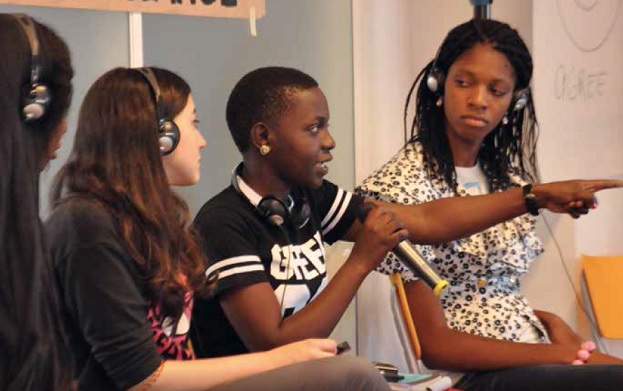
"A guiding principal of MRMV [My Rights, My Voice programme] has been the aspiration to work not simply on youth issues or even for youth (as beneficiaries and recipients of adult interventions), but to support projects which are driven by youth, and to work with youth as co-creators, collaborators and partners."
This case study discusses this core approach of Oxfam's My Rights, My Voice (MRMV) programme, which engages marginalised children and youth in their rights to health and education services. Started on 2012, MRMV is a four-year programme being implemented with local partners in eight countries - Afghanistan, Georgia, Mali, Nepal, Niger, Pakistan, Tanzania, and Vietnam. Recognising that the Global South is increasingly a younger population, the case study was developed to help inform Oxfam strategies and approaches as they seek to draw on the energy and creativity young people bring to development.
As a starting point, the MRMV project considered Hart's Ladder of Youth Participation, which "sets out levels of youth engagement in development, from tokenistic participation of youth to active citizenship." The MRMV project "has always striven to reach at least rung 6 in its practice, and certain aspects of the programme and activities have reached rung 7 or 8." In order to engage with young people, MRMV sought out youth-led organisations as partners and established national Youth Advisory Boards (YABs) for young people to advise on programme implementation. Global level engagement has presented some challenges, and the planned Global Youth Advisory Board was not established. However, some ways for young people to engage globally, sharing lessons learned and experiences, have been put in place - such as annual learning events and additional training or meetings, such as advocacy workshops and participatory video initiatives.
The case study also discusses gender and related challenges. Girls are active in programme activities, and the majority of MRMV youth groups are led by young women. However, there is evidence suggesting that youth are often not aware of gender inequality in their own relationships, and there is a "continuing need to raise young people's gender awareness and to actively support both boys and girls to consider gendered power dynamics, including the deep structural causes of gender inequality." As a result, MRMV undertook a process of learning and reflection conducted through webinars, telecons, training, and discussions at face-to-face meetings and learning events, to allow countries to consider their own practice, share ideas and strategies for addressing gender inequality, and plan new programme activities for the final phase of MRMV to improve their gender practice at every opportunity, not just in specific gender training. MRMV also continually engaged in capacity building and training to ensure child safe guarding. "The key message has been the need for effective contextual analysis to identify potential risks, and the importance of seeking support and guidance to manage problems when they are identified."
While youth bring extraordinary energy, openness, and creativity to development processes, MRMV experience demonstrates the need for new management approaches that show a high level of trust and confidence in youth. This approach has enabled MRMV to achieve high levels of youth engagement and enabled young people to develop as active citizens, leading the planning and implementation of advocacy activities and achieving numerous examples of positive change. However, this is not always easy, and requires "courage, commitment, innovation and a willingness to cede management control on the part of MRMV staff and partners - as well as a thorough understanding of how to manage risk."
The following are outlined as the key learnings from MRMV:
- Aspire to work with youth and on projects led by youth, rather than just for youth or on youth issues. Hart's Ladder of Youth Participation is a useful tool.
- Think about youth participation in all aspects of programme management. Involve youth as partners and co-creators.
- Safeguarding is important. Build this into programme management from the start.
- Actively promote the participation and leadership of girls and young women, and support young people to address the deep structural causes of gender inequality. Consideration of gender should run through all programme activities and should not be confined to 'gender training'.
- Young people need trust and space to develop their potential for change. This requires a new approach to programme management.
- Selecting and developing staff and partners who are able to work with youth is important. Youth-led and specialist youth organisations are able to bring additional skills and insights to improve practice.
Oxfam website on June 23 2016.
- Log in to post comments