










































Using Community-led local theater to increase alertness and vigilance of communities against Ebola Virus Disease in South and Western Uganda
Summary:
Evidence from Democratic Republic of Congo (DRC) indicates Ebola Virus disease epidemic cases have reached 3,274, of which 2,185 are confirmed deaths (2,068 caused by EVD and 117 probable). Uganda neighbors DRC along the South Western and Western regions where 2,076,850 people live (UBOS 2017). Because of cross-border trading and visits, inhabitants of border communities are at a great risk of an imported EVD outbreak if no intensified preventive measures are adopted. Due to this, the Uganda Ministry of Health (MOH) formed a multi-sectorial committee to raise awareness of EVD prevention, transmission and response and help prepare communities. USAID/Communication for Healthy Communities (CHC) was tasked to provide technical assistance to develop risk communication interventions aimed at increasing knowledge and addressing myths and misconception to enable the adoption of EVD preparedness behaviors. USAID/CHC developed a community-led theater approach through 20 local drama groups, which were trained by USAID/CHC to produce EVD-themed drama skits, songs, pause theatre, and market activations and to distribute materials and conduct discussion and quiz sessions to raise community awareness and vigilance toward EVD. Local theatre groups accelerated knowledge progression through dramatization on Ebola and how a family might be exposed to the virus and the consequences of an Ebola infection. Over 140,000 people were engaged and exposed to EVD messages during market days with traders across borders.
Background/Objectives:
Evidence from Democratic Republic of Congo (DRC) indicates Ebola Virus disease epidemic cases have reached 3,274, of which 2,185 are confirmed deaths (2,068 caused by EVD and 117 probable). Uganda neighbors DRC along the South Western and Western regions where 2,076,850 people live (UBOS 2017). Because of cross-border trading and visits, inhabitants of border communities are at a great risk of an imported EVD outbreak if no intensified preventive measures are adopted. Due to this, the Uganda Ministry of Health (MOH) formed a multi-sectorial committee to raise awareness of EVD prevention, transmission and response and help prepare communities.
Description of Intervention and/or Methods/Design:
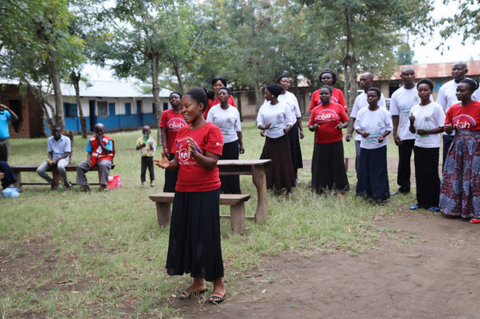
USAID/Communication for Healthy Communities (CHC) was tasked to provide technical assistance to develop risk communication interventions aimed at increasing knowledge and addressing myths and misconception to enable the adoption of EVD preparedness behaviors. USAID/CHC developed a community-led theater approach through 20 local drama groups, which were trained by USAID/CHC to produce EVD-themed drama skits, songs, pause theatre, and market activations and to distribute materials and conduct discussion and quiz sessions to raise community awareness and vigilance toward EVD. Messages were centered around a memorable acronym, R.I.N.G. (which stands for: case Recognition, how to Isolate, when to Notify and how to Give support), to help communities remember how to respond to EVD.
Results/Lessons Learned:
Communities' led response EVD preparedness activities using their local theatre groups has led to build durable sustainable capacities making Ebola response less resource demanding. Risk communication Interventions have clearly empowered a population of 2.07 million people in the 7 borderline districts along DRC with EVD preparedness messages. Over 40% of the population have been exposed to the local theater activities encouraging communities' hand washing practice, vigilance, alertness and adoption of the desired protective behaviors against EVD.
Local theatre groups accelerated knowledge progression through dramatization on Ebola and how a family might be exposed to the virus and the consequences of an Ebola infection. Over 140,000 people were engaged and exposed to EVD messages during market days with traders across borders. Since June 2019, Uganda has effectively managed the only 3 imported EVD cases, 14 high risk contacts including 4 health workers and 100 other contacts that were confirmed by MOH.
Discussion/Implications for the Field:
Early deployment of competent and adequate local theatre groups is an effective approach to increase community preparedness and response to epidemics especially awareness levels to prevention of EVD outbreaks. Thus, Uganda has been able to empower communities with protective behaviors against EVD through using local talents with strengthened capacities even integrating participatory audience engagements, health talks and call for action sessions.
So, local theater groups are cost effective and sustainable intervention because communities preferred to speak and engage with their people (the local talents they knew) leading to increased community ownership of the approach.
Abstract submitted by:
Daniel Kasansula - FHI 360
Brian Asiimwe - FHI 360
Edith Nantongo
Fredrick Echeku - FHI 360
Sheila Marunga Coutinho - FHI 360
Evidence from Democratic Republic of Congo (DRC) indicates Ebola Virus disease epidemic cases have reached 3,274, of which 2,185 are confirmed deaths (2,068 caused by EVD and 117 probable). Uganda neighbors DRC along the South Western and Western regions where 2,076,850 people live (UBOS 2017). Because of cross-border trading and visits, inhabitants of border communities are at a great risk of an imported EVD outbreak if no intensified preventive measures are adopted. Due to this, the Uganda Ministry of Health (MOH) formed a multi-sectorial committee to raise awareness of EVD prevention, transmission and response and help prepare communities. USAID/Communication for Healthy Communities (CHC) was tasked to provide technical assistance to develop risk communication interventions aimed at increasing knowledge and addressing myths and misconception to enable the adoption of EVD preparedness behaviors. USAID/CHC developed a community-led theater approach through 20 local drama groups, which were trained by USAID/CHC to produce EVD-themed drama skits, songs, pause theatre, and market activations and to distribute materials and conduct discussion and quiz sessions to raise community awareness and vigilance toward EVD. Local theatre groups accelerated knowledge progression through dramatization on Ebola and how a family might be exposed to the virus and the consequences of an Ebola infection. Over 140,000 people were engaged and exposed to EVD messages during market days with traders across borders.
Background/Objectives:
Evidence from Democratic Republic of Congo (DRC) indicates Ebola Virus disease epidemic cases have reached 3,274, of which 2,185 are confirmed deaths (2,068 caused by EVD and 117 probable). Uganda neighbors DRC along the South Western and Western regions where 2,076,850 people live (UBOS 2017). Because of cross-border trading and visits, inhabitants of border communities are at a great risk of an imported EVD outbreak if no intensified preventive measures are adopted. Due to this, the Uganda Ministry of Health (MOH) formed a multi-sectorial committee to raise awareness of EVD prevention, transmission and response and help prepare communities.
Description of Intervention and/or Methods/Design:
USAID/Communication for Healthy Communities (CHC) was tasked to provide technical assistance to develop risk communication interventions aimed at increasing knowledge and addressing myths and misconception to enable the adoption of EVD preparedness behaviors. USAID/CHC developed a community-led theater approach through 20 local drama groups, which were trained by USAID/CHC to produce EVD-themed drama skits, songs, pause theatre, and market activations and to distribute materials and conduct discussion and quiz sessions to raise community awareness and vigilance toward EVD. Messages were centered around a memorable acronym, R.I.N.G. (which stands for: case Recognition, how to Isolate, when to Notify and how to Give support), to help communities remember how to respond to EVD.
Results/Lessons Learned:
Communities' led response EVD preparedness activities using their local theatre groups has led to build durable sustainable capacities making Ebola response less resource demanding. Risk communication Interventions have clearly empowered a population of 2.07 million people in the 7 borderline districts along DRC with EVD preparedness messages. Over 40% of the population have been exposed to the local theater activities encouraging communities' hand washing practice, vigilance, alertness and adoption of the desired protective behaviors against EVD.
Local theatre groups accelerated knowledge progression through dramatization on Ebola and how a family might be exposed to the virus and the consequences of an Ebola infection. Over 140,000 people were engaged and exposed to EVD messages during market days with traders across borders. Since June 2019, Uganda has effectively managed the only 3 imported EVD cases, 14 high risk contacts including 4 health workers and 100 other contacts that were confirmed by MOH.
Discussion/Implications for the Field:
Early deployment of competent and adequate local theatre groups is an effective approach to increase community preparedness and response to epidemics especially awareness levels to prevention of EVD outbreaks. Thus, Uganda has been able to empower communities with protective behaviors against EVD through using local talents with strengthened capacities even integrating participatory audience engagements, health talks and call for action sessions.
So, local theater groups are cost effective and sustainable intervention because communities preferred to speak and engage with their people (the local talents they knew) leading to increased community ownership of the approach.
Abstract submitted by:
Daniel Kasansula - FHI 360
Brian Asiimwe - FHI 360
Edith Nantongo
Fredrick Echeku - FHI 360
Sheila Marunga Coutinho - FHI 360
Source
Approved abstract for the postponed 2020 SBCC Summit in Marrakech, Morocco. Provided by the International Steering Committee for the Summit. Image credit: Anna Dubuis / DFID via Flickr (CC BY 2.0)