










































The power of the media in Nigeria
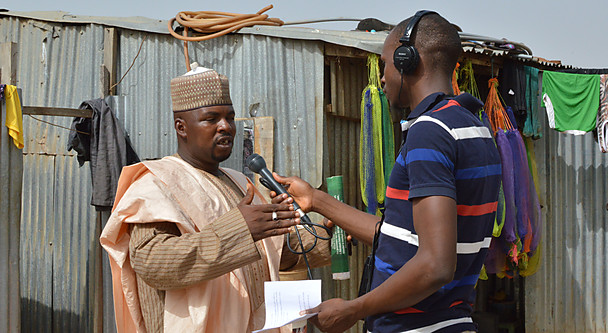
Author: Anu Mohammed, December 2 2014 - I could never have predicted a conversation overheard in my cab to work would have such an impact on me. But as we drew to a halt in one of Abuja’s frequent traffic jams, I heard my driver make a call that got me thinking about the increasing power of media in Nigeria - and people’s confidence in it to make a difference.
My driver had taken the opportunity to pick up his mobile and complain to a friend about a wrong that had been done to him. But it wasn’t his complaints about the offending party that made me sit up. It was his comment that if the issue wasn’t resolved, he’d report the case to a popular daily radio show.
My driver isn’t alone in his confidence in the media as a way to address problems.
One survey our research team conducted in 2012 found that more than half - 57% - of the survey participants who had watched or listened to our programmes, felt that they could air their views in the media without fear, and that their views were well represented in the media.
What’s more, another of our surveys found that the majority of people we spoke to also believed that the Nigerian media is playing an important role and providing opportunities for citizens to hold their leaders to account.
What was particularly encouraging to our team was the fact that one of our radio programmes, Talk Your Own- Make Naija Better, seemed to be having a really positive impact in this direction.
Our research showed that approximately every eight out of 10 people who regularly listened to the programme agreed that Talk Your Own plays a role in holding government to account.
Regular listeners also agreed that the programme informs citizens about the decisions and actions of the government (88%) as well as provides an opportunity for people like them to question government officials about their decisions and actions (79%).
In another study where we spoke to listeners in a focus group discussion setting, they gave us diverse examples of Talk Your Own’s impact on their lives, including how the programme increased their knowledge, changed their perceptions - and inspired them to act.
For example, a male listener in a rural part of Enugu state said he had learned a lot about government accounting from the programme: "Before, I believed that once you are a governor, you could eat [ie embezzle] public funds, and when you leave office nobody will chase you. But from the programme, I have learned that if you do that, an agency is there to catch you."
A female listener from an urban area in Nigeria’s capital Abuja, told us how the programme changed her attitude and actions towards corruption: "My mom was looking for a job for my elder brother and there was a certain time she paid money for it. But when I listened to Talk Your Own I told her that was wrong and we have stopped paying bribes."
The purpose of public service broadcasting is to “inform, educate and entertain”. Judging from our research, I think we could add one more: “empower!”
Click here to access this BBC Media Action blog and related links on their work in Nigeria.
Image credit: BBC Media Action
Contact:
BBC Media Action
BBC Media Centre, MC3A, 201 Wood Lane
London
W12 7TQ
United Kingdom (UK)
Phone: 44 (0) 20 8008 0001
Fax: 44 (0) 20 8008 5970
Media.action@bbc.co.uk
- Log in to post comments