










































Polio Program Transition in South Sudan: An Assessment of Risks and Opportunities - Leveraging Civil Society Resources to Scale Up Immunization
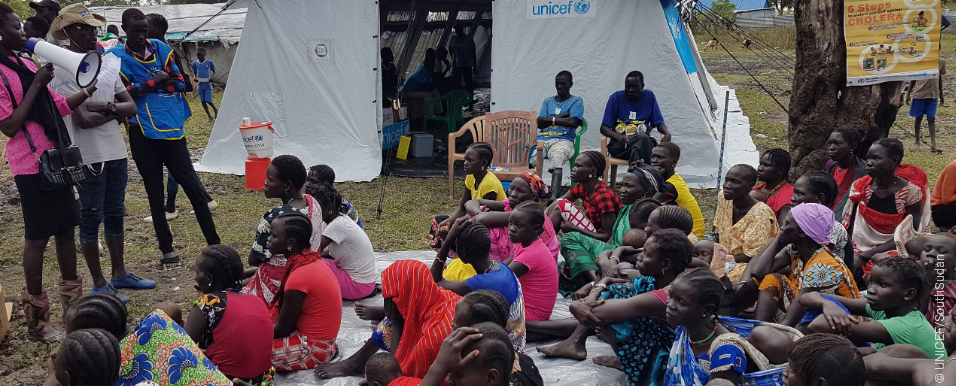
"Government could leverage CSOs' unique skill sets to enhance social mobilization efforts, access hard-to-reach communities, and expand the trained workforce."
To ensure a smooth transition away from Global Polio Eradication Initiative (GPEI) funding when certification of wild poliovirus (WPV) eradication is complete, South Sudan is preparing to sustain their national polio and immunisation programmes through other resources. As in other countries, successful polio transition in South Sudan will require stakeholder engagement. Polio programme partners have expressed the view that an expanded range of stakeholders, including civil society organisations (CSOs) at the country level, should be included in this process. Funded by the United Nations Foundation (UNF), this report describes the results of an assessment carried out by the International Federation of Red Cross and Red Crescent Societies (IFRC) in 2019 to document the realities of integration and transition efforts in South Sudan.
As the report outlines, South Sudan has a long history of conflict that has contributed to challenges for the country's health system, including: human resource (HR) shortages and lack of capacity; lack of awareness of and demand for immunisation; large numbers of internally displaced persons (IDPs); and lack of an effective coordination mechanism for CSOs, which operate in a fragmented manner. Although South Sudan has some of the worst health indicators found worldwide, the country's polio indicators are encouraging, as South Sudan has not reported a single case of WPV since 2009, no cases of circulating vaccine-derived poliovirus (cVDPV) have been reported since 2014, and the African Regional Certification Commission (ARCC) certified the country as polio free on August 25 2020 (after this report was published). Despite this, immunisation coverage is low in South Sudan (see graphs on page 8 of the report for data).
The methodology for the study included:
- A desk review of key documents, including South Sudan's Polio Transition Plan (PTP), country health plans, the Basic Package of Health Services (BPHS), the Boma Health Initiative (BHI), and reports from World Health Organization (WHO) and other health sector organisations.
- Country visits to conduct key informant interviews with representatives from the Ministry of Health, UN agencies, CSOs, and other stakeholders. Updated data and geographic maps were obtained from the Joint Appraisal draft report for 2019 from Gavi, the Vaccine Alliance, and reports from other humanitarian organisations.
- Field visits to South Sudan (August and October 2019) to meet stakeholders in the health sector and to participate in the Gavi Joint Appraisal in Juba.
This process revealed that the GPEI wind-down will affect programming as well as financial support. The financial risk could be mitigated by mainstreaming critical functions of routine immunisation and other disease control programmes. There is a risk of loss of staff for training, monitoring, and supervision of activities - all funded largely by GPEI. Many active CSOs, international and national, are already managing the humanitarian crisis in South Sudan by providing HR support and essential medicines and vaccines and conducting large vaccine campaigns. CSOs, which play a critical role in healthcare service delivery and advocacy in South Sudan, could support the South Sudanese government in health sector development activities as the country's polio programme is integrated with the broader system and moves away from GPEI resources.
However, CSOs will need extensive capacity building to fill these gaps. For example, an attempt was made during polio programme transition planning to map all organisations. The CSOs were engaged only during supplementary immunisation activities (SIAs) to mobilise communities and identify volunteers and have little capacity for all the essential tasks for achieving and maintaining polio eradication in South Sudan.
To cite an area with some promise: The country has adopted an integrated disease surveillance platform for which protocols and training materials are already available. The strategy calls for focal points in the community to identify suspected disease and inform technical staff for follow-up and investigation.
Going forward, IFRC identifies a potential role for CSO engagement in three main areas (to be carried out according to the country's BHI and BPHS strategies):
- Organisation and representation - There is a need to create a platform for the CSOs to increase visibility, coordinate activities, share lessons, and synergise resources. The BHI calls for the establishment of two coordination forums at the state level: a technical working group, and a stakeholders' forum. Active CSOs in the respective state/county would be part of both forums. In addition, all active CSOs would simultaneously form their own coordination group for periodic information sharing and discussion of challenges and opportunities.
- Advocacy support - In the context of GPEI wind-down, the following activities could benefit from CSO engagement: strengthening of immunisation financing, addressing low immunisation coverage, integrating services and linkages among stakeholders, and improving vaccination records. For example, CSOs could advocate with government, partners, and donors to implement large-scale use of mobile health clinics and other tailored outreach strategies for hard-to-reach communities. They could also advocate with the government, UN partners, and donors for the introduction of home-based records, backed up with a campaign to educate communities and families on the importance of retaining them.
- Service delivery - There are four areas for potential CSO participation: tailoring immunisation activities in crisis-related situations; building and scaling up HR capacities for service delivery; building awareness of and demand for immunisation in communities; and using name-based data for monitoring progress and tracking defaulters at the community level. For example, per IFRC, for approximately 7,500 villages in South Sudan, there is a need to create a nucleus of knowledge for childhood immunisation: why it is required and where to seek services. To support such a social movement, roughly 15,000 volunteers/workers countrywide could be trained using the strategies, programmes, and materials that are already available and/or a dedicated training programme could be developed by one or more CSOs. Once trained, social mobilisers could engage in health education (awareness-building for immunisation uptake) and mobilisation of communities for outreach services - as reflected in the BHI's description of the functions of the community-based workforce.
The report concludes recommendations specific to each of the four stakeholder groups that IFRC contends could contribute to a smooth polio transition process in South Sudan: government (at different levels); donors; the UN system implementing partners; and CSOs, who "currently implement many immunization services, and the wind down of GPEI provides an opportunity for these organizations to step up their contributions and support the country's efforts to integrate these vital functions going forward."
IFRC website, March 2 2021. Image credit: ©? UNICEF/SouthSudan
- Log in to post comments