










































Phase II: Strategic Plan for Polio Outbreak Response in the Middle East - May-December 2014
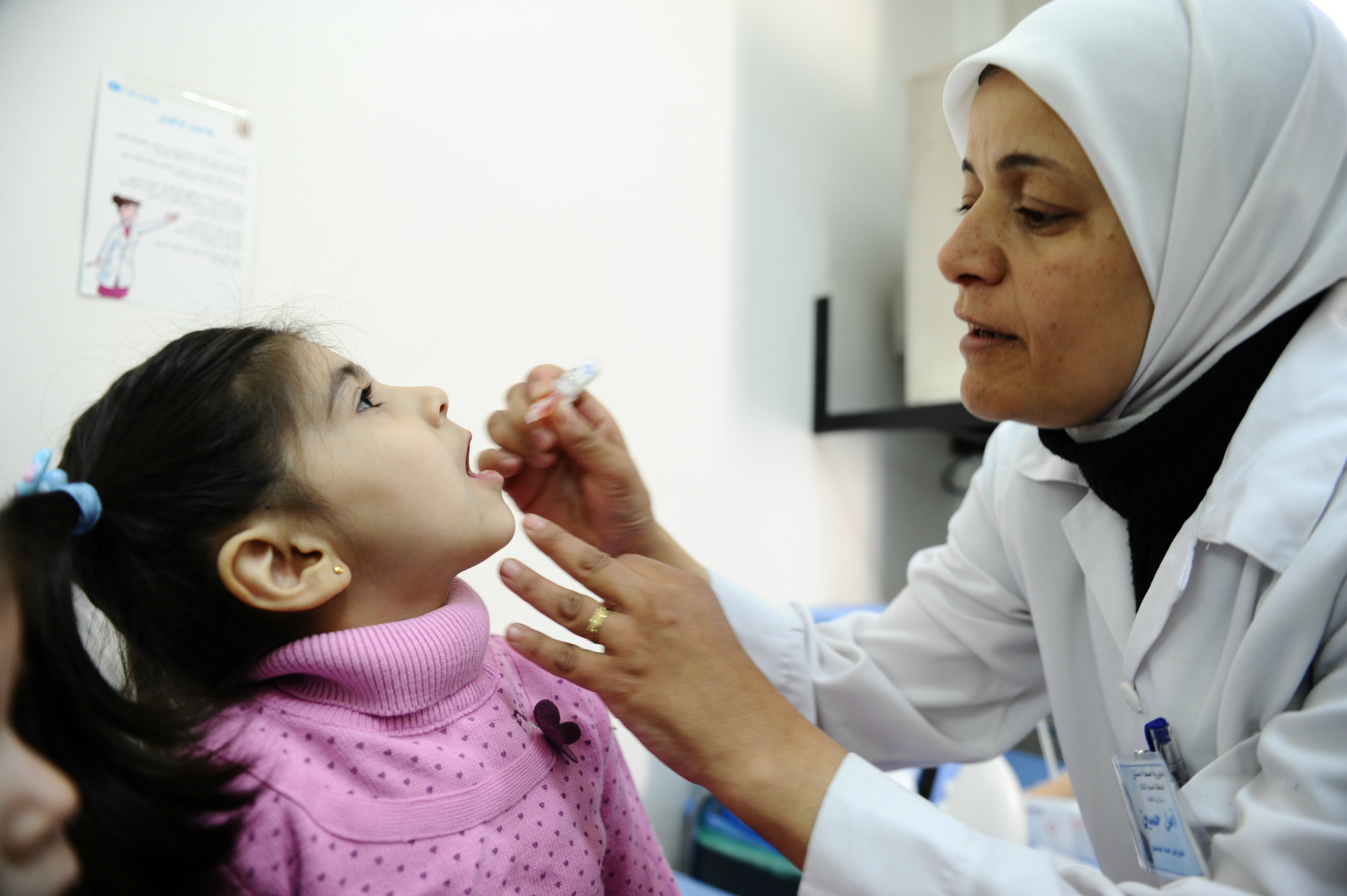
This is the second of two reports (see Related Summaries, below) in response to the circulation of wild poliovirus (WPV) in October 2013 after a 15-year absence. From the World Health Organization (WHO) and the United Nations Children's Fund (UNICEF) in collaboration with the ministries of health and other humanitarian aid and United Nations (UN) partners, this Phase II WHO/UNICEF Strategic Plan for Polio Outbreak Response in the Middle East outlines the specific actions that will be implemented across the Syrian Arab Republic, Iraq, Jordan, Lebanon, Turkey, Egypt, the Islamic Republic of Iran, and the West Bank and Gaza Strip from May to December 2014 in an effort to fully interrupt WPV transmission and prevent further international spread.
It is noted here that the multi-country response in Phase I of the effort was "rapid, coordinated and focused on reaching the maximum number of children across the seven countries with oral polio vaccine (OPV). As of 30 April 2014, 30 supplementary immunization activities (SIAs) have been conducted across the seven target countries using over 100 million doses of vaccines and targeting approximately 25 million children in multiple rounds of vaccination. In addition, detection and reporting of acute flaccid paralysis (AFP) cases have been intensified, national communications plans have been developed and updated, and efforts are under way to strengthen routine immunization [RI]. However, significant risks still remain that the outbreak will spread further within the Syrian Arab Republic and/or Iraq, and expand to neighbouring countries and potentially beyond. This threatens a collective global good..."
In Phase I, a "regional communications for development strategy was implemented to ensure more than 90% of caregivers with children aged under 5 years had appropriate knowledge of polio vaccination. This included knowledge of campaign dates, the importance of repeated doses and routine immunization, vaccine safety, risk of non-compliance, and ensuring children are immunized during SIAs. The regional external communications strategy emphasized the risk of polio returning to the region and the importance of a coordinated, regional response, advocating for health system strengthening and maintaining a political commitment. High household awareness of polio campaigns has been achieved across the region, but low awareness rates are still prevalent in high-risk areas of unvaccinated children. Post campaign monitoring in the Syrian Arab Republic, Lebanon and Jordan indicated that 70% of missed children are in areas with low risk perception, unawareness of the campaign, and misconceptions about OPV." These findings are attributed to poor focus on community-level interventions during SIAs and lack of engagement of local communication actors, especially in hard-to-reach areas and amongst underserved populations, as well as a lack of diversified media outlets that can reach a wider audience.
With those lessons learned, Phase II will focus on improving the quality and intensity of activities such as SIAs and reach (e.g., systematic mapping of hard-to-reach populations). There are expected to be communication-related strategies such as those surrounding the development of an acute flaccid paralysis (AFP) surveillance benchmark strengthening plan that includes activities such as: ensuring a wide network, regular quality visits, supervision, and performance monitoring; conducting awareness meetings for orientation of health personnel together with training of surveillance focal points and sensitisation of medical professionals (e.g., medical and paediatricians' associations) and regular sharing of information on the current epidemiologic situation and performance; and implementing detailed investigations (to include social and behavioural determinates) of zero-dose AFP cases (and confirmed WPV, if applicable) to inform immunisation and communication activities.
More broadly, in Phase II, the objective is to increase awareness and risk perception, as well as to create positive vaccine attitudes and behaviour. Plans are focusing on: mass media using regional and country media/print material/social media and school packages; and community mobilisation and strengthening of interpersonal communication (IPC) skills of health workers, especially in hard-to-reach areas/populations. According to the document, a variety of campaign monitoring and evaluation methods will be used to document the impact of the different interventions and ensure evidence-based planning.
The regional/country media strategy will be tailored to undertake such tasks as: continuing advocacy and raising risk perception of polio and other vaccine-preventable diseases; developing high-impact content and involving targeted media channels to capture attention; proactively communicating immunisation successes and remaining barriers; reducing stigmatisation of Syrian refugees among host communities; and strengthening communications, coordination, and key messages with partners in the Polio Eradication Initiative (PEI).
At the national level, social mobilisation and communication activities will continue to focus on actions such as: diversifying local strategies/channels to respond to different vaccine delivery approaches and communicating specific SIA dates; localising communications plans according to specific population groups and local media analysis; maintaining public trust in the vaccine and the vaccinators; collecting data on reasons for missed children during and after each SIA; developing quality materials that are tailored to the social context and that address parents' concerns (fostering risk perception, demand, and acceptance of repeated campaigns); strengthening IPC skills of health workers to address the public's safety concerns and low risk perception; including messages on RI during and between SIAs; mitigating the tension from stigmatisation of the Syrian population in the region; and being prepared with media packages that include answers to frequently asked questions (including difficult questions) and updated fact sheets, involving diverse spokespeople.
GPEI website, September 10 2014. Image caption/credit: A health worker gives polio vaccine to a young girl in Syria. © UNICEF/Syria2013/Sanadiki
- Log in to post comments