










































Performing Life

All staff are Bolivian nationals except for PL's Director, who is from the United States (US). Volunteers from the US and Latin America work with the programme from one week up to several months, teaching performing skills, tutoring, and helping with the following activities:
Performing arts classes - free classes on juggling, unicycle, diabolo, and poi (an indigenous art form from New Zealand) - all of which require concentration and commitment, thus keeping youth occupied, off drugs, and helping to form supportive groups among fellow performers. Performing arts classes are held every weekday from 3-4 hours in the afternoon. Following each class, a healthy meal is provided, and the students then go out to perform. Classes are held in central city parks to reach out to the many youth who work in these areas. Classes seek to teach youth skills that increase self-esteem, coordination, concentration, dedication, etc. PL provides spaces where the youth can demonstrate their abilities in public, eventually incorporating themselves as members of PL's Performance troupe, in which youth can begin to earn money through performing. After performances, youth talk briefly about street work, dangers of homelessness, etc. The goal is that young performers can raise public awareness while at the same time increase their income and have more time for school and studying.
Music project - This project works with and trains working/street youth to produce a series of professional music CD albums. The youth exercise creative control over and retain the copyrights to all their materials. PL's mobile recording set-up enables them to incorporate other groups, such as those in youth homes who cannot come to the studio. As a positive vehicle for self-expression, the Music Project hopes to boost participants' self-esteem. The youth learn how to write and read better as they compose their lyrics. They learn new computer skills as they edit their songs. They also have an opportunity to perform, be part of media interviews, and - it is hoped - to be seen as worthwhile, creative individuals with stories and abilities. PL produces, distributes, and sells the CDs in order to make the project self-sustaining. The youth can purchase the CDs at cost to sell and keep the proceeds. As of July 2010, 2 albums, 1 demo, and 1 full-length album have been produced, and free concerts have been put on throughout the city. The youth are producing their third album and have a number of music videos that, according to organisers, get a lot of airplay.
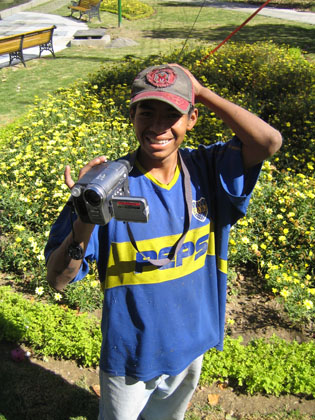
Film project - Launched in June 2008, this project teaches participants acting, scripting, and filmmaking techniques so that they can make a film based on their real-life experiences and day-to-day survival living on the streets. The concept of the film is to create two tracks, layering a documentary about the kids into a fictionalised story written and acted by them. The youth are trained in film techniques, learning to act, write, and shoot with the camera. The goal is to produce a 60- to 90-minute film that will be used to reach out to other youth groups, raise public awareness about life on the streets, and let the youth tell their own stories. PL will then accept youth proposals for additional film projects. The long-range plan for this project is to develop a variety of short film vignettes with and by other street children, which can be used to help them gain insight into their own lives and express their ideas to the public, demonstrating the depth of creative talents that communities need to nurture and support. Through the creative process, these youth can emerge as leaders and spokespeople, claiming their rightful place in society. July 2010 update: PL youth have created a short dramatic film and have several other short documentary-type films. A feature-length documentary was just completed about the programme and has been shown in the United States (US). It contrasts the hope that the PL kids have gained with the destitution experienced by the kids still living on the streets.
Bracelet programme - a youth-managed enterprise that offers participants the opportunity to make bracelets out of thread which are then sent to the US for sale. All proceeds are returned to the participants and saved in their own bank account, set up for them by PL. PL participants spontaneously started their own microlending programme, whereby they lend from their savings accounts to each other and to new kids to help them get started in the bracelet programme. [Organisers explain that the bracelet programme is dependent on Hope for the Children and others selling the bracelets and weavings from Bolivia to wealthier individuals in the US and Europe, but this is not sustainable in the long term. That is why the goal for each participant is to help them use their savings to get something going for themselves in their own communities.]
Weaving Women - Since February 2009, this project has been supporting women who work or live on the streets by buying their handmade bracelets and weavings and exporting them to the US and Europe. As part of PL participants' microlending programme, a start-up loan has been provided to a Weaving Women project that works with 6 Quechua weavers and their children in mountain villages.
Youth home outreach - Since 2008, PL has been working with youth homes to provide creative activities that help residents make the transition from street life to that in a youth home.
To learn more about these projects, visit the PL website.
Children, Youth, Economic Development.
PL was founded in 2005 in the United States by John Connell when he was 18 years old. Since its foundation, the organisation has worked with over 200 children and adolescents.
The state of Cochabamba has approximately 1,455,700 inhabitants; the city of Cochabamba has 517,370 residents. The Bolivian government estimates that approximately 25% of youth 4-18 years old are working in the streets in order to economically sustain their families and/or themselves. An estimated 2-5% of Bolivia's population below the age of 18 live on the streets, although the exact number is not known. Of these street youth, approximately 50-75% of them use drugs on a daily basis, most commonly glue and pasta base, a raw form of cocaine. In the city of Cochabamba, 75% of the households live far below the poverty line.
Emails from Suzanne Jamison to The Communication Initiative on July 10 2009 and July 22 2010; and PL website, accessed September 25 2009.

- Log in to post comments