










































People's Local Knowledge of Climate Change in the Middle-Hills of Nepal
Institute of Forestry and Environmental Sciences, University of Chittagong, Bangladesh (Baul and Ullah); School of Forest Sciences, University of Eastern Finland, Finland (Baul); Institute of Forestry, Pokhora, Nepal (Tiwari); School of Environment, Natural Resources and Geography, Bangor University, Bangor Gwynedd, United Kingdom (McDonald)
"A study of weather knowledge in Middle-Hill of Nepal reveals the wealth of knowledge that farmers possess. These farmers have developed intricate systems of gathering, prediction, interpretation and decision-making in relation to changing climate with impacts in different fields of dynamic ecosystems..."
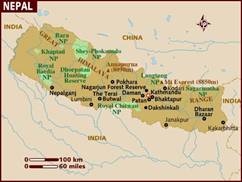
Noting that incorporating local knowledge into climate change policies can lead to the development of "effective, cost-effective, participatory, and sustainable adaptation strategies" when complemented by modern scientific knowledge, this study aims to explore local perceptions and experiences of climate changes in Nepal's Middle-Hills region in conjunction with meteorological data and assessments of climate change impacts on physical and biological systems. "Collectively, this knowledge represents a dynamic information base for the scientific community and for policy makers to develop strategies for adaptation to constantly changing and varying climate that will be supported by the general population."
A survey was conducted, stratified by villages at various altitudes. The head of the selected households (assumed to be the decision-maker in farming) or their spouse was interviewed using both structured and semi-structured questions. In addition, 40 interviews were carried out by asking closed- and open-ended questions. Group discussions, consisting of 8-10 participants, were also held in 6 villages. The purpose was to focus on group perceptions of changing climate, particularly temperature increases, rainfall patterns, positive or negative impacts and changes in natural phenomena, and utilisation and management patterns for crops, trees, and livestock as affected by adverse climate. Finally, 2 participatory rural appraisal (PRA) tools - trend analysis of climate and farming, and problem ranking - were used.
An excerpt from the Discussion section follows:
"Farmers in the study area might not understand the concept of the terms 'global warming' or 'climate change', but their understanding of the trend of temperatures increasing is very clear. They were well aware, from their long experience with the realities of the local environment, that the climate has changed....The farmers' observations, except for the hotter intensity of temperatures in summer, corroborated with meteorological data...
...[F]armers are known to make decisions on cropping patterns of cereal and vegetables crops based on local perceptions of climate, and decisions on planting dates based on complex cultural models of changed weather. Obviously gathering and documentation of this scientific and indigenous knowledge explored by researchers, is vital for development practitioners and society, as if policy makers can make plan in order for adaptation strategies and providing extension and other services to such primary stakeholders who are at risk. We, as researchers, have responsibilities to find solutions coping with the environmental impacts, which include the development of monitoring systems with the changing environmental conditions. But most important, we wish to help local communities by promoting knowledge and new approaches that contribute to sustainable solutions in agriculture and use of resources."
An excerpt from the Conclusion section follows:
"...While the farmers may not have a full explanation of the reasons for what they are observing and experiencing, they can nevertheless help in designing adaptation strategies for climate change and its diverse impacts. Furthermore, local knowledge can reduce our sole reliance on climate change experts, and in many cases, can challenge or correct their analysis and interpretation, particularly at local scales. In this context, enhancing our understanding of climate change must combine the objectives, empirical information and people's observations, experiences and perceptions.
Farmer's observations are [in] agreement with meteorological data regarding climatic variability. This can be sum[med] up with farmers' observations and climatic data analysis that mean annual temperature is rising, winter is getting warmer and summer remained constant in temperature change and post-monsoon rainfall decreases...compared to 30 years back....Indicators of climate change were readily evident to our participants....As the changes in natural ecosystems relating to climate change are dynamic, complex, and unpredictable, ... meteorological data and objective scientific analysis must be combined with farmers' experiences and perceptions, which will ultimately help in understanding of the climate change and how people can adapt to it and mitigate its effects."
Indian Journal of Traditional Knowledge, Vol. 12 (4), October 2013, pp. 585-595, sourced from "Getting Local voices to Global Talks on Climate Change", SciDev.net, accessed October 23 2015; and email from Tarit Kumar Baul to The Communication Initiative on October 28 2015.
- Log in to post comments