










































Parental Attitude and Beliefs towards Child Vaccination: Identifying Vaccine Hesitant Groups in a Family Health Center, Erbil City, Iraq
Hawler Medical University
This descriptive study was conducted to determine parental hesitancy toward vaccination inside Erbil city, Iraq, and to find associations between the parents' position towards vaccination and the outcome of immunisation. In research conducted elsewhere, attention to hesitant parents has been deemed essential for stabilising immunisation opposition; this group of parents is possibly the most liable to change their behaviour because they can be influenced by evidence from healthcare workers about immunisation. To inform such work, this study sought to build an evidence base; to date, there is no evidence of such a study being conducted in the Kurdistan region or even in Iraq.
The data were collected from January 1 2014 until July 1 2015 through a self-administered questionnaire. It included two sections: one related to the demographic characteristics of clients, and the other was the Parent Attitudes Childhood Vaccines (PACV) questionnaire, used to detect parents those who have concerns about vaccination. Study participants (564 parents) were taking their children to one of the 3 family centres in Erbil city. Vaccines are provided at these public clinics only; vaccinations are free for all.
The demography of the participating parents showed that mothers were more responsible for children's vaccination (64.5%), which was expected, given that all participating parents had under children under 2 years old, who are usually under the mother's care.
Parental position in respect to immunisation of their child revealed that 65.3% were unquestioning acceptors, 20.6% were cautious acceptors, 9.9% were hesitant, 3.5% were late or selective vaccinators, and 0.7% were refusals. Immunisation behaviours of parents among different groups showed that 20.9% postponed their child vaccination for causes other than sickness or sensitivity, while 73.8% provided immunisation on time. More than two-thirds (65.9%) were completely sure that it is a good idea to follow the schedule of immunisation for their child; only 26.6% were not sure. It was found that 77.4% discuss their worries about vaccine with health workers. Parents in the questioning acceptor group scored higher for attitude and trust mean score compared to parents in the unquestioning group.
The discussion section of the paper puts these and other findings into a global context, comparing the results with those from other studies. There, it is noted that "[a] comprehensive approach is needed to provide accurate information to parents who are concerned about the safety and necessity of vaccines. Local population-based strategies need to be developed inside Erbil city, to direct provider-to-parents communication strategies and groups to assess the effectiveness of social media interfaces to address questions from vaccine-hesitant parents. The investigators believe that the current study provides another critical arm of this comprehensive approach in that it addresses several aspects identified by parents as important or challenging in this effort. The study can be implemented in other settings; the tool can address concerns in the first visit requiring vaccines, and the tool can be used in the clinic under the supervision of a health care providers."
In conclusion, the current study showed that Iraqi parents had some positive aspects related to vaccination and defects in other domains. The investigator recommends an educational intervention study to be conducted among vaccine-hesitant parents to find if any changes occur in the measured parental attitudes toward vaccines.
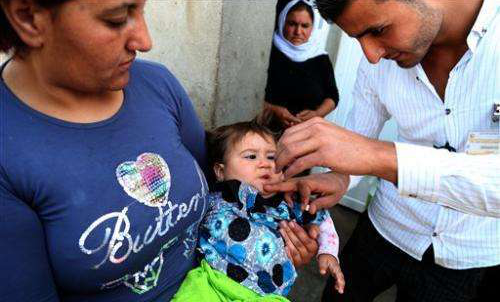
World Family Medicine/Middle East Journal of Family Medicine 2018; 16(6): 17-26. DOI: 10.5742/MEWFM.2018.93386. Image credit: AP Photo/Khalid Mohammed
- Log in to post comments